Legal Experts Detail How UK Bans Figures Like Ye, Martha Stewart, Tyler, the Creator
How UK Bans Figures Like Ye, Martha Stewart, Tyler, the Creator

Legal Experts Detail How UK Bans Figures Like Ye, Martha Stewart, Tyler, the Creator

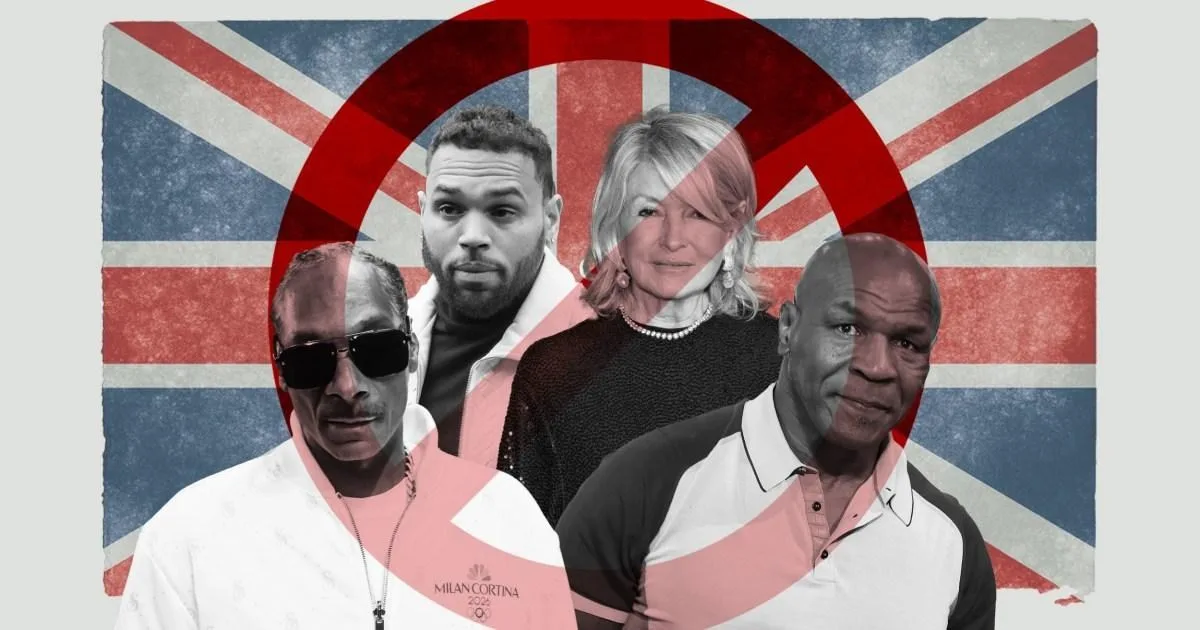
In 2024, the UK government excluded 15 individuals using discretionary powers that allow the home secretary to bar foreign nationals deemed not conducive to the public good. This legal framework has recently been applied to high-profile figures such as the rapper Ye, formerly known as Kanye West, alongside others like Martha Stewart and Tyler, the Creator, sparking debates over immigration control and free expression.

Why Kanye West Was Banned from Performing in the UK

The UK government prevented Kanye West, legally known as Ye, from entering the country, asserting that his presence would not be conducive to the public good. This decision followed a sustained pattern of antisemitic comments from the rapper, including expressions of admiration for Hitler and the release of a song titled Heil Hitler. The prospect of him performing at London's Wireless music festival, which could attract 150,000 attendees, drew condemnation from government ministers, festival sponsors, Labour leader Keir Starmer, and the Campaign Against Antisemitism. After the government confirmed West would not be allowed entry, the festival was cancelled.

Foreign nationals seeking to visit the UK typically require permission via a visa or an electronic travel authorisation (ETA), which can be refused for various reasons. Immigration rules bar entry to those who have breached immigration law or been convicted of criminal offences in the UK or abroad. Additionally, the home secretary holds wide discretionary powers to exclude individuals if their presence is not conducive to the public good due to their conduct, character, associations, or other factors—the very powers invoked against West.

Wide Pickt banner — collaborative shopping lists app for Telegram, phone mockup with grocery list

How Discretionary Powers Are Applied

According to the Home Office, these powers are usually invoked in cases involving national security, unacceptable behaviour such as extremism, international relations or foreign policy, and serious organised crime. In 2024, 15 people were excluded under these provisions. The home secretary only needs to be satisfied that the underlying behaviour occurred on the balance of probabilities, following guidance that was first introduced in 2005 during the war on terror. However, this guidance also extends to disrupting a range of criminal activities, including organised crime, football hooliganism, immigration breaches, and corruption.

In West's case, the government cited the broad basis that his presence would not be conducive to the public good. It is likely that Home Secretary Shabana Mahmood relied on his production, publication, and distribution of material expressing views that foster hatred, potentially leading to inter-community violence in the UK. Immigration law in the UK is based on wide discretionary powers, with guidance being indicative rather than exhaustive. This allows the home secretary to justify exclusion beyond the guidance's precise wording, without requiring incitement to violence—only that hatred has been fostered.

Given the extremity of West's public comments, it is arguable that granting him a stage at a high-profile music festival could normalise antisemitism, a concern heightened by recent rises in antisemitic violence in the UK.

Other High-Profile Bans Under These Rules

West is not the first prominent artist barred under these rules. In 2015, Tyler, the Creator was excluded from entering the UK. Then-Home Secretary Theresa May stated that his statements might foster hatred, leading to inter-community violence, referencing songs that describe violent physical abuse, rape, and murder in graphic terms that appear to glamourise such behaviour. In response, the artist argued that the songs were written from an alter ego's perspective, and he emphasised his non-violent personality.

Pickt after-article banner — collaborative shopping lists app with family illustration

The government does not routinely name those excluded, but popular lists often include celebrities with past criminal convictions, such as American businesswoman Martha Stewart. These individuals are likely barred on criminality grounds rather than the not conducive to the public good test. Exclusions based on this test generally relate to reprehensible statements and behaviours of a political or religious nature, affecting figures across the ideological spectrum, including far-right campaigners, Israeli politicians, and Louis Farrakhan, whose 15-year ban was overturned after a high court appeal.

Broader Implications and Legal Challenges

Exclusions based on corruption and criminality are often less newsworthy but are invoked in most cases. The concept of someone's presence not being conducive to the public good also appears in other immigration powers, such as stripping British citizenship, as seen with Shamima Begum, where misconduct must be seriously prejudicial to the UK's vital interests. In contrast, denying entry to foreign nationals can occur for less serious misconduct.

Granting such broadly worded powers to the home secretary is controversial, as determining which views and conduct justify exclusion is inherently political. Any broadly worded executive power carries the risk of abuse. For West to challenge his exclusion in court, it would require proving that the home secretary misunderstood the scope of her broad legal powers or made a decision so irrational that no reasonable decision-maker could have reached it. This is an extremely high legal bar, and courts are likely to defer significantly to the home secretary's judgment.

About the author: Jonathan Collinson is a Lecturer in Law at the University of Sheffield. This article is republished from The Conversation under a Creative Commons license.