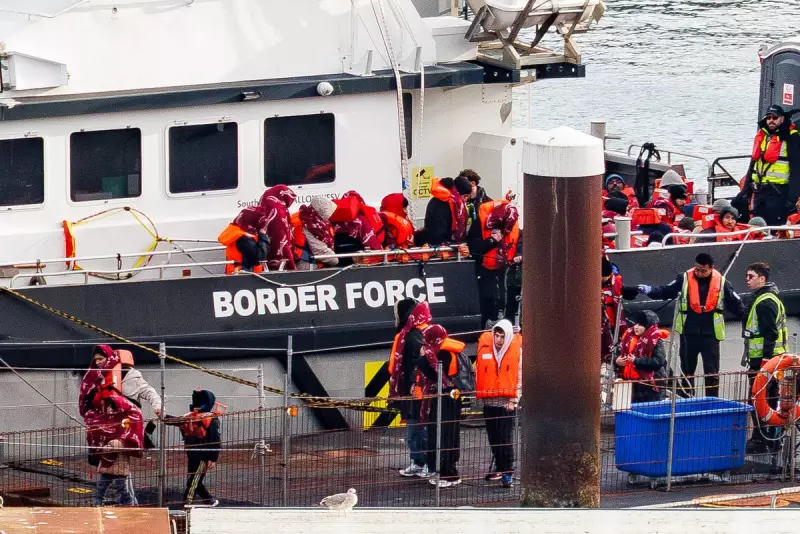
An Iraqi migrant facing removal to France under the government's controversial "one in, one out" returns scheme has made a defiant pledge to return to the United Kingdom at the earliest opportunity. The man, who has spent ten weeks in a British immigration detention centre, told the BBC that he grew up dreaming of life in England and remains determined to build a future here despite the imminent threat of deportation.
"I'll just come back"
Speaking in fluent English from the detention facility ahead of his scheduled removal, the asylum seeker revealed the perilous journey that brought him to British shores. Having fled Iraq after threats from a powerful political faction, he travelled through Turkey and along the Balkan route before paying people smugglers for a place on a small boat crossing the Channel.
"Yes I had to pay a lot of money, but I didn't have any other choice," he explained, adding: "I had grown up in love with English culture, and I know how English people, how much they have compassion and how they respect the refugees and how they respect the people who are in danger. That's why I came here."
Arsenal supporter's determination
When questioned about whether he would attempt to re-enter the UK after deportation to France, his response was unequivocal. "If there is a chance, of course I will come back to England because [of] my skills, my abilities, my language, everything," he stated. "I have grown up in love with English culture, and I am an Arsenal supporter. Hopefully, we are going to win the league this year."
The migrant described the emotional moment his small boat approached British waters, saying: "Even when we were crossing the Channel, when we saw the English flag, I saw this is the end of everything, of suffering, of many years of suffering. But I never expected that there was something even worse waiting for me, and this is the detention centre. I never expected this."
Scheme statistics and concerns
Official figures reveal that by 22 December 2025, exactly 193 people had been returned to France under the flagship returns agreement negotiated with Paris. The reciprocal arrangement, which sees migrants sent back across the Channel in exchange for eligible asylum seekers coming to Britain, resulted in 195 individuals being permitted entry from France during the September to December period.
However, the Home Office has confirmed that at least two migrants have already managed to return to the UK after initial deportation under the scheme, only to be removed for a second time. This highlights the practical challenges facing immigration enforcement officials as they implement the policy.
Safety fears and support gaps
The Iraqi man expressed serious concerns about his safety if returned to France, where those removed under the scheme typically receive only brief accommodation in homeless shelters before being advised to claim asylum. Under established Dublin procedures, asylum seekers in France can face further removal to other European nations where they first entered the continent, potentially leaving them without housing support if they decline to make a claim.
These anxieties are shared by numerous detainees, with approximately 80 asylum seekers at Harmondsworth immigration removal centre near Heathrow penning a joint letter in early January protesting their treatment. The correspondence described individuals "breaking down" and experiencing significant mental distress while feeling "isolated or punished instead of receiving care."
Broader immigration context
The political debate surrounding immigration continues to intensify as new statistics reveal complex trends. While small boat arrivals have reached 658 since the beginning of the year, and asylum applications have increased by 13 percent year-on-year to 110,051, deportation and return figures have also risen by 11 percent.
Home Office data shows that 36,457 people were either returned or deported from the UK in the year up to September 2025. Paradoxically, legal migration to Britain is declining as fewer individuals arrive for work or study purposes, creating a multifaceted immigration landscape that policymakers continue to grapple with.
Meanwhile, Green Party co-leader Zack Polanski used his Christmas address in Calais to urge the public to cease "demonising migrants," reflecting the ongoing political divisions surrounding immigration policy and rhetoric. As the "one in, one out" scheme continues to operate, stories like that of the determined Iraqi Arsenal supporter highlight the human realities behind the statistics and political declarations.