Minneapolis Under Siege: ICE Operations Trigger Community Resistance
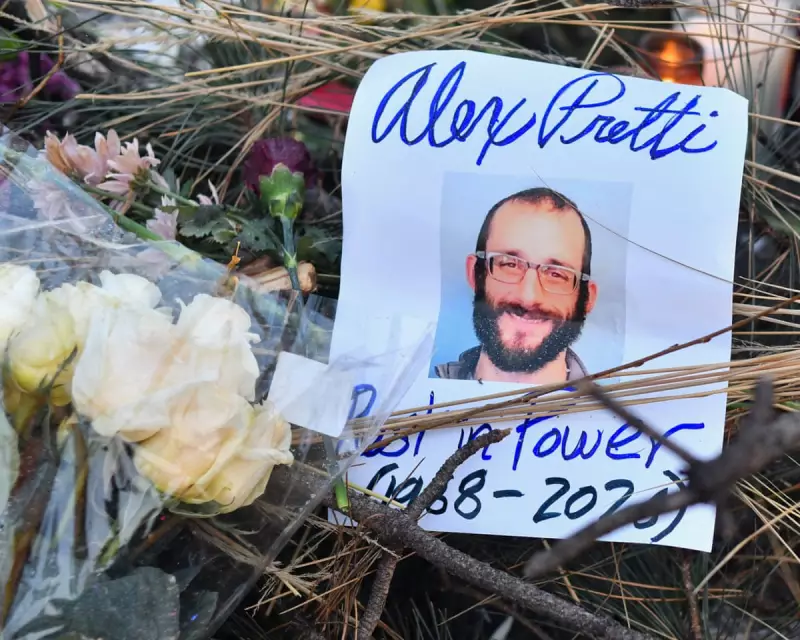
A makeshift memorial now stands in the area where Alex Pretti was shot dead on Saturday, a poignant symbol of the turmoil engulfing Minneapolis. The city has endured a week of ICE activity and outrage, with the days leading up to Pretti's death marked by escalating tensions and government brutality.
A Crisis Deepens in Freezing Conditions
Since the Trump administration dispatched ICE agents into Minneapolis in December, there have been 3,000 arrests and two fatal shootings. In the bitter cold, as the crisis intensifies, the people of Minnesota continue to resist what many describe as a siege on their city. This operation, hailed by the administration as the largest immigration enforcement in US history, has instead morphed into a full-blown crisis, presenting the sharpest test of American democracy during Trump's second term.
Alex Pretti, a 37-year-old intensive care nurse, was shot and killed apparently after rushing to protect a woman who was pepper-sprayed by Border Patrol agents on Saturday morning. Renee Good, a 37-year-old mother of three, was observing ICE activity near her home when an agent opened fire earlier in January. These incidents are not isolated; they reflect a pattern repeating across this mid-sized city as the administration escalates both rhetorically and physically.
Community Response and Organised Resistance
The resistance in Minneapolis extends far beyond mere activism and protest. Thousands of residents are organising and documenting events as they unfold. Acts of solidarity among neighbours in the frigid cold range from mutual aid to ICE watch patrols, where volunteers scan streets for immigration activity. Patty O'Keefe, a 36-year-old environmental nonprofit worker, is one such volunteer. She patrols with her partner, following tips on encrypted chat groups and reporting suspected ICE vehicles.
O'Keefe recently experienced intimidation firsthand when ICE agents pepper-sprayed her car, smashed its windows, and arrested her. She was held for eight hours without charge, hearing the cries of other detainees. Despite this, she remains steadfast, viewing such episodes as attempts to intimidate but not deter the community. At the site where Good was killed, a small group holds vigil in temperatures dropping below -20°C, with snow covering hundreds of bouquets.
Historical Context and Political Divisions
Minneapolis has long been a crucible for social and political tensions. Just five years ago, the murder of George Floyd made the city a litmus test for the American justice system. The aftermath saw community organising that persists today, with local leaders like Mayor Jacob Frey and State Attorney General Keith Ellison still in office. However, the current crisis has exposed deep political divides.
At a Republican gubernatorial candidate forum in Esko, about 150 miles north of Minneapolis, candidates rebuked peaceful protests and community opposition. One candidate, Phillip Parrish, urged Trump to invoke the Insurrection Act to deploy military troops. Among voters, there was little empathy for Good's shooting, with some repeating falsehoods promoted by the administration. Candidate Brad Kohler made racist remarks about the Somali-American population, reflecting the normalisation of such rhetoric.
Targeting of Somali-American Community
The racism has made Minnesota a potent target for the administration. Minneapolis neighbourhoods with high densities of Somali residents have been repeatedly targeted by ICE, despite most of the roughly 80,000 Somali residents being US citizens. Fartun Weli, who runs a nonprofit serving Somali families, expresses disbelief at the slurs from the White House. At a local Somali mall, many storefronts are closed, with vendors reporting no sales for over a month as customers stay away in fear.
Weli grapples with a fundamental question: is there any rational justification for this? Standing just blocks from where Pretti was killed, she finds no answer. The community's resolve, however, remains unbroken. As O'Keefe notes, the tragedies have motivated more people to get involved, a testament to the bravery of Minneapolis residents. In the face of state-sanctioned violence and escalating rhetoric, the city continues to resist, mourning its losses while fighting for justice and humanity.