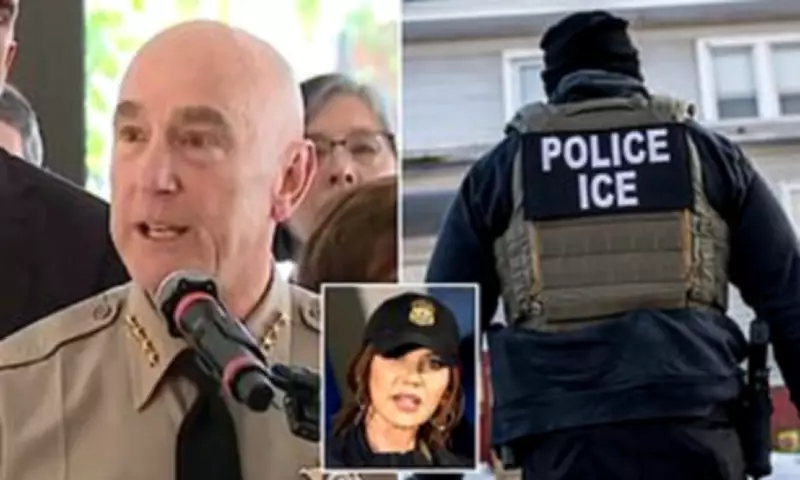
Santa Clara County Sheriff Bob Jonsen has ignited controversy ahead of next week's Super Bowl by publicly declaring that his department will not assist Customs and Immigration Enforcement (ICE) with any crackdown operations. The announcement comes as the Trump administration prepares to deploy ICE agents to the Bay Area before the Seattle Seahawks face the New England Patriots on February 8.
Federal Plans Meet Local Resistance
Secretary of Homeland Security Kristi Noem previously vowed that federal agents would be "all over that place" during Super Bowl events. A Department of Homeland Security official this week attempted to reassure the public, stating: "Those who are here legally and are not breaking other laws have nothing to fear."
However, Sheriff Jonsen has drawn a firm line, revealing that Santa Clara law enforcement will not alter their "policies or protocols" to accommodate ICE operations. "We will not be working or supporting ICE Immigration Enforcement," he told a news conference on Thursday.

Heightened Tensions Across America
The Super Bowl's arrival at Levi's Stadium in Santa Clara occurs amid heightened national tensions following two fatal shootings involving ICE officers. Alex Pretti was killed in Minneapolis just two weeks after 37-year-old Renee Good was fatally shot in her car by an ICE officer.
These deaths have sparked widespread protests, with some Trump administration officials accusing local authorities of insufficient support for federal law enforcement. Sheriff Jonsen's announcement represents a significant escalation in this ongoing conflict between local and federal authorities.
Transparency and Community Trust
Jonsen urged federal partners to maintain transparency about their plans: "I urge our federal partners, if there's something that you're planning to do in our community, please, please be transparent and reach out to your local officials so we can work as best we can."
The sheriff attempted to reassure Bay Area residents and Super Bowl visitors about local law enforcement presence: "If you see us out there, we're there to help you and we will be there. Don't hesitate to contact someone wearing a uniform as these events unfold."
Identifying Official Personnel
Jonsen provided guidance for distinguishing between local officers and federal agents: "If they're not masked, if they're wearing tan and green or blue or black, trust me, they're there for your protection."
He warned the public to be cautious of anyone concealing their identity: "If they're masked and they're trying to hide their identity, then somebody hasn't communicated with us. Because we've made it very clear to our officers, our workforce is to be open and transparent."
Conflicting Reports and Statements
Reports on Thursday suggested there are no plans for ICE to conduct operations at Levi's Stadium or NFL-sponsored events before Super Bowl Sunday. However, DHS told media outlets that their plans to be present around the Super Bowl remain unchanged despite recent unrest.
DHS Assistant Secretary Tricia McLaughlin stated this week: "DHS is committed to working with our local and federal partners to ensure the Super Bowl is safe for everyone involved." She insisted that security operations would be "conducted in-line with the US constitution."
Community Concerns and Political Reactions
Local officials have expressed concerns that ICE presence could "increase the level of tension and fear in our area." Peter Ortiz of the San Jose City Council told local media: "We're already seeing that they are scared to go out to eat, scared to go to the local corner store, scared to send their kids to school."
Last year, Trump ally Corey Lewandowski warned: "There is nowhere that you can provide safe haven to people who are in this country illegally, not the Super Bowl, and nowhere else. We will find you, we will apprehend you, we will put you in a detention facility and we will deport you."
Broader Context and Cultural Implications
The controversy extends beyond law enforcement to cultural elements of the Super Bowl. President Trump has criticized the selection of Puerto Rican artist Bad Bunny for the halftime show, while the artist previously cited ICE agents as a reason for excluding mainland US dates from his tour.

Secretary Noem even suggested people should avoid the Super Bowl "unless they are law-abiding Americans who love this country," adding: "We'll be all over that place... we're gonna enforce the law."
As Super Bowl LX approaches, the conflict between federal immigration enforcement priorities and local law enforcement policies creates an unprecedented security and political challenge for one of America's most watched sporting events.