In a significant tactical shift, President Donald Trump has moved to recalibrate his administration's aggressive immigration enforcement strategy following the fatal shooting of Minneapolis nurse Alex Pretti by Border Patrol agents. The incident, which marks the second killing of an American in Minnesota by federal law enforcement this year, has triggered widespread public anger and forced a rare course correction from a White House typically resistant to such pressure.
A Strategic Reversal Amid Mounting Pressure
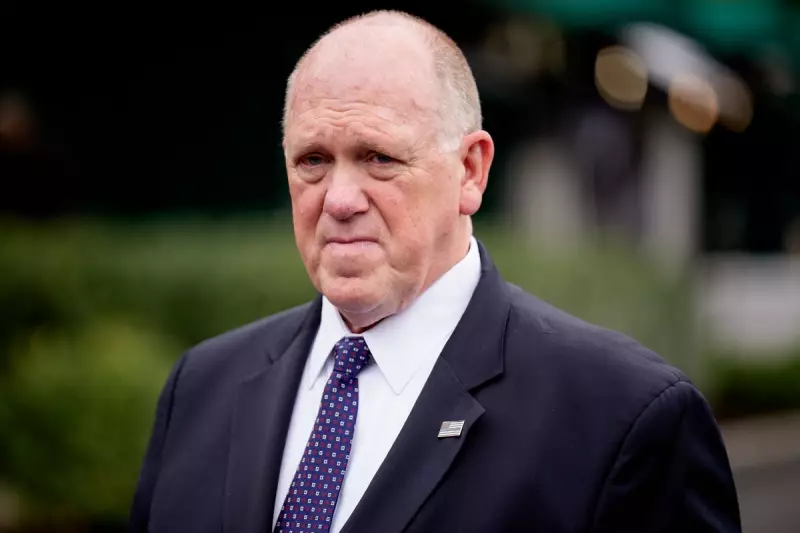
Just over a year into his second term, President Trump appears to have encountered a level of public outrage that cannot be dismissed through his usual political playbook of rallying his base with inflammatory rhetoric. Days after Border Patrol agents fired multiple rounds into 37-year-old Alex Pretti, Trump announced on Truth Social that he was sending his "Border Czar," Tom Homan, to Minneapolis to oversee immigration enforcement operations.
The move represents a stunning reversal for an administration that, for the past month, has allowed roving patrols of ICE and Border Patrol officers to operate with apparent impunity in the Twin Cities. These operations have involved controversial tactics including snatching people from vehicles, using children as bait to arrest parents, and deploying flash-bangs and tear gas against protesters.
The Homan Appointment: Damage Control in Disguise
Trump described Homan as "tough but fair" and stated the former Immigration and Customs Enforcement director would report directly to him. Three hours later, the president posted another message detailing a "very good call" with Governor Tim Walz, during which he promised the governor that Homan would establish contact and requested Minnesota law enforcement provide "any and all criminals that they have in their possession."
This represents a notable departure from the administration's previous approach, which had been orchestrated by Trump's deputy chief of staff Stephen Miller and Homeland Security Secretary Kristi Noem. Their strategy had sidelined Homan in favor of elevating Greg Bovino, a mid-level Border Patrol commander known for harsh tactics and alleged disdain for protesters and the press.
Internal Power Struggles and Public Backlash
The brutal enforcement tactics displayed in Minnesota were the product of an internal power struggle within the administration. Miller, Noem, and her political adviser Corey Lewandowski had successfully marginalized Homan's more targeted approach to immigration enforcement, which traditionally focused on arresting and deporting criminals through cooperation with state and local authorities.
Their apparent success in navigating White House and Department of Homeland Security tensions led them to believe Trump would tolerate extreme measures against illegal immigrants and liberal protesters. However, the videotaped shooting of Alex Pretti and subsequent attempts to smear him by falsely accusing him of attacking Border Patrol officers have proven to be a political tipping point.
White House Messaging Under Scrutiny
White House Press Secretary Karoline Leavitt attempted to justify the administration's approach during her Monday briefing, claiming Trump was "fulfilling the will of the people" who voted for him in 2024 by "arresting and removing ... threats from our country." She cited several oft-repeated cases of Americans killed by individuals in the country illegally.
Yet this narrative conflicts with emerging reports suggesting approximately one-third of people in ICE custody face no criminal charges whatsoever. Leavitt also claimed Homan's dispatch was partly driven by Noem's broader responsibilities, including oversight of the Federal Emergency Management Agency during recent winter storms.
Political Calculations and Base Management
The strategic shift appears driven by Trump's sensitivity to polling and growing political pressure. With increasing numbers of Congressional Republicans calling for investigations into Pretti's killing, the president faces the delicate task of saving face without appearing to capitulate to Democratic protesters or Governor Walz, who served as Kamala Harris's running mate in the 2024 election.
By reinstating Homan—a career Border Patrol agent who understands how to conduct targeted operations without antagonizing the public—Trump achieves several political objectives simultaneously. He creates an off-ramp from escalating public anger while maintaining credibility with his base, since Homan remains an immigration hardliner who helped architect Project 2025's call for mass deportations and ending birthright citizenship.
A Tactical Retreat, Not a Strategic Surrender
This represents classic political goalpost-moving: shifting from allowing wholesale roundups by Border Patrol to emphasizing targeted enforcement at jails and prisons. The administration can thus claim it is maintaining tough immigration enforcement while dialing back the most visibly brutal tactics that have sparked national outrage.
The episode reveals both the limits of public tolerance for aggressive immigration enforcement and the Trump administration's willingness to adjust tactics when political costs become too high. While the underlying commitment to strict immigration control remains unchanged, the methods of implementation have undergone significant recalibration in response to public pressure and political reality.