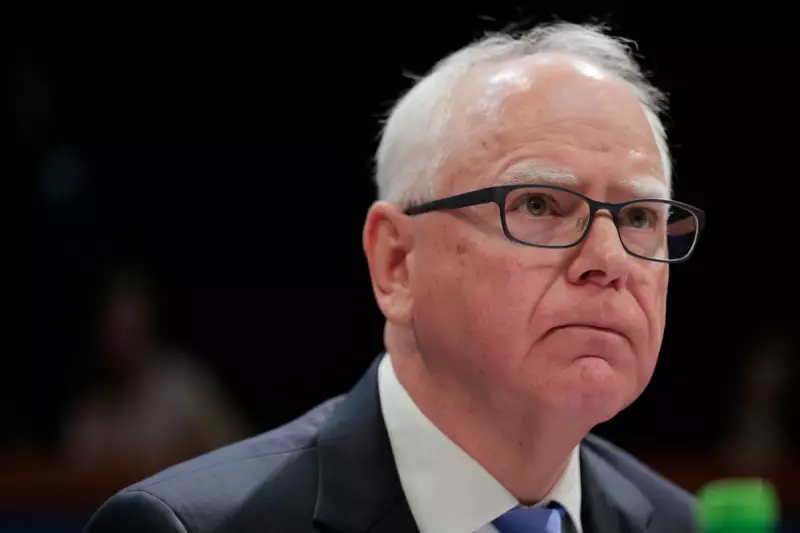
President Donald Trump has publicly committed to working closely with Minnesota Governor Tim Walz in the aftermath of a tragic incident in Minneapolis that resulted in the death of nurse Alex Pretti, who was fatally shot by a Border Patrol agent. The President characterised his recent telephone conversation with Governor Walz as "very good," revealing that they discovered a "similar wavelength" in their discussions concerning the sensitive situation.
Federal Intervention and Legal Challenges
In a significant move, President Trump has ordered the deployment of border czar Tom Homan to personally oversee Immigration and Customs Enforcement (ICE) operations within the state of Minnesota. This decision comes amidst escalating tensions and a complex legal battle currently unfolding in the federal courts.
Unprecedented Federal Presence
A federal judge is presently presiding over a lawsuit that directly challenges the Department of Homeland Security's controversial decision to deploy a substantial number of federal agents to Minnesota. State officials have formally petitioned the court to issue an immediate halt to what they describe as an "unprecedented" surge of federal personnel into their jurisdiction.
The Justice Department has responded robustly to this legal challenge, dismissing the state's request as "legally frivolous" in their official court filings. This sharp disagreement highlights the deepening constitutional and jurisdictional rift between state and federal authorities over immigration enforcement policies and operational protocols.
Political Implications and Operational Oversight
The deployment of a senior federal official like Tom Homan, who holds the title of border czar, underscores the White House's determination to maintain a strong federal presence in Minnesota's immigration enforcement landscape. This development occurs against a backdrop of heightened national debate regarding the appropriate balance between state sovereignty and federal immigration authority.
President Trump's emphasis on finding common ground with Governor Walz, a Democratic state leader, suggests a potential shift towards more collaborative federal-state relations on this divisive issue, though significant policy differences undoubtedly remain. The tragic shooting incident has evidently created a catalyst for high-level discussions between the administration and state leadership.
As the legal proceedings continue and operational changes are implemented under Homan's oversight, all eyes remain on Minnesota to see how this delicate interplay between cooperative rhetoric and contentious policy will ultimately unfold in practice. The outcome may well set important precedents for federal-state interactions on immigration matters across the United States.