Myanmar Student's American Dream Derailed by Trump Travel Ban
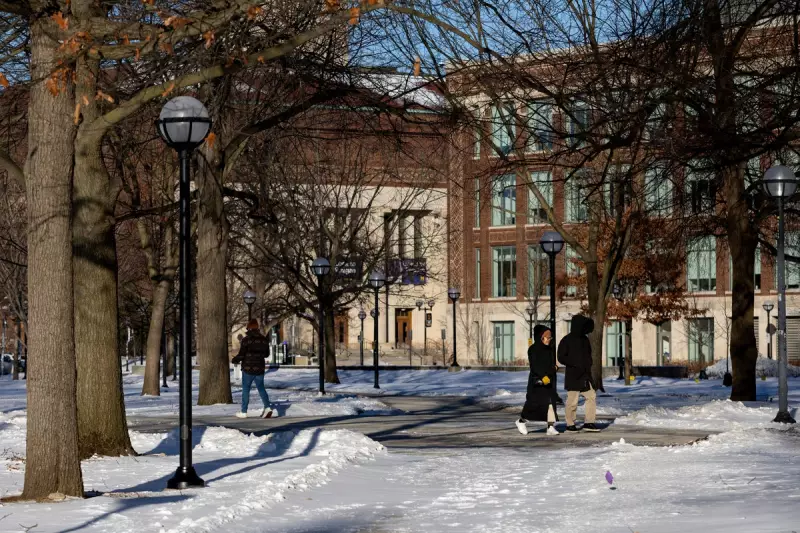
Patrick Thaw experienced a bittersweet moment as he watched his University of Michigan friends reunite for the start of a new semester in Ann Arbor. While they gathered on campus, Thaw was FaceTiming from Singapore, stranded half a world away from the American education he had worked so hard to achieve.
Dreams Cut Short by Presidential Order
Last June, while interviewing to renew his US student visa, Thaw's world was suddenly turned upside down by President Donald Trump's travel ban. The restrictions targeted people from 12 countries, including Thaw's native Myanmar, effectively ending his studies at the University of Michigan where he was a neuroscience major.
"If I knew it was going to go down this badly, I wouldn't have left the United States," he said of his decision to leave Michigan for a summer internship in Singapore.
The ban represents one of several ways the Trump administration made life more difficult for international students during his first year back in the White House. Additional measures included a pause in visa appointments and extra layers of vetting that contributed to a noticeable dip in foreign enrollment for first-time students.
Broader Impact on International Education
While new students had to look elsewhere for their education, the hurdles proved particularly complicated for those like Thaw who were already well into their American college careers. Universities across the United States have been forced to develop increasingly flexible solutions to support affected students.
Sarah Spreitzer, assistant vice president of government relations at the American Council on Education, explained that institutions have been bringing back pandemic-era remote learning arrangements or offering admission to international campuses they partner with as temporary measures.
In Thaw's specific case, a Michigan administrator highlighted studying abroad as a potential option. While the travel ban remained in place, a program in Australia initially seemed viable. Meanwhile, Thaw found himself with little to do in Singapore but wait, filling his days with email checking, walks, and meals out after his internship concluded.
"Mentally, I'm back in Ann Arbor," the 21-year-old said. "But physically, I'm trapped in Singapore."
A Life Transformed by American Education
When Thaw first arrived in Ann Arbor in 2023, he immersed himself completely in campus life. He immediately connected with his dorm roommate's group of friends and joined both a biology fraternity and an Alzheimer's research laboratory. His intellectual curiosity led him to explore diverse courses, including a Jewish studies class where he impressed his professor with his engagement and willingness to take academic risks.
Professor Cara Rock-Singer noted that Thaw told her his interest stemmed from reading the works of Philip Roth. "I really work to make it a place where everyone feels not only comfortable, but invested in contributing," Rock-Singer said. "But Patrick did not need nudging. He was always there to think and take risks."
Thaw's journey to American higher education began as a child in Myanmar, where his desire to attend a US university became increasingly urgent as civil war broke out and educational opportunities dwindled. He described periods when tensions were so high that he and his mother took shifts watching to ensure the bamboo in their front yard didn't erupt in flames from Molotov cocktails.
"The moment I landed in the United States, like, set foot, I was like, this is it," Thaw recalled of his initial arrival. "This is where I begin my new life."
Statistical Context and Institutional Response
During the 2024-25 academic year, the United States hosted nearly 1.2 million international students. As of summer 2024, more than 1,400 people from Myanmar held American student visas, making it one of the top-represented countries among those affected by the travel ban.
A University of Michigan official stated that the institution recognizes the challenges facing some international students and remains committed to ensuring they have all available support and options. The university declined to comment specifically on Thaw's situation, citing privacy considerations.
Moving Forward Despite Uncertainty
While the study abroad program in Australia initially sparked hope that Thaw could remain enrolled at Michigan, uncertainty around the travel ban's duration and persistent visa obstacles ultimately led him to decide against this option. He recognized that waiting indefinitely for the ban to lift wasn't a viable strategy for completing his education.
"I cannot just wait for the travel ban to just end and get lifted and go back, because that's going to be an indefinite amount of time," he explained.
Thaw has since begun applying to colleges outside the United States, receiving acceptance letters from institutions in both Australia and Canada. He holds particular hope for attending the University of Toronto, which would place him within a four-hour drive of his friends in Ann Arbor.
Allison Voto, one of Thaw's close friends from Michigan, emphasized the value of their friendship despite the geographical separation. "If he comes anywhere near me, basically on the continent of North America, I'm going to go see him," she said. "I mean, he's Patrick, you know? That's absolutely worth it."
The travel ban has not only disrupted Thaw's educational trajectory but has also separated him from the community he built during his time in Michigan, where his background and experiences fostered meaningful conversations and broader understanding among his peers.