Trump Administration Slashes Border Wall Plan by 400 Miles Following Texas Opposition
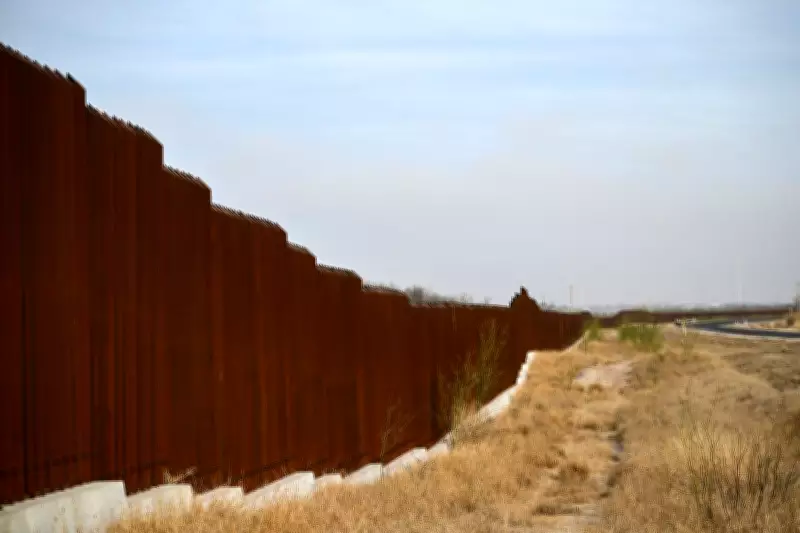
President Donald Trump's signature southern border wall project has been dramatically reduced in West Texas after a coalition of local residents and officials pushed back against its construction, arguing it is both unnecessary and harmful to the region's landscape.
The proposed barrier, a major feature of Trump's first term intended to deter illegal immigration from Mexico and Central America, has been cut from approximately 575 miles to just 175 miles in the Big Bend sector following sustained local resistance.
Local Coalition Forms Against Physical Barrier
The No Big Bend Wall group has led opposition to the physical steel wall, insisting that illegal crossings are not a significant problem in their area due to the challenging terrain encompassing Big Bend National Park and Big Bend Ranch State Park.

"I wish the president would be more informed as to what's going on," said Presidio County Sheriff Danny Dominguez. "It's a place where, if you cross the border, you got to at least walk three or four days... you don't just walk across the river and expect to get picked up."
Official statistics reveal that while there have been 34,480 encounters at the southern border overall, Big Bend accounted for just 892 of these incidents, supporting local claims that the area does not require extensive physical barriers.
Environmental and Archaeological Concerns
The opposition coalition has cited numerous environmental and cultural preservation issues among their objections, including:
- Degradation of vulnerable watersheds and archaeological sites
- Disruption of animal migration routes
- Negative impacts on the region's celebrated dark night skies
- Potential decreases in property values
David Keller, an archaeologist from nearby Redford, explained the administration's response: "They're responding to friction. Regionally, we're a united voice. Republican, Democrat, Libertarian: doesn't matter. We all don't want it."
Sheriffs Advocate for Alternative Solutions
Five border county sheriffs have written an open letter to federal officials requesting greater local consultation and advocating for "technology-driven, and terrain-informed" solutions to address illegal crossings rather than extensive physical barriers.
Hilton Beckham, a spokesman for Customs and Border Protection, stated: "CBP continues to coordinate with the National Park Service, Texas Parks and Wildlife Department, and other federal and state agencies, throughout the planning of border barrier and technology deployments, in order to achieve Border Patrol's operational priorities."
Beckham added that areas adjacent to the Big Bend National Park and State Park remain in planning stages while CBP focuses on higher priority locations.
Broken Promises and Ongoing Concerns
Local residents feel promises have been broken, as Texas Governor Greg Abbott was reportedly assured by Border Patrol Chief Mike Banks that no physical barrier would be erected in Big Bend National Park or the State Park.
Deirdre Hisler, a Presidio County commissioner, reported that a recent meeting with a local sector chief had been productive, resulting in the cancellation of an additional 5.6 miles of physical barrier.
However, concerns persist as local landowners continue receiving letters from the Army Corps of Engineers about leasing agreements, and former Homeland Security Secretary Kristi Noem signed waivers for environmental studies typically required before such projects commence.
"Best case scenario is they just go away and they never come back," said local river tour guide Charlie Angell, expressing worries about future wall segments impacting riverfront property and animal habitats.
The scaled-back plan represents a significant victory for local activists but leaves questions about the future of border security measures in the region as the administration balances enforcement priorities with community concerns.