Eswatini Supreme Court Upholds Legal Rights for Deported Men
The Supreme Court in the African kingdom of Eswatini has delivered a landmark ruling, affirming that four men deported by the United States under a third-country program are entitled to meet with a lawyer. This decision comes after the men were denied in-person legal counsel for nine months while detained at a maximum-security prison.
Legal Battle Over Basic Rights
Previously, a lower court had permitted local lawyer Sibusiso Nhlabatsi, acting on behalf of U.S.-based attorneys, to meet with the deportees. However, the Eswatini government swiftly appealed this ruling. In its judgment on Thursday, the Supreme Court rejected arguments from Eswatini authorities that the deportees did not desire to meet with Nhlabatsi and that they lacked a right to legal counsel since they had not been arrested or charged with any crime in Eswatini.
Alma David of the Novo Legal Group, representing two of the men, stated on Friday that the prolonged nine-month litigation to secure this basic right "speaks volumes about how hard the government of Eswatini is fighting to deny these men the most basic of rights." The four individuals, originating from Cuba, Yemen, Laos, and Vietnam, have been permitted phone conversations with their U.S.-based lawyers but faced significant barriers to in-person meetings.

Background on the Deportation Program
Eswatini is one of at least eight African nations that have entered into agreements with the U.S. government to accept deported migrants from other countries. The Trump administration utilized this program as part of its immigration crackdown, aiming to swiftly remove migrants in the U.S. illegally who could not easily be repatriated to their home nations. Critics argue that the program facilitates violations of legal rights in countries with questionable human rights records, where deportees often have no connections.
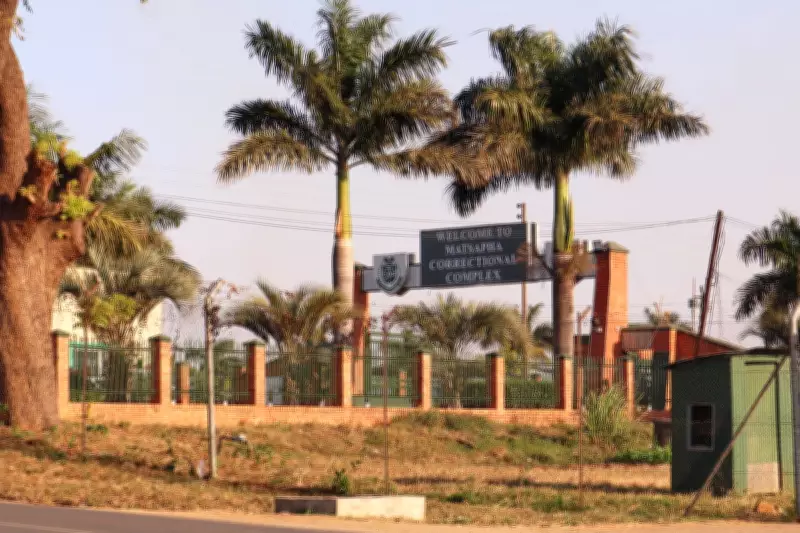
U.S. authorities maintain that due process was followed in the deportations, but responsibility for the treatment of deportees has largely been transferred to the receiving countries. The four men sent to Eswatini were convicted of serious crimes in the U.S. and had deportation orders, according to the U.S. government. Their lawyers contend that they completed their U.S. prison sentences and that their detention at the Matsapha Correctional Complex in Eswatini is unlawful, as they have not been charged with any crime in the African nation.
Financial and Political Dimensions
Documents released by the U.S. State Department reveal that the U.S. agreed to pay Eswatini’s government $5.1 million to accept deportees. Since July, Eswatini has received at least 19 deportees from the U.S. in separate batches, with the capacity to hold them in prison for up to a year. Two of these individuals have since been repatriated to their home countries.
The other African nations with known agreements include South Sudan, Rwanda, Uganda, Ghana, Cameroon, Equatorial Guinea, and Congo. Details of these deals are often shrouded in secrecy, but published information indicates that the U.S. would pay Rwanda $7.5 million. Notably, South Sudan’s government requested the U.S. to drop sanctions against a senior official accused of corruption and assist in prosecuting an opposition leader in exchange for accepting deportees, though there is no evidence the U.S. considered these requests.
Senate Democrats have raised concerns over a $7.5 million payment to Equatorial Guinea, where the president and his family face allegations of systemic corruption, embezzlement, and repression. A February report by Democratic staff of the Senate Foreign Relations Committee disclosed that the Trump administration spent at least $40 million to deport approximately 300 migrants to third countries, including in Africa and Central America. Internal documents reviewed by The Associated Press indicated that 47 deportation deals had been agreed upon or were under negotiation at the time.
A spokesperson for the Eswatini government declined to comment immediately on the Supreme Court ruling. Eswatini, ruled by a king as Africa’s last absolute monarchy, has faced accusations of clamping down on pro-democracy movements, sometimes violently, adding context to the legal and human rights issues at play.