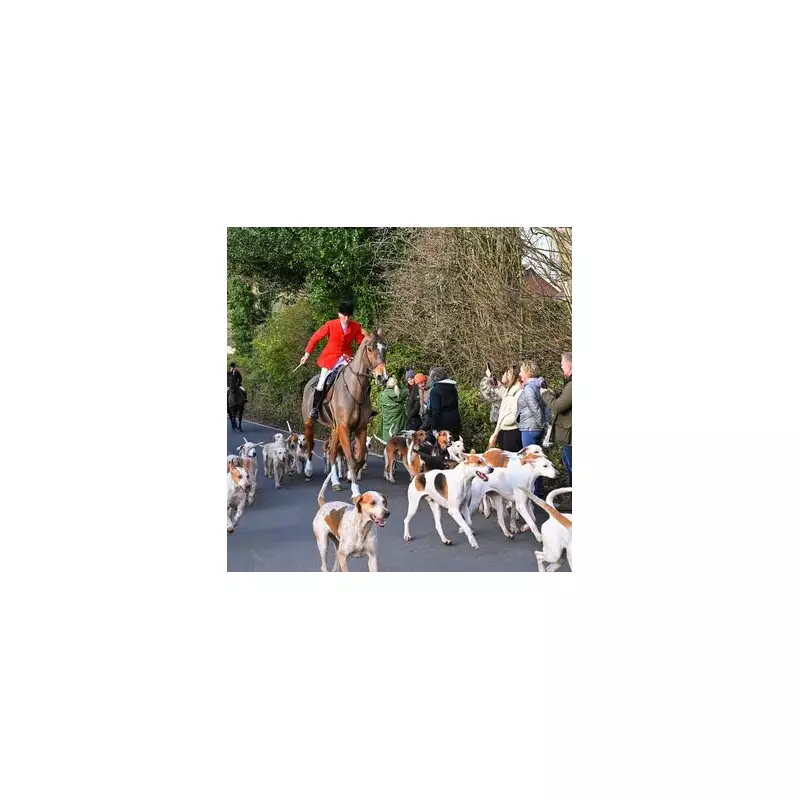
The final chapter for fox hunting in the UK may have been written on Boxing Day 2025, as the government unveiled plans to close a legal loophole that has allowed the practice to persist for decades. New Labour proposals, strengthening the landmark Hunting Act introduced by Tony Blair's government over twenty years ago, could mean the trail hunts that took place across the country were the nation's last.
The 'Smokescreen' of Trail Hunting
Published on Monday, the government's new animal welfare strategy directly targets the practice of 'trail hunting'. Critics, including Labour in its manifesto, have long labelled this a 'smokescreen' or loophole. It involves dogs following a pre-laid artificial scent, but opponents argue it is routinely used as cover for the illegal hunting and killing of live foxes with packs of dogs—an activity banned for 30 years.
The proposed changes would effectively seal this loophole, bringing a potential end to a contentious national tradition. This legislative move coincides with a remarkable grassroots phenomenon: the policing of illegal hunts by the public.

Unlikely Alliance: The Professionals Policing the Hunts
Research from academics at the University of Sheffield and University of Southampton has uncovered a shifting landscape in the fight against illegal hunting. A study by Amy Stevens, Keith Spiller, and Xavier L'Hoiry reveals that hunt sabotage groups are no longer the preserve of stereotypical activists.
Instead, they are increasingly composed of middle-class professionals holding down demanding jobs. The researchers spoke to saboteurs who are doctors, teachers, nurses, social workers, electricians, and even farmers. These individuals dedicate significant hours to monitoring hunts, gathering evidence, and passing it to the police.
One typical saboteur, a woman referred to anonymously as 'Lizzie', told the academics the issue has moved beyond a class clash. "For a long time, hunt sabs were just seen as hippies that don’t work; just these nutty animal rights extremists," she said. "[But] we’re all working, we’re all in responsible jobs … I think the police are coming around to thinking this isn’t a class issue. [We] are just looking for the law to be upheld."
Tactics and Evidence in Citizen-Led Policing
These organised groups employ sophisticated, non-confrontational methods to disrupt illegal activities and protect wildlife. Their tactics include:
- Laying strong-smelling substances like citronella or aniseed to mask trails and confuse hounds.
- Creating false scent trails to lead dogs away from potential prey.
- Using physical obstruction in some cases, while avoiding harm to animals or direct conflict.
- Meticulously recording hunt activities with video cameras and, increasingly, drone technology to provide clear evidence to authorities.
The academics noted the strong camaraderie within these groups, with members describing how they "drag each other out of the mud … and keep each other’s back". Their work represents a sustained, citizen-led effort to ensure the enforcement of a law that parliament passed a generation ago.
As the government moves to finally close the legal gap, the combination of legislative action and vigilant public oversight signals a decisive turning point. The hunts that took place on Boxing Day may well be remembered not as a perennial tradition, but as the last gasp of a practice that the British public and its lawmakers have now unequivocally rejected.