
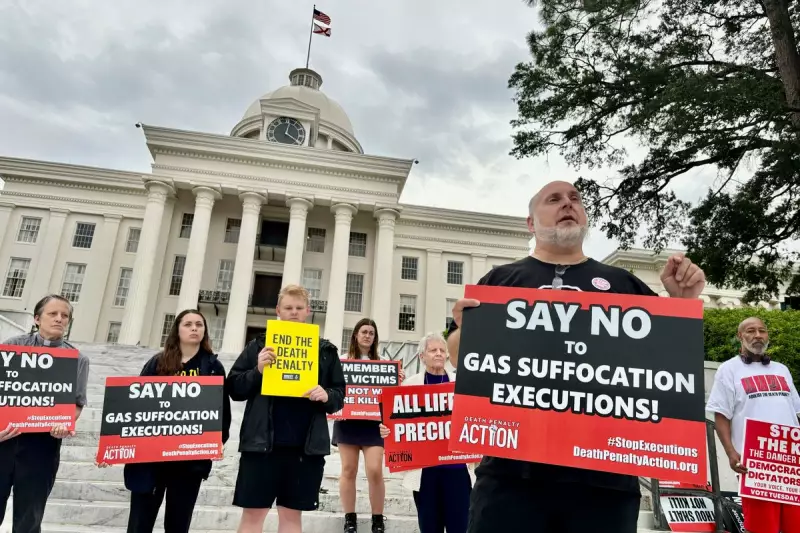
The growing use of nitrogen gas for capital punishment in the United States is raising significant ethical and scientific concerns, with experts challenging the narrative that it offers a humane and painless death.
The Science of Suffocation
Nitrogen asphyxiation functions by displacing breathable air with pure nitrogen, effectively starving the brain and body of essential oxygen. While proponents describe it as a peaceful fading into unconsciousness, the physiological reality is starkly different.
As oxygen levels plummet, the body's survival mechanisms trigger an intense panic response. This includes gasping, choking, and thrashing as the individual experiences severe air hunger. These are not indicators of a gentle passing but of a body in a desperate, involuntary struggle for life.
This method has been adopted by states including Alabama, Louisiana, Oklahoma, Arkansas, and Mississippi, with several executions already carried out. States like Ohio and Nebraska are also considering similar legislation, driven partly by shortages of lethal-injection drugs.
Eyewitness Accounts and Physiological Reality
Accounts from recent executions contradict the calm imagery presented by advocates. Witnesses have reported visible suffering lasting several minutes, marked by violent convulsions, heaving, and desperate attempts to breathe.
The claim that low carbon dioxide levels prevent panic is a fundamental misunderstanding of human physiology. The body is exquisitely sensitive to oxygen deprivation. Specialised sensors in our neck, known as carotid bodies, detect falling oxygen levels and trigger powerful signals to breathe harder, creating an overwhelming sensation of air hunger.
This response is one of the most distressing sensations a human can experience. Unlike the controlled unconsciousness induced by medical anaesthesia, oxygen starvation brings feelings of suffocation, panic, and terror.
Parallels in Aviation and Assisted Suicide
The traumatic experience is well-documented in aviation medicine. Pilots exposed to sudden oxygen loss at high altitudes describe severe breathlessness and confusion within seconds. This brief window, known as the 'time of useful consciousness,' is anything but peaceful.
In an execution context, the situation is worsened as prisoners are restrained. Straps can restrict chest expansion, amplifying the sense of suffocation.
A similar claim of a gentle death has entered debates on assisted suicide with devices like the 'Sarco pod' in Switzerland. Its inventor, Dr Philip Nitschke, suggests users 'drift off peacefully.' However, there is no substantial evidence to support this assertion, and the first reported use in 2024 prompted a criminal investigation.
The notion of a calm death may stem from confusion with nitrogen narcosis, an intoxicating effect felt by deep-sea divers under high pressure. At sea level, nitrogen simply displaces oxygen, causing hypoxia without any sedative properties.
While breathing pure nitrogen can cause loss of consciousness within approximately 20 seconds, the preceding moments involve agonising seconds of confusion and suffocation. The ethical implications are profound, leading three major US suppliers of medical-grade nitrogen to ban sales for executions.
Policymakers presenting the method as clean and clinical are being scientifically and morally misleading. The science is clear: nitrogen itself may be silent, but the death it brings is not kind.