

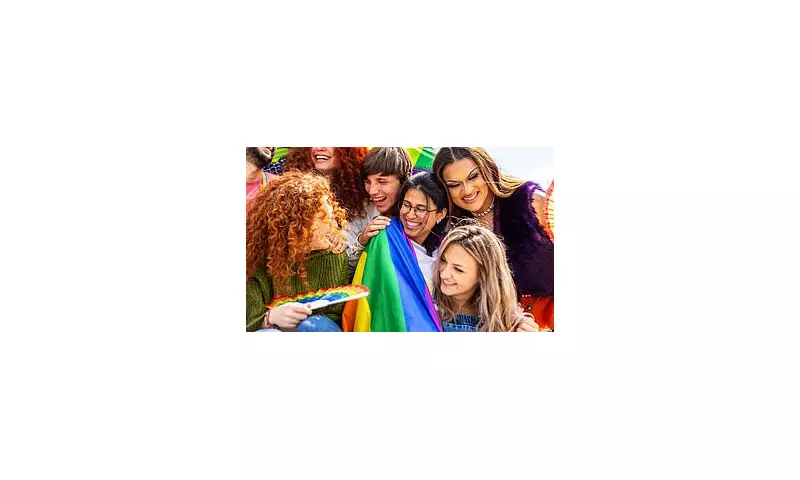
A landmark global study has revealed a significant generational shift in how people describe their sexuality, with the traditional term 'lesbian' declining in use among younger generations. The research, analysing data from nearly one million users across 122 countries, shows Gen Z is increasingly embracing newer, broader labels such as 'queer', 'pansexual', and 'asexual'.
Global Data Reveals a Spectrum of Identity
Researchers from the University of Manchester conducted the analysis using data from 913,253 users of the Zoe dating app, which is aimed at queer women and nonbinary people. The data was collected between January 2023 and May 2025, providing a vast, contemporary snapshot of self-reported sexual identities worldwide.
Overall, the study found that 'lesbian' (48.3%) and 'bisexual' (39.8%) remain the most common identities among all users. However, a sharp divide emerges when examining age. Younger users are 'far more likely' to describe themselves with newer or broader terms, while older cohorts more frequently identify as lesbian or gay.

A Generational and Geographic Divide
The findings highlight a clear evolution in language. 'Younger generations are showing us that sexuality is not a fixed category—it's a spectrum,' said lead author Dr Francesco Rampazzo. The research suggests traditional labels are 'evolving rapidly' as more young people feel comfortable with diverse and fluid descriptions of their identity.
Geographic patterns also emerged. Countries in the Global North, such as the US, Canada, and Switzerland, showed greater diversity in sexual identities. In contrast, the Global South saw a stronger dominance of lesbian or bisexual labels, though exceptions like South Africa and Israel indicated broader representation.
Notably, the study found that identities like asexuality appear in countries outside the Western-centric data norm, including Tajikistan, Yemen, and Tanzania. This underscores the need to move beyond an overreliance on Western data when studying emerging global identities.
What This Means for Understanding LGBTQIA+ Communities
The research, published in Demographic Research, fills a crucial gap. As the researchers noted, global data on sexual orientation is scarce, and samples for sexual minorities are often small. This large-scale analysis provides unprecedented insight.
The team concluded that generational and cultural shifts are central to understanding LGBTQIA+ identification. They advocate for expanding research frameworks to include emergent identities like asexuality and pansexuality to accurately capture this ongoing evolution. While the reasons behind these demographic changes remain unclear, the study paves the way for further essential research into the dynamic landscape of sexual identity.






