Your dreams might seem scattered and confusing, but they are actually preparing you for the challenges of day-to-day life, according to a new study. Researchers have found that rather than just processing emotions or memories, your nighttime visions might behave more like a simulation.
Dreams Reflect Everyday Goals
The study discovered that dreams tend to reflect everyday goals that shape human life, including staying safe, building relationships, and caring for family. By experiencing these scenarios in our sleep, we are training ourselves to deal with them in the real world, the experts said.
Author Frederick Thomas, an assistant professor of psychology at Coker University, explained: 'The findings suggest that dreams may act like a kind of mental 'practice space,' where the mind works through real-life social challenges—helping us prepare for situations involving relationships, reputation, survival, and caregiving. In this way, dreaming may play a broader role in helping us navigate the social world than previously thought.'

Multimotive Simulation Space
The team suggests dreams are a 'multimotive simulation space' that allow the brain to use sleep to practice different social roles at once. By doing this, we might be better prepared to handle complex social interactions during our waking hours.
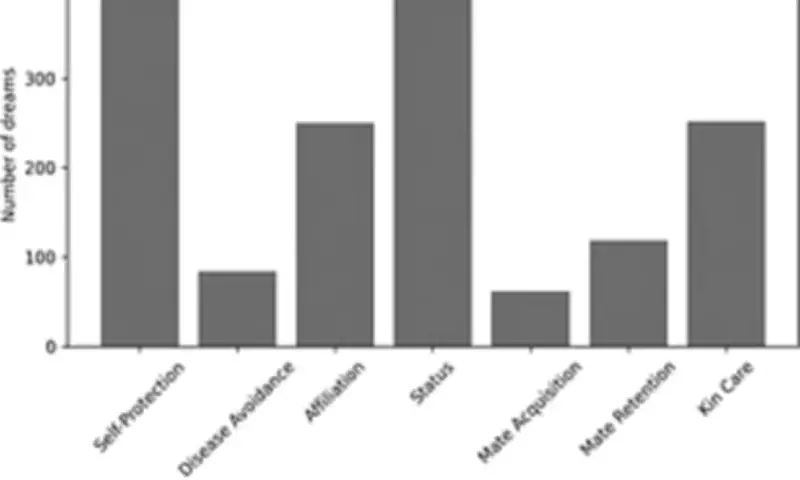
For the study, the team asked nearly 400 participants to describe their most recent dream. Two different experts then read every dream report and rated the scale of each element. Specifically, they looked for:
- Self-protection: escaping danger or physical aggression.
- Status: competition, success, or fear of failing in front of others.
- Affiliation: the need for friendship and belonging.
- Kin care: nurturing or protecting family members, especially children.
- Disease avoidance: feelings of disgust or worries about getting ill.
- Mate acquisition: looking for a new partner.
- Mate retention: jealousy, betrayal, or trying to maintain a current relationship.
The dream report analysis found that self-protection and status appeared most frequently, with participants regularly dreaming they were failing a test or being chased.
Clustering of Motives
'We also found that certain types of motives tended to cluster together,' Dr Thomas explained. 'For example, themes related to survival and caregiving often appeared alongside one another, while social and relationship-focused motives formed a separate grouping. This suggests that dreams may organize different kinds of social challenges in meaningful ways. Even though themes like illness appeared less often, they still showed up consistently.'
The study, published in the journal Dreaming, found dreams tended to reflect similar patterns, regardless of gender. The team explained that interest is growing in how the mind prepares for complex social environments, particularly in a world shaped by social pressures, uncertainty, and changing relationship dynamics.
'Dreams are not just strange or random experiences—they may serve an important function,' Dr Thomas told PsyPost. 'Our findings suggest that dreams connect our underlying desires and motivations to how we navigate the social world. I hope readers begin to see that dreams may be doing more than we typically assume.'
Scary Dreams Can Be Beneficial
A separate group of experts recently revealed that having a scary dream can actually be good for you. Researchers from the University of Kansas found that feeling fear during your nighttime visions could indicate you are better at handling your emotions. For the study, they analysed dream reports from more than 500 people, using artificial intelligence to sort emotions reported in the dreams, measuring levels of fear as well as joy.
'As long as sleep is not really disrupted, if it's not rising to the level of a nightmare, fear in our dreams might actually help us better deal with our emotions in the day,' said Garrett Baber, a doctoral student in clinical psychiatry at the University of Kansas.

How to Interpret Your Dreams
The meaning of dreams will vary according to your own personal associations and experiences. Sarah Bick, a clinical and cognitive hypnotherapist working with the subconscious mind at Inna Therapies, offers these steps to interpret your own unique dreams:
- Write down the dream in detail as soon as you wake.
- Make free associations to what each of the dream elements mean to you. Don't research it; ask yourself what comes to mind first when you think of, say, a rabbit.
- Connect the dream to what is happening in your own life. What resonates as being true for you?
- Interpret the dream, combining what you've written into a coherent message, until it gives you an 'aha' moment. Dreams rarely go over material that is resolved, rather that which is yet to be solved.
The most common dreams in the UK include falling (53%), being unable to run (42%), partner cheating (22%), someone dying (21%), teeth falling out (21%), snogging a celebrity (20%), exam you haven't revised for (19%), flying (18%), friends/family being mean (16%), being late (15%), finding money (14%), unable to find the toilet (12%), and naked in public (12%).