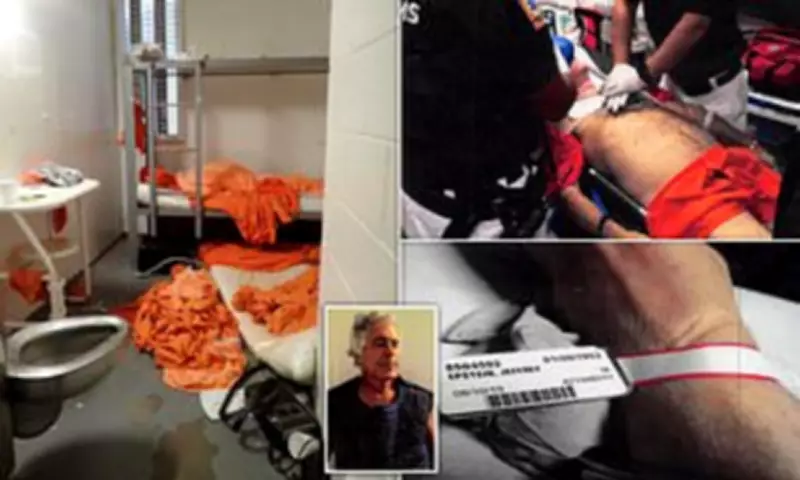
Epstein Files Reveal Mysterious 'Flash of Orange' in Jail Before Death
Amid the concrete grey of a bleak New York detention centre, a fleeting 'flash of orange' captured on surveillance video could be one of the most significant revelations from the three million documents recently released from the Jeffrey Epstein files. This blurry snippet of footage may shed new light on the intensely debated circumstances surrounding the paedophile financier's controversial death while awaiting trial on sex trafficking charges in August 2019.
Surveillance Anomaly Fuels Doubts
According to documents released by the US Department of Justice, investigators reviewing surveillance video from the night Epstein was found dead in Manhattan's Metropolitan Correctional Center observed a fuzzy, orange-coloured shape moving up a staircase toward the wing containing his cell. Inmates were issued with orange clothing and bedclothes, yet this sighting occurred at 10.39pm when prisoners should have been locked up for the night. Less than eight hours later, the corpse of 66-year-old Epstein would be discovered in his cell.
The mysterious 'flash of orange' represents just one of many details in the latest Epstein files release that challenge the official suicide narrative. The documents also reveal an official death announcement dated before Epstein died, discussions about potential plea deals with prosecutors, and speculation about money laundering for Russian criminals and blackmail operations for Kremlin intelligence services.

Timeline of Final Days
The newly released evidence provides unprecedented insight into Epstein's final weeks, days and hours. On July 6, 2019, FBI agents arrested him upon landing at New Jersey's Teterboro Airport. By July 23, he was placed on suicide watch after being found semi-conscious with an orange fabric noose around his neck, though he later told a prison psychologist he had 'no interest in killing myself' and that suicide 'would be crazy.'
Critical developments occurred in late July when federal agents met Epstein's lawyers to discuss 'the possibility of a resolution of the case, and the possibility of the defendant's co-operation.' Even the rumour of such discussions would have terrified associates who feared being exposed by Epstein's testimony.
The Fateful Night
On August 9, Epstein's cellmate was moved out after attending court, leaving him alone despite explicit orders that he must not be unaccompanied following his previous suicide attempt. Guards were supposed to conduct '30-minute checks' and 'unannounced rounds,' yet surveillance cameras with views of Epstein's cell were not functioning properly.
From 10pm onward, guards Tova Noel and Ghitto Bonhomme failed to conduct inmate counts and wellness checks as required. At 10.39pm, surveillance footage shows the mysterious 'flash of orange' on the stairs leading to Epstein's tier. An FBI memorandum notes that 'a flash of orange looks to be going up the L Tier stairs – could possibly be an inmate escorted up to that Tier.'
Independent video analysts consulted by CBS News concluded the movement was 'more consistent with an inmate – or someone wearing an orange prison uniform – than a corrections officer.'
Discovery and Aftermath
At 6.33am on August 10, guards discovered Epstein unresponsive on his cell floor. Guard Michael Thomas later claimed he 'ripped' Epstein down from a near-seated position where he was hanging from a makeshift noose. Epstein was pronounced dead at 7.36am after being transported to hospital.
When FBI agents arrived at 1.35pm, they found the cell in disarray with crucial evidence having been rifled through and moved. Former New York police detective Herman Weisberg noted that 'it appeared that the scene was, for lack of a better term, staged a bit.'
Forensic pathologist Dr Michael Baden, hired by Epstein's brother, renewed his claim that Epstein's neck injuries are more consistent with 'strangulation pressure' than suicide and called for the case to be re-examined. Investigators have failed to definitively identify the noose allegedly used in the incident.

Enduring Questions
On August 17, New York's chief medical examiner officially ruled the death a suicide, though she acknowledged the jail surveillance footage was too blurred to identify anyone. Successive polls show far more Americans believe Epstein was murdered than committed suicide, and the newly released evidence seems unlikely to change these perceptions.
The documents reveal systemic failures at the detention centre, including guards falsifying records, malfunctioning surveillance equipment, and procedural violations. US Attorney General William Barr later admitted to 'serious irregularities' and described the situation as 'a perfect storm of screw-ups.'
Almost seven years after his death, many close associates including his brother Mark and jailed associate Ghislaine Maxwell openly state they do not believe Epstein took his own life. As more details emerge about Epstein's web of powerful friends – whose intimate connections he repeatedly threatened to expose – the theory that someone might have chosen to silence him before trial gains increasing plausibility.
The 'flash of orange' remains a tantalizing piece of evidence in a case filled with contradictions and unanswered questions, ensuring that speculation about Epstein's true fate will continue despite official conclusions.