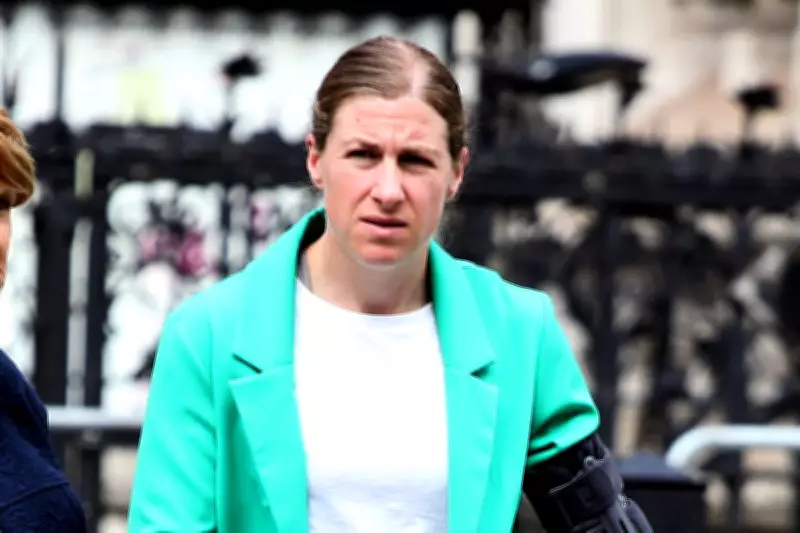
Invictus Games Gold Medallist Could Face Prison Over Dishonest Disability Claim
The Ministry of Defence has accused Debbie O'Connell of telling "lies" about the extent of her injury, leading to a potential prison sentence for contempt of court. The former soldier, who won gold medals at the Invictus Games, launched a £1.74m damages claim after a 2015 fall from a horse, but her case was dismissed due to "fundamental dishonesty."
Background of the Case
Debbie O'Connell served in the Royal Horse Artillery's ceremonial unit, the King's Troop, when she fell off her horse in 2015, breaking her collarbone in four places. She claimed the injury left her left arm almost useless, leading to chronic pain and disability. After leaving the army, she pursued a successful para-athletics career, winning gold medals in cycling at the 2018 Invictus Games and in sprinting at world-level competitions.
In September 2018, she initiated a £2.4m compensation claim against the Ministry of Defence, later reducing it to £1.74m. However, despite a judge acknowledging her injury, the case was thrown out in 2025 after Judge Christopher Kennedy KC found her evidence "must be dishonest" based on surveillance footage showing her using her arm normally for activities like leading a horse and chopping vegetables.

Contempt of Court Proceedings
On Friday, 13 February 2026, the case returned to the High Court as the Ministry of Defence applied to have Ms O'Connell committed to prison for contempt of court. MoD barrister Niazi Fetto KC argued that she had "relied upon her dishonest pursuit of a para-athletics career" in the T46 category, which is for athletes with limb impairments comparable to an above-elbow amputation.
Lawyers for Ms O'Connell, including barrister Ian Denham, contended that the contempt bid should be blocked, stating she had "suffered enough" after losing her case and being ordered to pay over £200,000 in legal costs. They also argued that some allegations lacked evidence and that the dishonesty finding was based on a civil standard of proof, not the higher criminal standard required for contempt.
Judge's Ruling and Public Interest
Mr Justice Coppel granted permission for the contempt case to proceed, emphasizing it is in the "public interest" to pursue such applications when claims are "prosecuted on a false basis." He noted strong findings of fundamental dishonesty against Ms O'Connell and authorized a five-day hearing to determine if she is in contempt and should be jailed, with a maximum sentence of two years imprisonment.
During the trial, Ms O'Connell, from Lincoln, denied dishonesty, insisting her claim was genuine and that she fits the T46 classification. She explained that as a soldier, she was taught to "push through pain," and her athletics career was an effort to make the most of her life despite her injury.
Surveillance Evidence and Judicial Findings
Judge Kennedy's judgment highlighted a "stark" discrepancy between Ms O'Connell's reported symptoms and the surveillance footage from 2022, which showed her with normal or near-normal function in her left arm. He concluded that her claim was "fundamentally dishonest" and that she had persisted in her dishonesty over a long period, engaging others and using sophisticated methods to conceal the truth.
The King's Troop, where Ms O'Connell served, is a ceremonial unit known for driving horse-drawn cannons and firing royal salutes at state occasions. Her fall was attributed to ill-fitting boots and a horse prone to bucking, but the MoD disputed this, accusing her of exaggerating her injuries.
A future hearing will decide the outcome of the contempt proceedings, potentially resulting in a prison sentence for the former para-athlete.