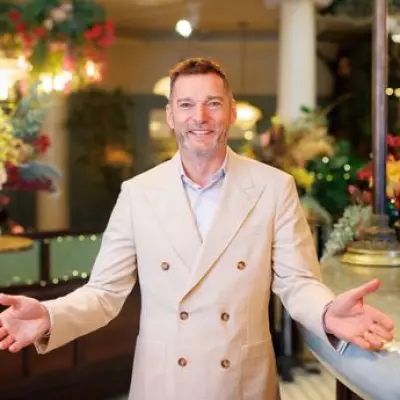
Clive Stafford Smith still hears the final words of one client ringing in his ears nearly 40 years after he was executed in a gas chamber behind the barbed wire and iron bars of Mississippi State Penitentiary. Mr Smith has represented hundreds of doomed men on death row, but the harrowing events of May 20, 1987, haunt him for one reason in particular: he watched the agonising, slow death of a man he claims was innocent.
The British human rights lawyer fought for the life of Edward Earl Johnson until just an hour before he was gassed to death in a tall metallic gas chamber with two windows on either side. Johnson, then 26 but sentenced to death as a teenager, was strapped tightly into a chair and spent 15 minutes choking to death by inhaling cyanide for a crime it was later claimed he did not commit.
Mr Smith took his place next to the victim's family and ignored the questions of news reporters as he forced himself to watch the execution from a row of neatly-placed plastic office chairs in the public gallery. 'The governor denied clemency with about an hour to go, and I had to break that to Edward,' Mr Smith, 66, tells The Crime Desk. 'I knew at that point it was all over, but Edward didn't. The warden let me go into the gas chamber with Edward and I gave him a big hug. Then he whispered in my ear: “Is there something you know that I don't know?”'

'I wasn't sure what he meant, so I said something stupid like “Edward, you know more than I do about everything”. But I worked out a few seconds later that he meant that he really thought they were going to stop it. They strapped him into that god-awful chair, and I was right behind him with these a******s who wanted to be there, trying to ask me questions about what was going on. There came a moment before, and it seemed like forever—it was probably only 10 minutes—when there was a ring on the telephone. Edward must have thought that was someone calling for a reprieve, but it wasn't. It was the signal to kill him. When he realised that, he said: “Well, let's get it over with.”'
Johnson's final moments were captured in the harrowing BBC documentary, Fourteen Days in May, which followed his case until the execution and Mr Smith's desperate attempts to stop it. In one heart-wrenching moment, Johnson bows his head in disbelief as the violent hum of the chamber rings out, while, overcome with emotion, a member of the documentary crew rushes forward and hugs him goodbye.
Mr Smith recalls: 'The chamber was just at the end of death row, and the last cell was where Edward was for the last three days. Then you went through one door and round to the left was just a small area where we sat and counted down the time, effectively, and then there was a door through to where the chamber was. At least I was allowed by the governor to go in there. Then the chamber was in there, and if you watch the film you can see how it's screwed tightly. I went into the gas chamber with him, and it was a kindness by the warden actually; I was very glad that I was allowed to do it. When it came to the witness area, there were just these white plastic chairs and there were some rows. I took the back one on the right-hand side, just because I didn't want to be close to anyone, but it didn't stop them asking for comments and quotes, the journalists, who I cannot say made themselves very civilised. Everyone was in a separate place.'
The lawyer then sat through 15 minutes of Johnson thrashing around in the chair before he finally stopped breathing. Recalling the horror, he said: 'The natural instinct is to hold your breath. Guidance says that's a bad idea because that's just going to prolong it, but you can't expect anyone to believe that. It took 15 minutes before he was unconscious and not feeling any pain. The wardens let Edward's family stay with him until around two hours before. Then they all left for the church. His mother did not want to watch the execution, and I don't blame her; it's not something I would want to do. But I do feel it's your last duty to someone, and you've got to be there.'

Johnson was sentenced to death after being convicted of the murder of police officer Marshall J. T. Trest and the sexual assault of an elderly woman, Sallie Franklin, in June 1979. At Johnson's funeral the week after his execution, new evidence emerged that suggested he was innocent. Mr Smith was approached by a woman named Mary, who said she was with Edward the night he was accused of the crimes. The lawyer adds: 'I went to his funeral the next week in Walnut Grove, Mississippi, and this woman, Mary, came up to me. She said “I know he didn't do it because I was with him at the time of the crime.” I said “Well, why didn't you tell someone?” She said “I did, but when I went to the police and told them, they told me to buzz off and mind my own business.” It's just horrendous. I don't spend my life going around beating myself up with a leather whip over guilt, but it's quite something to be responsible for the death of someone who didn't do it.'
It is a tale Mr Smith wishes was a rare one, but after representing around 400 death row inmates, he has lost two to lethal injection, two to the electric chair, and two to the gas chamber, including Edward. Today, he can still recall the smell of the cells and the chamber and the way guards were sympathetic to those days away from death. He counts his walks through the corridors of death row as the longest of his life. Mr Smith adds: 'Going into death row is not something you have to do very often; it's only when you had a decent warden like Don Cabana who let me go there. Normally it was just in the visitation room. It invariably smelt of disinfectant, the whole of death row. It was very different when you were there to deliver news, so walking onto death row was a long, slow walk because I was coming from the telephone. I would walk past a bunch of guards, all of whom were very sympathetic; they always liked Edward. I'd be walking past some very quiet cells with people in them, all people I represented, and was to deliver some very bad news.'
Among Mr Smith's clients was British murderer Nicholas Ingram, who was executed by electric chair in 1995. Remarkably, Mr Smith remembers Ingram cutting a calm figure throughout the process before his eventual death. Mr Smith said: 'He was cynical about getting any form of justice, so he was pretty cool about the whole thing. They wanted him to have his last meal, and there was a big media circus around his case because I thought the best chance of winning was having the British government intervene. John Major was Prime Minister at the time, and the head of the Parole Board told me that if the British Prime Minister called and asked for mercy, they would do it. But Major, for reasons that have always escaped me, didn't see fit to do that.'
He added: 'Nicky didn't want to play their game, so when it came time for him to have his last meal, he said “I don't want a last meal; you're going to kill me. I want a last cigarette,” and the warden said “no, you can't do that; it's bad for your health.” So I went outside and told the media that these guys were about to kill a human being inside, but thought it was bad for his health to have a cigarette. That humiliated the warden, and he backed down and they gave him a cigarette. Nicky was electrocuted, and it was horrible. In the end, everyone ends up dead, so it's hard to say which method is any better, but electrocution is the worst; it's just disgusting. It's 2,400 volts through your body. I got a stay for him the day before, but it was after they had shaved him. I went in the next morning to see him, and they had shaved his head and shaved his leg. His mother was coming in right after me. When you see someone prepared for an execution like that, it is like a slap in the face. I had to coerce the sociopathic warden to give him a beanie cap, just so his mum wouldn't see that. It was just horrible. Of all the things I've seen, this was the worst thing to actually have to watch. They like to think it's quick, but with Nicky, they hit the switch and the light goes dim, because they are using so much electricity. Human beings are not great conductors of electricity, and it went on with this buzz for around two minutes. Then they stopped, and then the doctor came in with his stethoscope, and Nicky was still alive. So they had to go at it again. It was just horrendous.'
Other death row clients he lost included British national Tracy Housel, executed by lethal injection for murder in 2002; Les Martin to lethal injection the same year for rape and murder; and Leo Edwards, lost to a gas chamber in 1989 for murdering a man during a robbery spree. Despite his imminent death, Mr Smith says Martin somehow had the capacity to joke with him. He recalled: 'Les said he would fire me if I did not get a stay for him. I did, but they set another date, so when they were about to kill him, he turned on the gurney, gave me a big grin, and mouthed “You're fired!” Not sure I would have that sang froid. He was joking. He was a sad man. He had f***ed his life up and he knew it, so he was not that sad to be ending it. He was very sorry that he had done the murder, but he wanted the family to know he did not rape their daughter.' On Edwards, he recalled: 'Leo was a drug addict. He had done a robbery when high on drugs, and his partner had probably been the one to pull the trigger, but the cops always do a deal with the first to snitch. Leo was ironically given the same drugs before his execution as he had when he did the crime.'
But despite the horrors he witnessed up close, he has fond memories too. One of those was representing bipolar triple murderer Larry Lonchar, who wanted to be executed as quickly as possible as a form of suicide. Even though he was eventually executed by electric chair, Mr Smith takes pride in keeping him alive for eight years. He said: 'Larry, from the very beginning, was just trying to commit suicide by electric chair. I took his case on, and I got a lot of criticism for that from my friends because he was trying to get himself killed. They said there are thousands of people out there who want a lawyer, and you're wasting time on a guy who doesn't. My mother was part of the Samaritans, and I always really admired that. I don't think it's something that everyone agrees on, but I do think you have a duty to people who are trying to end their lives and help them not do that. I represented him for eight years, and he would drop his appeals, and then I would try and talk him around.'
He added: 'Larry, when he was about to be electrocuted, was totally calm and didn't care. They asked him what his final words were, and he said “Lord forgive them, for they know not what they do.” All these pseudo-Christians in the audience started squirming. Even though it was horrible, it was just so life-affirming, because I felt in those eight years stopping Larry doing what he wanted to do and actually allowed him to do it in a way that he could really deal with it. Even though it was a horrible moment, I count it as one of the greatest moments in my career.'
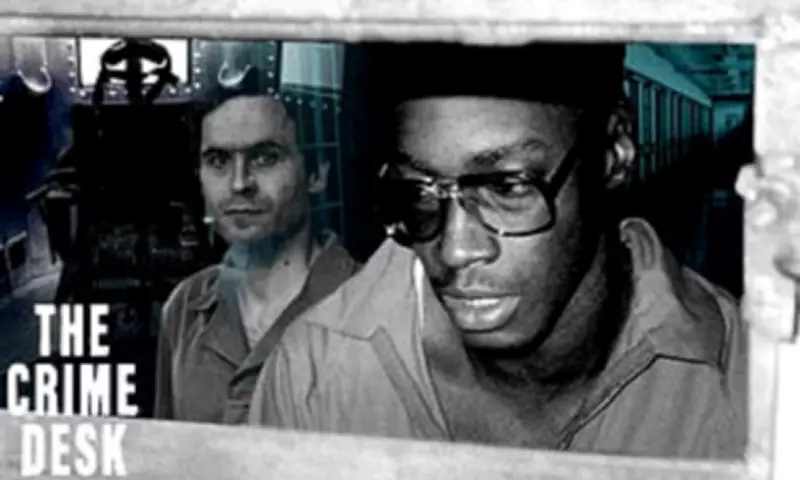
His journey began aged 19, in 1975, when he left the UK to pursue a career in journalism in the US. But after visiting death row inmates in Georgia to write a book about life on the row, he was inspired to switch to law and represent them instead, after learning how many of them did not have legal means beyond the earliest stages. While Mr Smith was studying law, he volunteered for a death penalty organisation in Atlanta who were representing murderer Ted Bundy. Bundy was a serial killer who murdered at least 30 women between 1974 and 1978, but was linked to many more and still holds a high level of notoriety today, having been the subject of a Netflix hit. But Mr Smith says he is nothing like the man he was portrayed as.
Mr Smith added: 'He was portrayed in America as this suave guy who went to law school for a bit and was charming, and that's how he lured all these poor women in. He was not. He was utterly mad. And of course, you have to be utterly mad. You can't go around thinking it's a cool thing to murder a bunch of young women without being totally deranged. At that point, the litigation was whether he even understood what it meant to be executed. He was so crazy, he had psychotic eyes. He was mad, just mad. If he'd been someone else, if he'd been someone who wasn't a horrendous, hated serial killer, he wouldn't have been executed. They would have sent him off to a mental hospital. But because it was Ted Bundy, they were always going to kill him.'
Today, Mr Smith lives in Dorset but continues to work in the US, visiting regularly to meet clients, including inmates at Guantanamo Bay. He also continues to campaign against the death penalty and insists US authorities are using illegal drugs to perform lethal injections because pharmaceutical companies are reluctant to be associated with capital punishment. And he resents a spike in executions since Donald Trump was elected for a second term in the White House. According to the Death Penalty Information Centre, there were 24 executions in 2023 and a year later there were 25. But in 2025, there were a total of 47 executions, with Florida registering a record of 19, and so far in 2026 there have been eight. Mr Smith adds: 'Why do you kill people who kill people to show that killing people is wrong? It's just totally pointless and barbaric. Every time I have been to an execution, we always come out at midnight because we're basically ashamed of ourselves. You look up at the stars and you say to yourself, honestly, did that really make the world a better place?'