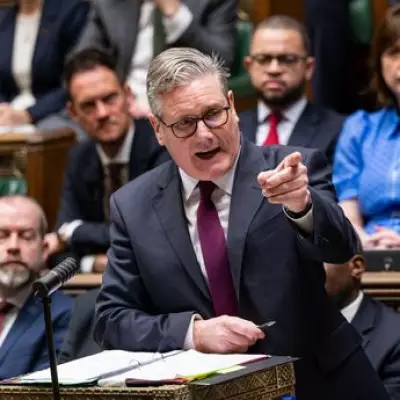
Starmer Calls for Mandelson's Resignation as Epstein Links Reveal Government Leaks
Sir Keir Starmer has publicly urged Lord Peter Mandelson to resign from the House of Lords following the release of documents that appear to show the former business secretary passed confidential government information to convicted sex offender Jeffrey Epstein. The Prime Minister stated that Lord Mandelson "should not be a member of the House of Lords or use the title", although he acknowledged that he lacks the direct power to strip him of his peerage.
Cabinet Secretary Launches Urgent Review Into Ministerial Contacts
In response to the emerging evidence, Sir Keir has tasked Cabinet Secretary Sir Chris Wormald with conducting an urgent review into all available information regarding Lord Mandelson's contacts with Epstein during his tenure as a government minister. This investigation follows a request from former Prime Minister Gordon Brown, who called for an examination into the disclosure of "confidential and market sensitive information" during the global financial crisis.
The documents released by the US Department of Justice indicate that Epstein received internal discussions from the heart of the UK government during this critical period. The evidence suggests that Lord Mandelson, while serving as business secretary under Gordon Brown's administration, may have engaged in inappropriate communication with the disgraced financier.

Specific Allegations of Government Information Sharing
According to the released documents, Lord Mandelson appears to have discussed several sensitive government matters with Epstein:
- In December 2009, email exchanges suggest Lord Mandelson was lobbying to amend the so-called "super tax" on bankers' bonuses, with apparent encouragement from Epstein
- An email from December 15, 2009, seemingly from Epstein, asked about making the tax apply only to the cash portion of bankers' bonuses
- Lord Mandelson's apparent reply stated he was "trying hard to amend" the policy and that he was "on case" despite Treasury resistance
- Two days later, email discussions indicate Lord Mandelson encouraged JP Morgan's CEO Jamie Dimon to call then-Chancellor Alistair Darling and "mildly threaten" him regarding the tax policy
Further documents reveal that internal government discussions were passed to Epstein in 2009, including an analysis of business lending prepared by government minister Baroness Vadera. While the sender of this message to Epstein has been redacted, Lord Mandelson was involved in the original government email thread.
Additional Revelations About Financial Crisis Communications
The documents contain further concerning communications between Lord Mandelson and Epstein:
- In June 2009, Lord Mandelson wrote to Epstein about an "interesting note that's gone to the PM", forwarding an assessment by Gordon Brown's adviser Nick Butler regarding potential policy measures including an asset sales plan
- Epstein responded by asking "what salable assets", with a reply from a redacted email address suggesting "land, property I guess"
- On May 9, 2010, during the final days of the Brown government, Epstein emailed Lord Mandelson about a potential 500 billion euro bailout, with a reply from a redacted address confirming it "sd be announced tonight" - a massive rescue package was indeed agreed by Brussels in the early hours of May 10
Political Pressure Mounts for Police Investigation
The Liberal Democrats, SNP, and Plaid Cymru have all called for Lord Mandelson to face a police investigation for potential misconduct in public office. Liberal Democrat leader Sir Ed Davey stated: "The Epstein files suggest Peter Mandelson leaked sensitive government information to a convicted sex offender while serving as a minister, and even suggested a US bank should threaten the government to lower its tax bill. These allegations are incredibly serious."
Cabinet minister Bridget Phillipson told BBC Radio 5 Live that the situation was "as serious as it gets" and represented "not the conduct befitting a government minister." She added that "if there is evidence of criminality then of course that should be pursued."

Financial Transactions and Personal Connections
Bank statements from 2003 and 2004 appear to show Lord Mandelson received payments totalling 75,000 US dollars (approximately £54,000) from Epstein. Additionally, Epstein is said to have paid for an osteopathy course for Lord Mandelson's husband in 2009, further deepening the personal and financial connections between the two men.
Mandelson's Response and Current Status
On Sunday night, Lord Mandelson resigned his Labour membership, with the party revealing he was facing a disciplinary process. In his resignation letter, he stated: "Allegations which I believe to be false that he made financial payments to me 20 years ago, and of which I have no record or recollection, need investigating by me. While doing this I do not wish to cause further embarrassment to the Labour Party."
Lord Mandelson, who is currently on a leave of absence from the House of Lords, could resign voluntarily. However, under current arrangements, a new law would be required to forcibly remove a peerage - something that last happened more than a century ago to deal with members of the nobility who sided with Germany during the First World War. There is no precedent for using new legislation to remove a specific individual from the Lords.
Sir Keir Starmer has urged the House of Lords to work with the Government to modernise disciplinary procedures to make it easier to remove disgraced peers in future. The Metropolitan Police have been contacted regarding the allegations, and Lord Mandelson's representatives have also been approached for comment.
This developing scandal raises serious questions about the boundaries between government service and personal associations, particularly during periods of national crisis such as the global financial meltdown of 2008-2010.