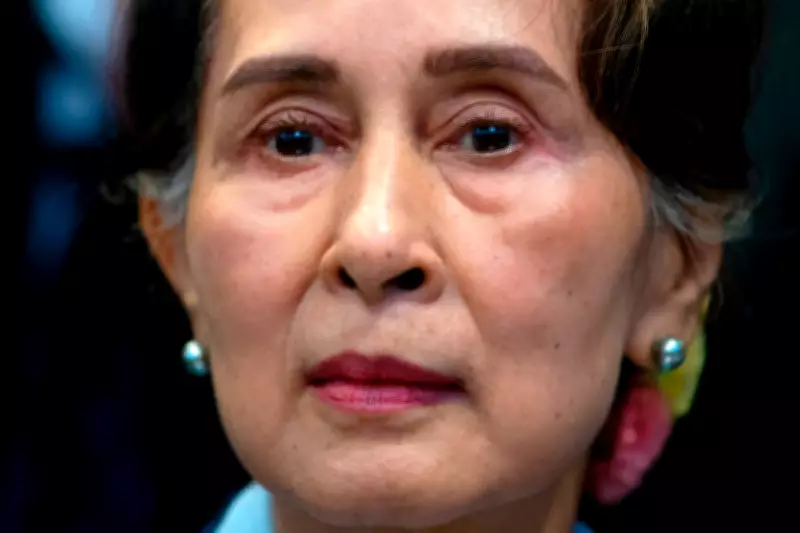
Myanmar's military-backed government has shortened the prison sentence of ousted leader Aung San Suu Kyi as part of a prisoner pardon linked to a Buddhist religious holiday, according to legal officials and state media reports.
Second Amnesty in Two Weeks
This amnesty is the second in two weeks, following an earlier one on April 17 when more than 4,500 prisoners were granted amnesty. It remains unclear how many individuals imprisoned for opposing military rule were included in Thursday's amnesty.
Two legal officials, speaking on condition of anonymity for fear of punishment, stated that Thursday's measure would further reduce Suu Kyi's sentence by one-sixth. However, they did not specify the exact remaining term. Based on previous reductions, the 80-year-old Nobel Peace Prize laureate is expected to have more than 13 years left to serve.

Details of the Amnesty
State media reported that in addition to granting amnesty to 1,519 prisoners, including 11 foreigners, the sentences of all remaining convicted prisoners were reduced by one-sixth to mark the Full Moon day of "Kason," known as Buddha's Birthday and Demise.
The amnesties come after Senior General Min Aung Hlaing was sworn in as president on April 10 following an election that critics say was neither free nor fair and was orchestrated to maintain the military's tight grip on power. In his inauguration speech, he said his government would grant amnesties aimed at promoting social reconciliation, justice, and peace.
Suu Kyi's Imprisonment
Suu Kyi was arrested on February 1, 2021, when the army seized power from her elected government. She was originally sentenced to 33 years in prison in late 2022 for several offenses that her supporters and rights groups described as attempts to discredit her and legitimize the army takeover, as well as to prevent her return to politics.
Her term was reduced to 27 years in August 2023 and then further cut by more than four years on April 17, when prison terms of less than 40 years were reduced by one-sixth. Suu Kyi is serving her prison term at an undisclosed location in the capital Naypyitaw.
Health and Conditions
There were reports last week that she might be transferred to house arrest as part of the clemency, but there was no confirmation from the government. Information about her condition remains tightly controlled. Reports in 2024 and 2025 indicated declining health, including low blood pressure, dizziness, and heart problems, but these claims could not be independently verified. Her legal team has not been allowed to meet her in person since December 2022.
Background
The 2021 army takeover triggered massive public resistance that was brutally suppressed, leading to a bloody civil war that has killed thousands of people. According to the Assistance Association for Political Prisoners, a rights monitoring organization, 22,047 people have been detained in Myanmar since the army takeover.
Suu Kyi, the daughter of Myanmar's martyred independence hero General Aung San, spent almost 15 years as a political prisoner under house arrest between 1989 and 2010. Her tough stand against military rule turned her into a symbol of nonviolent struggle for democracy, and she was awarded the 1991 Nobel Peace Prize.