Britain's parliamentary standards watchdog has delivered a stark warning that MPs should consider refusing all gifts and hospitality to rebuild shattered public trust.
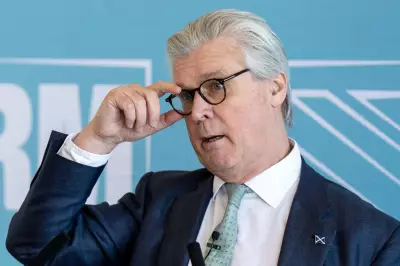
Daniel Greenberg, the Parliamentary Commissioner for Standards, revealed that voter confidence in politicians remains a 'serious problem' despite Labour's election promises to clean up Westminster.
No Radical Change Under New Government
In a revealing interview, Mr Greenberg acknowledged that there hasn't been a 'radical change' in behaviour since Sir Keir Starmer became Prime Minister in July 2024. This assessment comes despite the Labour leader's pre-election pledge to 'end the chaos of sleaze' that dominated the previous parliament.

The commissioner's comments follow a turbulent start for the new government, which found itself embroiled in its own 'freebies row' during its first months in power. Senior ministers including the Prime Minister faced intense scrutiny over accepting expensive gifts.
The Freebies That Rocked Westminster
The scandal saw Sir Keir dubbed 'free gear Keir' after revelations emerged about gifts from party donor Lord Alli. The Prime Minister was ultimately forced to repay £6,000 worth of gifts and hospitality, including coveted tickets to a Taylor Swift concert.
Chancellor Rachel Reeves found herself in hot water after accepting tickets to see Sabrina Carpenter and bringing a family member along without payment. She subsequently vowed to stop accepting free tickets entirely.
Meanwhile, Sir Keir, Ms Reeves and then-deputy PM Angela Rayner all pledged to refuse free clothing after disclosures that donors were funding their wardrobes.
The Self-Regulation Dilemma
Mr Greenberg emphasised that Parliament must 'self-regulate' rather than relying on external enforcement. While stopping short of demanding an outright ban on gifts, he suggested MPs should apply a simple test to every offer of hospitality.
'I would like to think that members would constantly benchmark for themselves everything they do against the simple test,' he told Times Radio. 'Does this increase the level of trust between me and the public, or does it decrease it?'
He provided a practical example: 'If a gambling company offers me, as an MP, they offer me tickets to Wimbledon. I would like to think an MP would say to herself or himself, 'how does this relate to trust?''
The commissioner acknowledged that some MPs are showing improvement by seeking advice before accepting gifts, rather than waiting for scandals to emerge. 'Like most regulators, I would so much prefer to help raise and support good standards than sit there waiting for things to go wrong and then punish them,' he noted.
However, Mr Greenberg concluded that overall, he cannot honestly claim there has been a radical, clear change in levels of public trust based on demonstrable behavioural improvements since the general election.