Trump Reportedly Acknowledged Epstein Crimes Years Before Public Denials
According to a recently disclosed FBI memorandum, former President Donald Trump indicated to law enforcement officials in Palm Beach during 2006 that widespread awareness existed regarding Jeffrey Epstein's criminal activities. The document suggests Trump advised investigators to concentrate their efforts on Epstein's associate Ghislaine Maxwell, whom he characterized as 'evil.' This revelation emerges from the Justice Department's latest release of approximately 3.5 million files related to the Epstein case, which includes a four-page FBI interview summary from October 2019.
Former Police Chief Identified as Confidential Source
The Miami Herald has reported that the redacted individual referenced in the FBI memo is former Palm Beach police chief Michael Reiter. Reiter allegedly recounted to federal agents a conversation with Trump that occurred in July 2006, during the initial investigation into Epstein's sex trafficking network. This timeline is significant, as it precedes by thirteen years Trump's public statements in 2019 where he denied any knowledge of Epstein's crimes.
According to the FBI document, Trump informed the interview subject that everyone in New York social circles 'knew Epstein was disgusting.' Furthermore, the memo claims Trump was among the first individuals to contact the Palm Beach Police Department when the investigation became public, expressing support by stating, 'Thank goodness you're stopping him, everyone has known he's been doing this.'

Contradictions and Unanswered Questions
These disclosures create a direct contradiction with Trump's later assertions. In July 2019, just one month before Epstein's death in prison, Trump told reporters he had no awareness of Epstein committing sex crimes against young women, stating emphatically, 'No, I had no idea. I had no idea.' The FBI memo suggests Trump may have possessed more detailed knowledge about Epstein's activities than he publicly acknowledged.
The document also indicates Trump claimed to have removed Epstein from his Mar-a-Lago club, which aligns with Trump's previous statements that he expelled Epstein around 2007 for being 'creepy.' Additionally, the only reference to Maxwell in the four-page memo involves Trump describing her as Epstein's 'operative' and advising investigators to focus on her due to her allegedly evil nature.
Context of Epstein's Legal Proceedings
Epstein ultimately reached a controversial plea agreement with Florida prosecutors in 2007, pleading guilty to soliciting prostitution from a minor. He received an eighteen-month prison sentence, serving thirteen months with work release privileges. This outcome has been widely criticized, as investigators had identified nearly forty underage victims at the time, yet the prosecution was limited to a single case involving a sixteen-year-old girl.
Michael Reiter, who retired as police chief in 2009 after overseeing the initial Epstein investigation, reportedly expressed disappointment to the FBI, stating, 'It was very disappointing that the system failed in this case.' When contacted for independent confirmation regarding the redacted individual's identity, a representative for Reiter informed the Daily Mail that he 'is not participating in interviews at this time.'
Connections and Continuing Developments
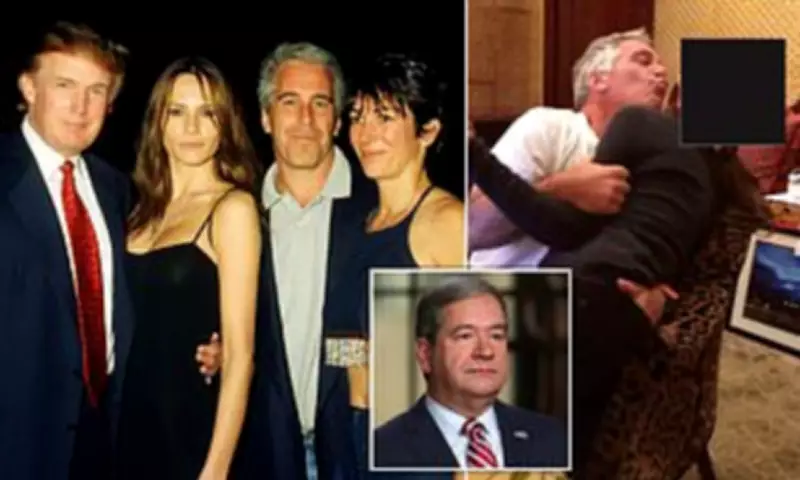
The Trump family's associations with Epstein and Maxwell during the 1990s and early 2000s have been documented, including an email showing a message signed 'Love Melania' sent to a Maxwell email address. Maxwell remains the only living person currently serving prison time in connection with Epstein's sex trafficking crimes, having begun a twenty-year sentence in June 2022.
The White House declined to comment on these revelations, referring inquiries to the Justice Department. A Justice Department official denied that Trump ever contacted Reiter, stating, 'We are not aware of any corroborating evidence that the President contacted law enforcement twenty years ago.' This newly released information raises significant questions about the extent of early knowledge regarding Epstein's crimes among prominent social circles.