A deepening corruption scandal in Ukraine has ensnared President Volodymyr Zelensky's newly appointed chief peace negotiator, casting a shadow over critical American-led diplomatic efforts to end the war with Russia.
Negotiator Replaces Scandal-Hit Official
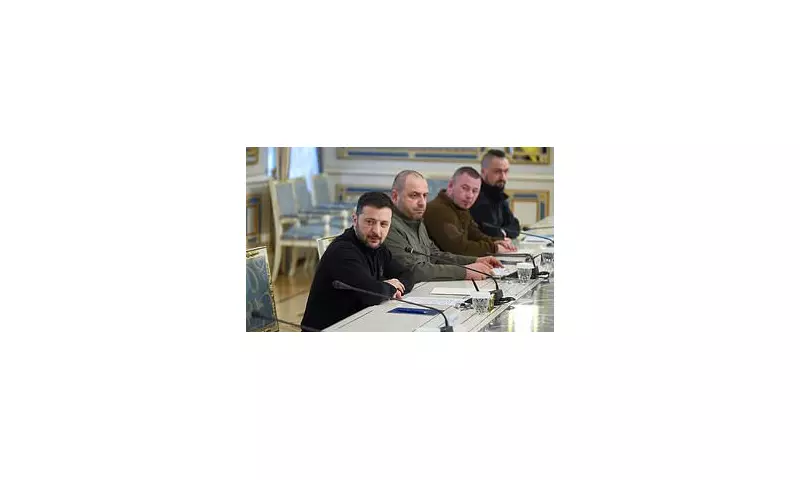
Over the weekend, a Ukrainian delegation flew to Florida for high-stakes talks on a US peace plan. The team was led at the last minute by Rustem Umierov, the Secretary of Ukraine's National Security and Defence Council. He replaced Andriy Yermak, Zelensky's former chief of staff, who resigned after anti-corruption investigators raided his home and offices.
The raids were part of a probe by Ukraine's National Anti-Corruption Bureau (NABU) and Specialised Anti-Corruption Prosecutor's Office (SAPO). The agencies allege that a group of eight individuals, including government officials, collected bribes from the state nuclear power company, Energoatom.

The £76 Million Fraud Scheme
Prosecutors claim the group illegally took between 10-15% of the value of each state contract, funnelling an estimated £75 million away from public coffers. This is money that could have been used to support Ukraine's defence against the ongoing Russian invasion.
Intriguingly, Rustem Umierov, the 43-year-old former defence minister now leading peace talks, was himself summoned as a witness in the same investigation on November 25. A NABU spokesperson stated the conversation was 'constructive' and that Umierov answered all questions within the legal framework.
However, Ukrainian media outlet Ukrainska Pravda reported that a SAPO prosecutor told a court earlier this month that businessman Timur Mindich, a long-time contact of President Zelensky, allegedly influenced both the energy minister and, in the defence sector, Rustem Umierov. The prosecution asserts Mindich's scheme relied on personal connections to these senior officials.
Umierov has vehemently denied any wrongdoing. In a social media post, he stated he only met Mindich regarding a contract to supply ballistic vests, which was later terminated. 'Any attempts to link my work in the Ministry of Defense with the 'influence' of some individuals are unfounded,' he wrote.
Political Fallout and Diplomatic Manoeuvres
The appointment has sparked domestic criticism. Ukrainian politician Volodymyr Ariev told the Washington Post that Zelensky had 'resigned one corruption scandal [figure] and appointed as the head of the negotiating team another one,' arguing Ukraine needs professionals loyal to national interests, not the president.
The Florida talks mark the start of a crucial diplomatic week. US Secretary of State Marco Rubio noted the complexity of the process, revealing that American envoy Steve Witkoff will travel to Moscow later this week to engage Kremlin officials. Both Kyiv and Moscow, eager to please the Trump administration, have ostensibly welcomed the peace push.
Yet, Russia continues its attacks and reiterates maximalist demands. President Vladimir Putin insisted last week he will fight until Ukrainian troops withdraw from the four regions Russia annexed in 2022, saying, 'If they don't withdraw, we'll achieve this by force.'
Zelensky, while thanking former President Trump for his efforts, has stressed the need for European involvement and robust security guarantees for Ukraine. He has repeatedly ruled out ceding territory, a core demand in early versions of the US plan, along with renouncing NATO membership aspirations—another point of contention.
Meanwhile, European leaders are grappling with their role. NATO and EU meetings this week focus on support for Ukraine, with a key debate over the legality of using frozen Russian assets for Ukraine's reconstruction, a point of division within the bloc.
As diplomacy intensifies, the corruption scandal threatens to undermine Ukraine's moral authority and the credibility of its negotiators at a pivotal moment in the nearly four-year conflict.