As the calendar turns to 2026, a striking visual commentary offers Britons a metaphorical map for the year ahead. Published on New Year's Day, the piece from The Guardian's Comment is Free section presents a symbolic crossroads, inviting reflection on the nation's direction.
Deciphering the Fork in the Road
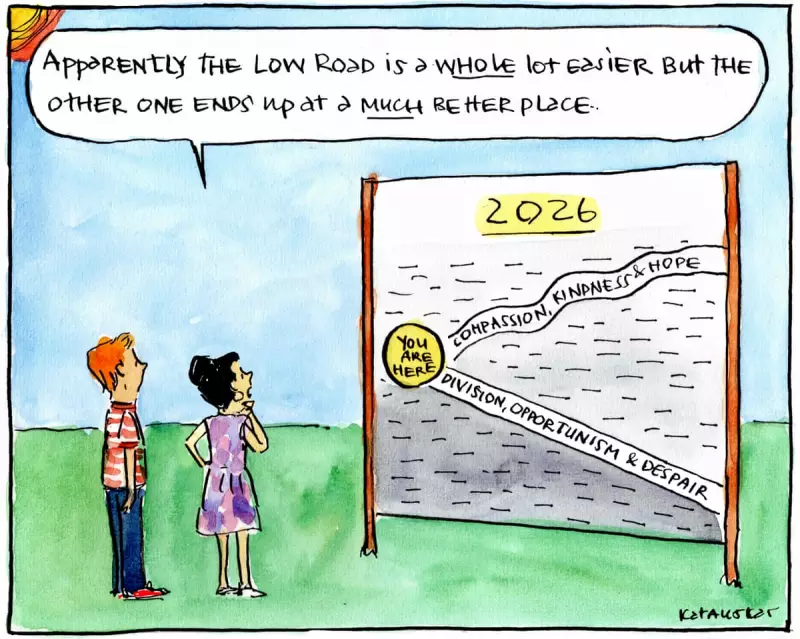
The illustration, central to the article, is not a literal map but a rich tapestry of allegory. It depicts a landscape divided by distinct paths, each representing a potential trajectory for societal and political life in the coming year. The artwork serves as a powerful prompt, encouraging readers to consider which route—be it one of bold reform, cautious consolidation, or radical change—they believe the country should embark upon.
The visual narrative masterfully avoids prescriptive labels, instead using imagery and symbolism to convey the tone and consequence of each possible avenue. One path may appear well-trodden but fraught with familiar obstacles, while another offers untrodden ground with the promise of new vistas, albeit with inherent uncertainties. The power of the piece lies in its open-ended interpretation, making it a catalyst for personal and collective contemplation.

The Power of Visual Satire in Political Discourse
This work sits firmly within the British tradition of using sharp, intelligent cartooning to dissect the political and social climate. By forgoing lengthy prose for symbolic art, the commentary achieves a immediate, visceral impact that transcends partisan lines. It asks a universal question relevant to every citizen: what is the best path to take?
The choice of New Year's Day for publication is itself significant. It leverages the natural human inclination for resolution and forward planning that accompanies the start of January. The piece transforms the personal tradition of New Year's resolutions into a broader, civic-minded conversation about national priorities and collective destiny.
In an era often dominated by dense policy papers and polarised debate, this visual format provides an accessible and thought-provoking entry point into discussions about the UK's future. It reminds us that the direction of 2026 is not pre-ordained but is shaped by the choices made at junctions like this one.
Ultimately, the illustration leaves the answer purposefully unresolved. Its success is measured not in providing a solution, but in its ability to frame the question of our shared path in a fresh, memorable, and profoundly engaging way. As we step into 2026, the map is presented; the journey remains ours to chart.