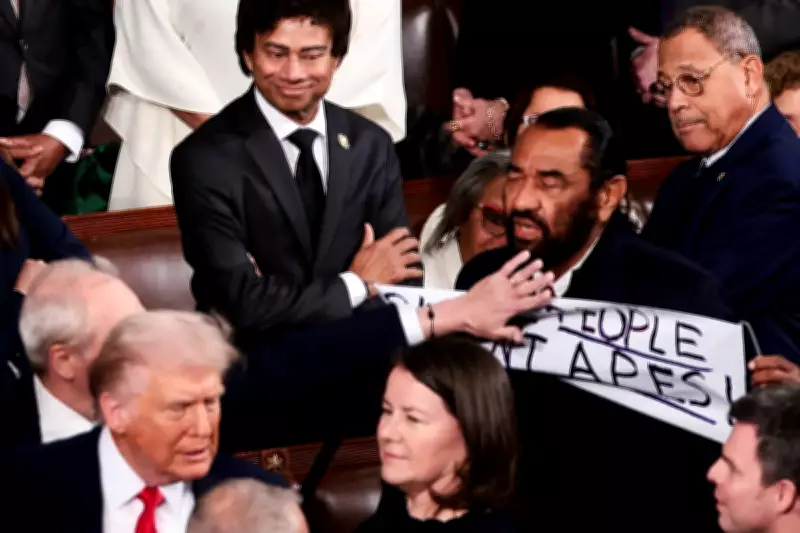
Democratic Representative Al Green of Texas was forcibly escorted from the House chamber during President Donald Trump's State of the Union address on Wednesday, February 25, 2026, after holding up a sign that read "Black People Aren't Apes." The incident occurred just minutes into the president's joint address to Congress, marking the second consecutive year that Green has been removed from this high-profile event for disruptive behavior.
Context Behind the Controversial Protest
The sign displayed by Representative Green appears to be a direct reference to a racist AI-generated video that President Trump posted on his social media platforms earlier in the month. That video controversially depicted former President Barack Obama and former First Lady Michelle Obama as primates, sparking widespread condemnation and accusations of racism from critics across the political spectrum.
A Pattern of Confrontation
This is not the first time Al Green has been ejected from a presidential address. In March of the previous year, he was removed from Trump's joint address to Congress after shouting, "You have no mandate to cut Medicaid!" while raising his cane in protest. This latest incident underscores Green's ongoing and vocal opposition to the Trump administration's policies and rhetoric.

The scene unfolded rapidly as Capitol Police officers approached Green's seat in the chamber. Despite the formal setting of the State of the Union, which typically emphasizes decorum, Green's protest drew immediate attention, highlighting the deep political divisions and tensions that continue to characterize American politics.
Immediate Reactions and Broader Implications
While details are still emerging, the ejection has already ignited debates about free speech, protest rights, and racial insensitivity in political discourse. Supporters of Green argue that his actions are a necessary response to what they perceive as Trump's inflammatory and racially charged behavior, particularly through the use of AI-generated content to spread derogatory imagery.
Critics, however, contend that such protests disrupt important governmental proceedings and undermine the dignity of the office. The incident also raises questions about the role of technology in politics, as AI-generated media becomes an increasingly potent tool for misinformation and hate speech.
As this story develops, it remains a poignant example of the ongoing clashes between Democratic lawmakers and the Trump administration, with racial justice and ethical governance at the forefront of the national conversation.