Prime Minister Anthony Albanese finds himself under intense scrutiny following the devastating terror attack at Bondi beach, with critics arguing he has failed to embody the traditional role of national 'mourner-in-chief' during the crisis.
A Prime Minister Captured by Events
Since receiving the dreaded call on Sunday night informing him of the attack, where gunmen targeted Jews celebrating Hanukkah, Albanese has appeared cornered by events rather than in control of them. The tragedy occurred against a backdrop of escalating criticism that his government had not done enough to stem a rising tide of antisemitism, a charge that has only intensified in the attack's aftermath.
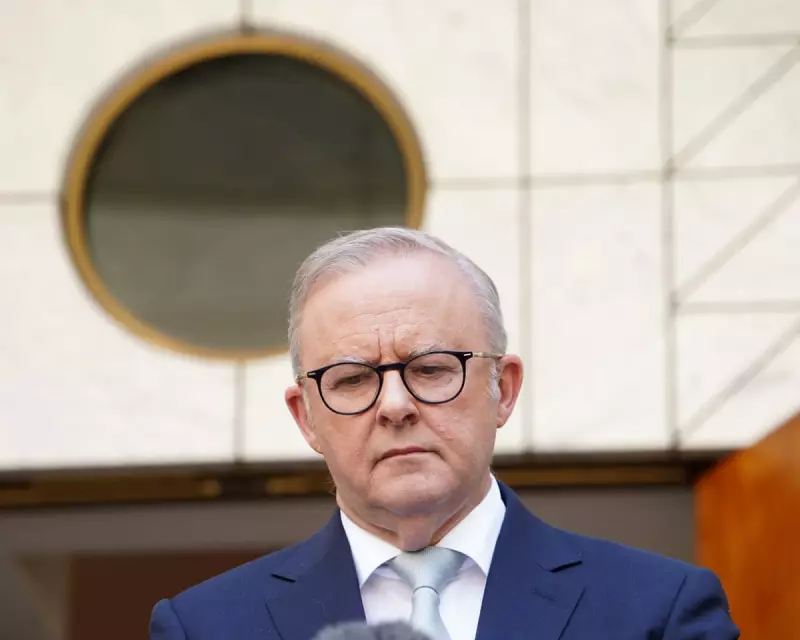
On Thursday, as the funeral for 10-year-old victim Matilda took place in Sydney, a humbled Albanese appeared at Parliament House in an attempt to reset the narrative. He conceded that more could always have been done to prevent the tragedy, though he stopped short of offering a specific apology or detailing what those actions might have been. "Governments aren't perfect. I'm not perfect," the Prime Minister stated, his body language speaking to the significant political blowback he has faced.

Legislative Response and Political Blame Game
In his Thursday address, Albanese confirmed the government would finally take up the report by the envoy for curbing antisemitism, Jillian Segal, which had been received more than six months prior. He announced a suite of measures, including plans to strengthen hate speech laws, target extremist groups, and beef up powers to cancel visas of those spreading division.
A new taskforce will focus on the education system, and efforts will be redoubled to stop the spread of antisemitic content on social media. The federal government's moves come as states proceed with gun reforms in the wake of the attack that left 15 dead.
However, the opposition has been quick to label the response as too little, too late. Opposition Leader Sussan Ley accused Albanese of missing the mark once again. Former treasurer Josh Frydenberg made the extraordinary demand that the Prime Minister accept personal responsibility for the deaths. Meanwhile, Coalition figures risk accusations of politicising the tragedy, even as they appear set to oppose tougher restrictions on gun ownership.
The Challenge of Leadership and the Path Forward
Albanese's characteristically cautious approach has been criticised as inadequate in the face of such a crisis, leaving room for political and media attacks. His struggle to assume the symbolic mantle of national comforter has, at times, seen him outshone by New South Wales Premier Chris Minns.
The Segal report itself presents complications, containing nearly 50 recommendations. Some, such as proposals to monitor public broadcaster reporting or advise on stripping funding from universities, are viewed as unworkable and potential infringements on free speech. The government has condensed the report into 13 themes for consultation.
An independent commission of inquiry into the Bondi tragedy is now seen as inevitable. Demands from the Coalition for an early recall of parliament before Christmas have been sensibly ignored. For Albanese, resetting the clock on the legislative response is critical, as his efforts to lead a nation in mourning continue to be closely watched and judged.