Irish Army Mobilised to Clear Fuel Depot Blockades Amid Escalating Protests
The Irish Defence Forces have been called into action to remove heavy vehicles that are blocking critical fuel depots across the country. This military intervention comes as nationwide protests over soaring fuel prices enter their third consecutive day, causing significant disruption to infrastructure and daily life.
Government Takes Firm Stance Against Infrastructure Blockades
Justice Minister Jim O'Callaghan issued a stern statement on Thursday morning, declaring that "the blocking of critical national infrastructure will not be permitted to continue." He confirmed that assistance from the Defence Forces had been formally requested to address the escalating situation.
Minister O'Callaghan warned vehicle owners involved in the blockades to "remove them immediately this morning and should not complain later about any damage caused to those vehicles during removal." This clear ultimatum underscores the government's determination to restore access to essential fuel supplies.

Taoiseach Micheal Martin emphasised that "the Government had to act" once the Whitegate oil refinery in County Cork and the Foynes fuel terminal in County Limerick were obstructed. Speaking to RTE, Mr Martin stated he did not "anticipate" violence would occur if army and gardai personnel moved against demonstrators, adding it is "not in our nature to be engineering any situation that gives rise to conflict."
Protests Escalate Across Ireland
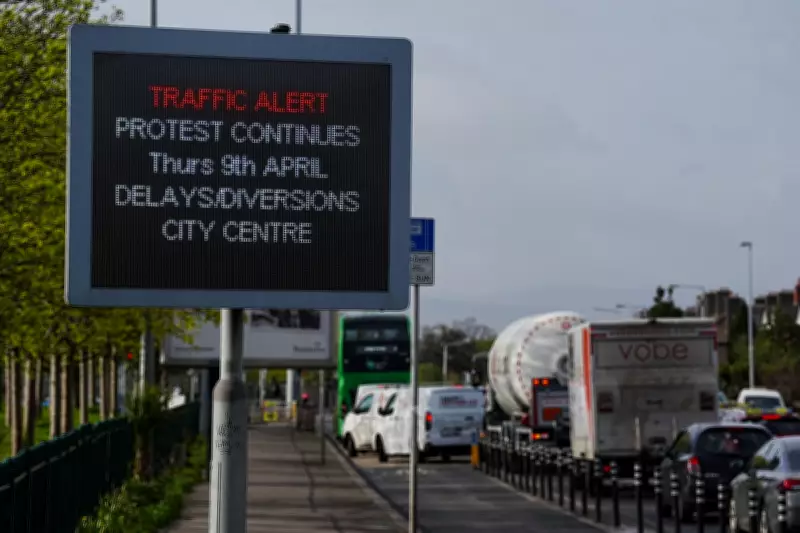
What began on Tuesday as coordinated slow-moving convoys on motorways and blockades on major roads in Dublin and other urban centres has intensified significantly. By Wednesday, protesters had escalated their tactics by physically blocking fuel depots with heavy trucks and tractors.
Hauliers and agricultural contractors have been prominent among those disrupting traffic and infrastructure. Their protests represent a direct response to the dramatic increase in fuel prices following the outbreak of war in the Middle East, particularly affecting supplies through the Strait of Hormuz.
Deputy Garda Commissioner Shawna Coxon announced at Garda headquarters in Dublin that police are now "moving to an enforcement phase" unless protesters "desist and disperse." She warned demonstrators to "immediately cease blockades of such critical national infrastructure or face the full rigours of the law."
Military Resources Deployed for Clearance Operations
The Defence Forces confirmed they had received a formal request for assistance from An Garda Siochana. While stating they would not comment further as "this operation is ongoing," military officials revealed they have four heavy-lift recovery trucks available to help clear trucks and tractors involved in the blockades.
It is understood that military assistance will be limited to these specialised vehicles and the personnel required to operate them. The Defence Forces also addressed circulating social media images of Mowag armoured personnel carriers, clarifying these were personnel of the 128th Infantry Battalion conducting "mission readiness exercises ahead of deployment to Unifil next month" rather than part of the protest response.
Wider Impacts and Government Response
Defence Minister Helen McEntee emphasised at the Curragh Camp that deploying the Defence Forces was "never a first resort." However, she justified the decision by stating: "It cannot be the case that individuals decide that they are going to blockade parts of the country and stop people from going about their business."
Minister McEntee highlighted multiple consequences of the blockades, including businesses being forced to close, farmers potentially putting animals at risk, and people being unable to reach hospital appointments. "As the Government, we have to take firm steps," she concluded.
Fuels for Ireland chief executive Kevin McPartland reported that forecourts are "running out of stock" as a "direct result" of the blockades. He expressed profound disappointment that people are being prevented from accessing fuel despite "enormous effort" to maintain supplies since the outbreak of war involving Iran.

Healthcare Concerns and Political Divisions
Health Minister Jennifer Carroll MacNeill and Health Service Executive chief executive Anne O'Connor jointly called for all approaches to medical facilities to be kept clear during the protests. They emphasised the need for emergency services access, patient attendance at medical appointments, and staff ability to reach workplaces.
"Attending hospital or receiving treatment in the community, whether in an emergency situation or for a routine appointment, is a vulnerable time for a patient and their family," they stated, urging respect for "the critical need for clear and safe access to all healthcare services."
Agriculture Minister Martin Heydon stated he would meet with farming and haulier representative groups but would not engage directly with protesters. He framed the situation as "a clear choice between democracy or anarchy," while acknowledging public frustration over "the very high energy shock as a result of the war that has broken out between America, Israel and Iran."
When questioned about protesters' demands to abolish carbon taxes, Minister Heydon responded that "undermining the overall economy is not in the best interest of the public at this time," urging trust in government measures.
Background to the Fuel Crisis
The cost of petrol, diesel and marked gas oil (commonly known as "green diesel") has soared dramatically due to the Middle East conflict and its impacts on supplies through the Strait of Hormuz. Just over two weeks ago, Ireland's ruling coalition approved a package of measures intended to reduce fuel costs, including temporary excise duty reductions for motor fuels, expansion of the diesel rebate scheme for hauliers and bus operators, and an extension of the fuel allowance.
These measures provided an effective reduction of 17 cents for petrol, 22 cents for diesel, and five cents for green diesel. However, these savings have been largely eroded as the conflict has continued to rage, leading to the current wave of protests and the unprecedented deployment of military forces to clear infrastructure blockades.