As he pens his final regular column for the Guardian after more than three decades, veteran journalist Martin Kettle turns his gaze to the past to find hope for the future. He observes a nation, and a world, that feels profoundly troubled, with national morale in the UK at a low ebb, faith in politics and media diminished, and the unifying Churchillian myth looking increasingly threadbare.
Echoes of a Fractured Decade
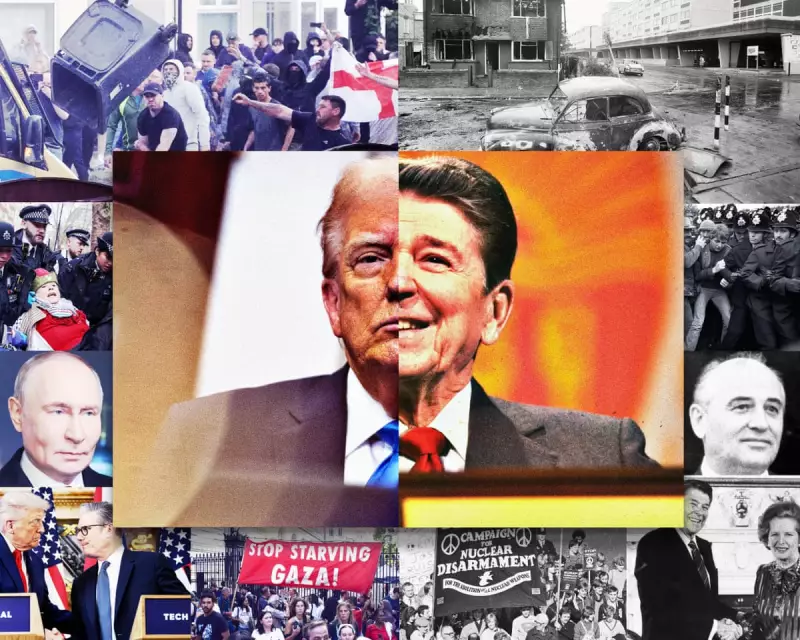
This sense of crisis, Kettle argues, is not without precedent. He draws a powerful parallel with the Britain of the mid-1980s, a period which also felt like a broken nation in a broken world. The specific fractures were different—then it was the aftermath of empire, the depths of the Cold War, and dependence on a maverick US president in Ronald Reagan. It was an era of soaring unemployment, double-digit inflation, industrial collapse, and the constant shadow of IRA terrorism.
Yet, as Kettle emphasises, that mood of perpetual crisis did not last forever. "We managed to get out of that place," he writes, albeit imperfectly and at a cost. The crucial lesson is that a way forward was found, and he believes the same must—and can—happen now. The danger, he suggests, is allowing the 1980s to slip into a "collective memory hole," just as the 1920s did for his own generation, thereby forgetting the hard-won lessons of renewal.

The Imperative of Political Cooperation
One of the most vital lessons from history, Kettle contends, is the power of cooperation over division. He points to the catastrophic failure of German communists, social democrats, and liberals to unite against the fascists in the 1930s. This principle, he argues, was slowly and crucially relearned in Britain after the divisions of the 1980s.
The decade began with the left split between Labour and the new SDP-Liberal Alliance, leading to a divided electorate and large Conservative majorities. The catalyst for change was reconciliation. Neil Kinnock began moderating Labour's offer, a process that evolved into Tony Blair's New Labour and its tacit alliance with Paddy Ashdown's Liberal Democrats. This coalition of sentiment, however imperfect, won three consecutive elections by learning, changing, and seeking cooperation.
"New Labour won three elections in a row because it was willing to learn, change and cooperate," Kettle notes, while acknowledging its flaws on market regulation and constitutional reform. The open question for today is whether parties are willing to embark on a similar, perhaps even more radical, process of collaboration to address the nation's profound challenges.
The Arena, Not the Grandstand
Kettle concludes with a rallying cry for engagement, not disillusionment. Quoting Theodore Roosevelt's 1910 speech about the "man in the arena" whose face is "marred by dust and sweat and blood," he argues that the arena of effort matters far more than the critic's grandstand. "We should rally behind politics, not turn away from it," he asserts, expressing hope that the sheer necessity of the moment will drive a new process of political renewal akin to that which emerged from the 1980s.
While this marks the end of his weekly column after 41 years at the Guardian, Kettle hopes to return to cheer on that desperately needed process. His final message is one of cautious optimism, grounded in history: we have been here before, in frightening and uncertain times, and we found a path forward. The task now is to find it again.