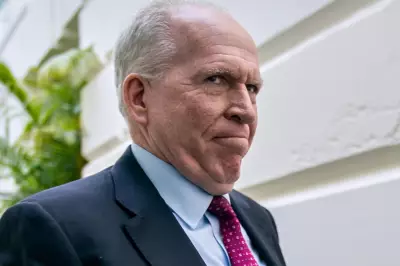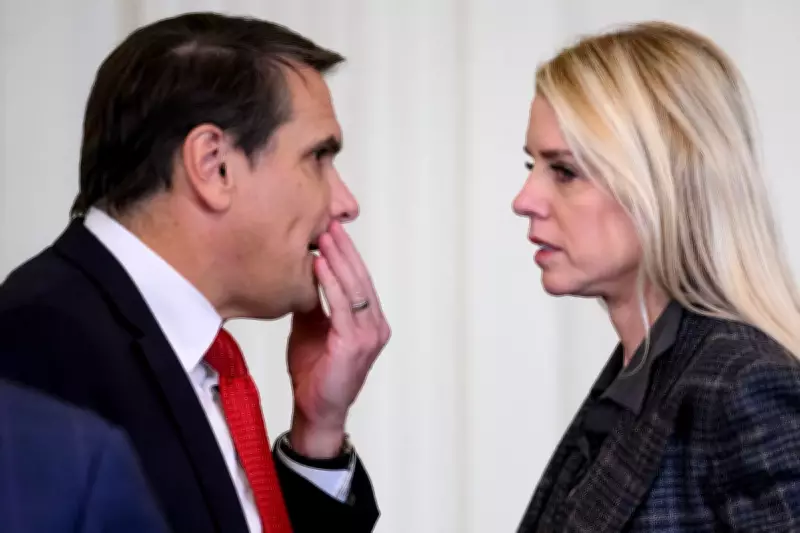
A prominent conservative legal scholar has issued a stark demand for Congress to completely defund the Department of Justice, following revelations that former Trump administration officials are actively soliciting explicitly pro-Trump attorneys for key prosecutorial roles. The controversy centres on a public call made by Chad Mizelle, a former acting general counsel for Homeland Security and Justice Department chief of staff, who used social media to seek lawyers loyal to the former president for positions within the federal government.
McCarthy's Fiery Rebuke and Bipartisan Reactions
Andy McCarthy, a National Review writer and former chief assistant U.S. attorney, launched a scathing critique on platform X, arguing that the Justice Department's very existence is contingent upon its nonpartisan nature. "If support for the incumbent president is now a condition of enforcing federal law, Congress should defund DOJ," McCarthy declared. He emphasised the profound danger to liberty posed by a partisan justice system, suggesting that if former Attorney General Merrick Garland had similarly sought Biden-supporting lawyers, conservative circles would be demanding impeachment proceedings.
The response to McCarthy's post revealed deep fractures within conservative commentary. While many respondents accused the existing DOJ bureaucracy of being dominated by left-wing attorneys, others simply dismissed his concerns. However, McCarthy found unlikely allies in his condemnation. John Podhoretz, another conservative writer and frequent Trump critic, expressed gratitude, stating he felt he was "taking crazy pills." Democratic Representative Dan Goldman also agreed with the sentiment but questioned why it had taken so long for some to recognise the systemic transformation of the department under Trump's influence.

The Broader Context: A Weaponised Justice Department?
This hiring controversy unfolds against a backdrop of significant concern regarding the Justice Department's operational priorities under the current administration. Critics argue the agency has been transformed into a political instrument, actively pursuing criminal cases—often unsuccessfully—against Trump's perceived enemies. These targets have included former FBI director James Comey, certain members of Congress, and New York Attorney General Letitia James, who previously investigated Trump's business practices.
The situation escalated dramatically last week with an FBI raid on an elections office in Fulton County, Georgia. Agents seized records and materials related to the 2020 presidential election, an action that prompted a gleeful response from Trump on his Truth Social platform. This raid has intensified fears that the White House and Justice Department are attempting to interfere in upcoming electoral processes, including the critical 2026 midterm elections.
Official Statements and Internal Turmoil
Deputy Attorney General Todd Blanche, during a recent CNN interview, notably refused to clarify the specific purpose of the Fulton County raid or confirm whether it was part of a broader investigation into 2020 swing states. He also could not explain the involvement of Director of National Intelligence Tulsi Gabbard. However, in a separate appearance on ABC's This Week, Blanche explicitly affirmed that the department's primary mandate is now to "execute on the president's priorities."
This shift in ethos has reportedly caused significant internal strife. The department has witnessed the dismissals and resignations of several prosecutors who refused to participate in what critics label a "revenge campaign." The administration has also faced notable legal setbacks regarding its appointments. Lindsey Halligan, a former personal attorney to Trump with no prosecutorial experience, departed the Eastern District of Virginia after failing to secure convictions against the president's foes. A federal judge had previously accused her of unlawfully masquerading as a top prosecutor.

Similarly, Trump's loyalist pick for U.S. attorney in New Jersey, Alina Habba, was found to be serving unlawfully and was subsequently disqualified, with an appeals court refusing to reconsider her case. These episodes underscore the ongoing tension between traditional legal norms and the administration's drive to install ideologically aligned officials in positions of substantial power.