Danish Prime Minister Calls Early Election to Harness 'Greenland Bounce'
Denmark's Prime Minister, Mette Frederiksen, has officially called an early general election, strategically timed to leverage a surge in public support known as the 'Greenland bounce'. This move comes in the wake of heightened tensions with former US President Donald Trump over Arctic territory claims.
Election Announcement Amid Political Momentum
Frederiksen, who has served as prime minister since 2019, is required by Danish law to call an election by 31 October. By setting the vote for 24 March, with eight months remaining, she aims to capitalise on improved poll ratings. This follows disastrous local elections in November, where her Social Democrats lost control of Copenhagen for the first time in a century.
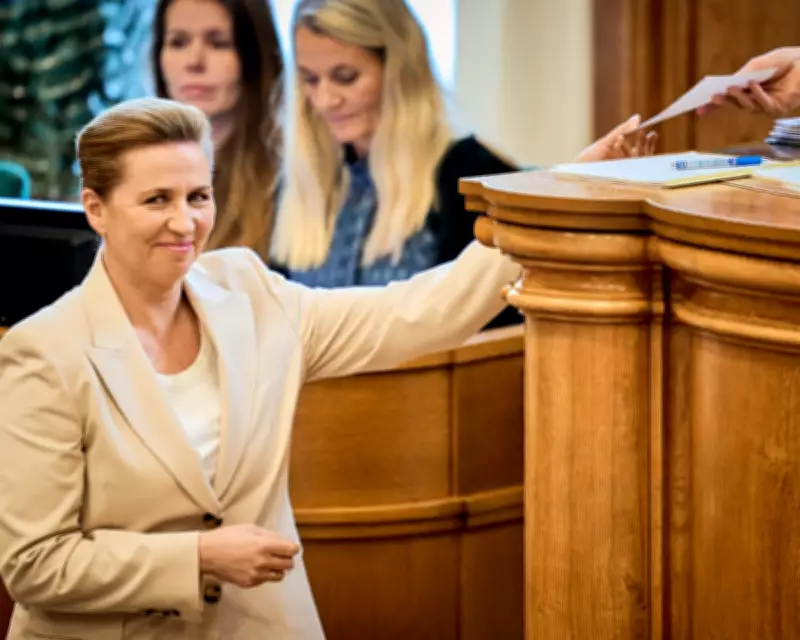
Recent polls indicate a resurgence for Frederiksen's party and its coalition partners, attributed partly to their handling of the Greenland crisis. In a packed parliamentary chamber on Thursday, Frederiksen beamed and shared hugs with colleagues, including Greenlandic politician Aaja Chemnitz, before passing a note to the speaker to request the floor for a special statement.

"Winter has finally let go and the days are getting longer and brighter. It will soon be spring – and the Danes will soon be going to the polls," she declared, announcing the election date.
International Stance and Domestic Policies
Frederiksen emphasised that this election would be decisive for Denmark and Europe's future, pledging to rearm and redefine the country's relationship with the United States. "Dear Danes, today I have asked his majesty the king to call an election for the Folketing," she stated. "Whether I will continue to be your prime minister depends on how strong a mandate you give the Social Democrats."
Her international profile has risen significantly over the past two months, as she rallied European leaders against Trump's threats to Greenland, which posed a potential existential threat to the NATO alliance. Similar boosts have been seen for other centre-left politicians opposing Trump, such as Canada's Mark Carney.
Domestically, Frederiksen has introduced key initiatives to appeal to voters, including:
- A proposed wealth tax aimed at generating 6 billion kroner (£700 million) for primary schools, intended to reduce inequality.
- Abolishing property tax for homes valued under 1 million kroner.
- The Fødevarechecken food support scheme, which polls suggest has had a positive effect.
Polling Trends and Political Analysis
A Megafon poll for TV2 last month showed Social Democrat support rising to 22.7% of the vote, projecting 41 seats, up from 32 in early December. This rebound follows widespread defeats in November, prior to Trump's renewed threats on Greenland.
Peter Thisted Dinesen, a politics professor at the University of Copenhagen, noted that US pressure had a rallying effect on Frederiksen. "The Greenland crisis has arguably aided her by conveying her ability to steer the country through an international crisis," he said. "The Social Democrats are faring better in the polls and have been presenting a significant number of new initiatives targeting different voter groups."
The latest polling places the red bloc, including Frederiksen's Social Democrats and smaller leftwing parties, on 87 seats, surpassing the current government's 71. Meanwhile, the rightwing nationalist Danish People's Party has dropped in the polls.
Coalition Dynamics and Future Prospects
In her speech, Frederiksen thanked coalition partners, including Foreign Minister Lars Løkke Rasmussen and Defence Minister Troels Lund Poulsen, joking about political unity. However, she kept options open for post-election coalitions, hinting at potential alliances across the political middle.
Frederiksen concluded by stressing the need for European unity and securing the future of the Danish commonwealth, which includes the Faroe Islands. As Denmark and Greenland continue discussions with the US on Arctic security, this early election sets the stage for a pivotal moment in Danish politics.