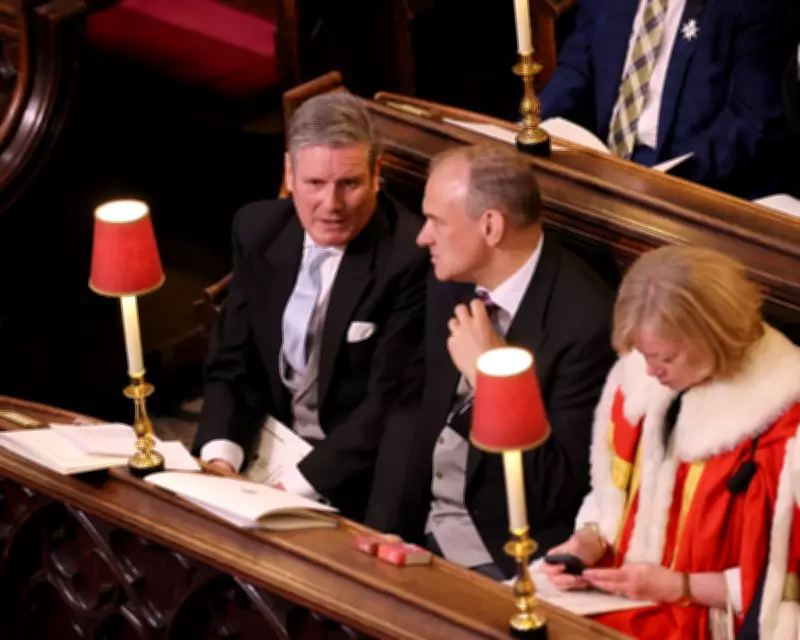
Liberal Democrat leader Ed Davey has delivered a blunt ultimatum to Prime Minister Keir Starmer and the Labour Party: resolve your internal conflicts immediately or call a general election. In a scathing assessment of the current political climate, Davey argues that the country cannot endure another three and a half years of what he describes as a "dysfunctional soap opera" emanating from Downing Street.
A Broken Promise of Stability
Davey recalls the early days of Starmer's premiership, when a social media post from Labour supporters celebrated "the quiet" after years of Tory turmoil. That optimism has now curdled into bitter irony. "Rayner resigns: 'Nice, isn't it. The quiet'; Mandelson sacked: 'Nice, isn't it. The quiet'; the prime minister loses his chief of staff – you get the picture," Davey writes, highlighting a relentless series of crises that have plagued the government.
Following Labour's historic election victory, which delivered their best result in a century, many anticipated a shift from drama to substantive policymaking. A prominent BBC journalist even remarked to Davey that coverage would focus on policy rather than political theatrics. For the leader of the policy-rich Liberal Democrats, this seemed a welcome change. However, that promise has utterly failed to materialise.

Fundamental Disagreements and Deepening Disappointment
Davey acknowledges he has never been aligned with Starmer on key issues. He criticises the Prime Minister for being weak on political reform, failing to address the cost of living crisis through a proper deal with Europe, and perpetuating Labour's instinct to centralise and bureaucratise. Despite these differences, Davey admits he genuinely hoped Starmer would end the perpetual political drama. "He is a decent man; I did not see in him the same zest to attain power just for the sake of it," Davey states, expressing a widespread desire for the Labour government to succeed.
Regrettably, the "Box Set" of governmental chaos has simply continued with a new cast. Davey points to poor decisions on pensioners' warm home discounts, the controversial farm tax, and the push for compulsory ID cards as evidence of severe misjudgment. The Mandelson debacle, he adds, stands as a profound disgrace to both the Labour Party and the nation.
Why Not Call for Starmer's Resignation?
Some might expect the Liberal Democrats to join the chorus demanding Starmer's resignation, but Davey refrains. He draws a parallel with the Conservative era, where endless changes in leadership failed to address the underlying rot within government. "I fear we could be in for the same with Labour: a neverending tussle over the keys to No 10, consuming all the energy of government that should be focused on the things that matter," he warns, citing urgent issues like hospital trolley waits as critical priorities being neglected.
The Stark Choice: Reform or Election
Davey's message to Labour is unequivocal: cease the infighting and navel-gazing, settle internal disputes decisively, and concentrate on governing effectively. "Do the job you begged voters to give you," he insists. Should Labour prove incapable of this, Davey asserts that a general election becomes imperative. The country simply cannot afford prolonged dysfunction.
Addressing potential objections, Davey acknowledges that some will lament "Not another election!" while others fear it could propel Nigel Farage into power. On the former point, he notes wryly that after six prime ministers in a decade, the aversion to further political upheaval is moot. "Either Labour MPs change the prime minister, or we all do," he concludes.
The Farage Factor and the Populist Threat
Regarding Farage, Davey argues that persisting with a failing Labour government for three more years actually increases the likelihood of a Reform UK victory, rather than diminishing it. He emphasises that Reform and its ideological ally, Donald Trump, thrive on governmental failure. When economic struggles persist, hospitals overflow, and petty crime seems rampant, the populist right gains traction by advocating systemic destruction over improvement.

"I'm really frightened that this is exactly the future Labour are sleepwalking the country into," Davey declares. He urges an immediate change in course, which requires more than merely swapping the occupant of Number 10. Labour must regain control of both their party and the pressing issues confronting ordinary citizens. If they cannot, Davey believes it is preferable to hold an election now, allowing alternative voices, including the Liberal Democrats, to present their solutions to the electorate.