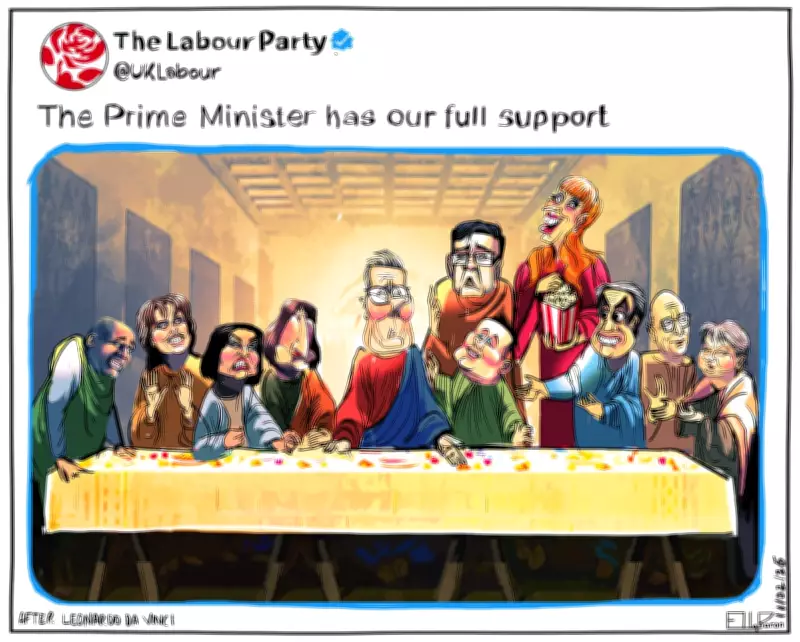
In a striking visual commentary on contemporary British politics, cartoonist Ella Baron has unveiled a new artwork that reimagines Keir Starmer in a 'Last Supper' tableau. This piece, published in early 2026, serves as a potent metaphor for the Labour leader's current predicament, capturing the multifaceted pressures and internal dissent he faces within his party.
Symbolism and Satire in Political Art
Baron's cartoon, which draws inspiration from Leonardo da Vinci's iconic Renaissance painting, places Starmer at the centre of a long table, surrounded by key figures from the Labour Party and British political landscape. Each character is depicted with subtle details that hint at their roles and allegiances, creating a layered narrative about power struggles, ideological divides, and the weight of leadership expectations.
The artwork uses humour and irony to critique the political climate, with Starmer portrayed as a figure grappling with betrayal and scrutiny, much like the biblical scene it references. This approach highlights the cartoonist's skill in blending historical allusion with modern-day satire to provoke thought and discussion among viewers.

Context and Reception
Published in a major media outlet, the cartoon has sparked widespread debate, with reactions ranging from amusement to serious analysis. Supporters of Starmer see it as a reflection of the harsh realities of political leadership, while critics interpret it as a commentary on perceived weaknesses or challenges within Labour's ranks.
Ella Baron, known for her incisive and often provocative illustrations, has a history of tackling complex political themes through her art. This piece continues that tradition, offering a visual lens into the tensions that define Starmer's tenure, including issues like party unity, policy direction, and public perception.
As political cartoons often do, Baron's work transcends mere entertainment, serving as a cultural artifact that encapsulates the mood of a specific moment in time. It invites audiences to consider the broader implications of leadership in a divided political environment, making it a relevant topic for ongoing discourse in British society.