France's 2027 Election: A Fragmented Opposition Risks Far-Right Victory
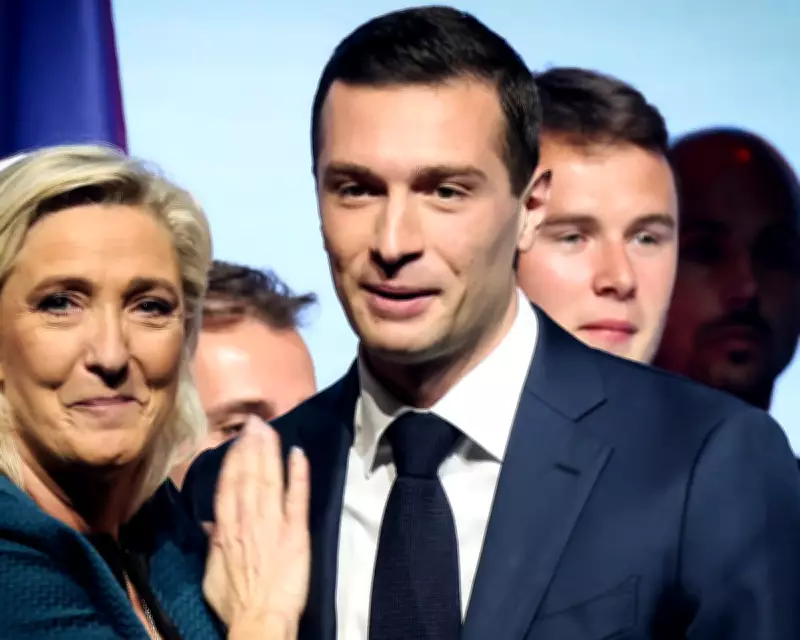
As France looks ahead to the 2027 presidential election, the political landscape is dominated by a pressing question: can anyone stop Jordan Bardella, the charismatic leader of the far-right National Rally (RN)? With anti-establishment sentiment surging and a crowded field of contenders, the opposition appears dangerously divided, potentially paving the way for a historic RN victory.
The Far-Right's Formidable Lead
Opinion polls consistently show the anti-immigration, Eurosceptic RN holding a substantial lead in first-round voting intentions. Bardella, the party's 30-year-old president, is polling as high as 38%, virtually guaranteeing him a spot in the run-off. His patron, Marine Le Pen, remains a key figure but faces ineligibility unless an appeals court overturns her embezzlement sentence in July. The RN's momentum was bolstered by recent municipal elections, where it gained ground in smaller towns, while the left retained control of major cities.
A Divided Left and Centre
The search for a unifying candidate to challenge Bardella has become urgent. On the left, radical France Unbowed leader Jean-Luc Mélenchon, 74, is poised for a third presidential bid, despite controversies including accusations of antisemitism and associations with militant groups. Polls indicate Mélenchon could split the left-wing vote, preventing any progressive candidate from reaching the second round, yet he trails Bardella significantly in a hypothetical run-off.

Centre-left figures like Raphaël Glucksmann, 46, and former president François Hollande, 71, are considering runs, but face challenges. Glucksmann appeals to urban professionals but struggles with working-class and rural voters, while Hollande's unpopular legacy from 2012-2017 hampers his prospects.
The Centre-Right's Contenders
On the centre-right, former prime minister Edouard Philippe, 55, has emerged as a frontrunner after his re-election as mayor of Le Havre. Recent polls suggest Philippe could narrowly defeat Bardella in a run-off, but as the early leader, he faces the peril of heightened scrutiny. He has postponed national campaigning to bide his time, focusing on mayoral duties while positioning himself as "on call for the republic."
Other centre-right hopefuls include Gabriel Attal, 37, leader of the centrist Renaissance party, whose bid could further fragment Macron's camp. Bruno Retailleau, 65, of Les Republicains, has thrown his hat in the ring, advocating for strict law and order policies, but faces internal rivalry from Laurent Wauquiez, 51, who proposes a broad primary excluding only the RN.
Elder Statesmen and Outsiders
Adding to the complexity, elder statesmen like Dominique de Villepin, 72, and Thierry Breton, 71, are positioning themselves as providential outsiders. De Villepin, known for opposing the US invasion of Iraq, has launched a micro-party to support his ambitions. Breton, a former EU commissioner, brings tech and defence expertise but lacks a political machine. Their entries could further dilute the opposition vote.
The Conundrum of Unity
The fundamental challenge remains: without a single, unifying candidate from the moderate right, centre, and left, Bardella's path to the Élysée Palace becomes increasingly likely. French politics, fragmented and polarised, struggles to replicate past primaries that once offered legitimacy. As anti-establishment moods deepen amid economic pressures, the risk of a split opposition gifting the election to the far right looms large. The next year will be a marathon race to see if France's political forces can coalesce in time to avert this outcome.