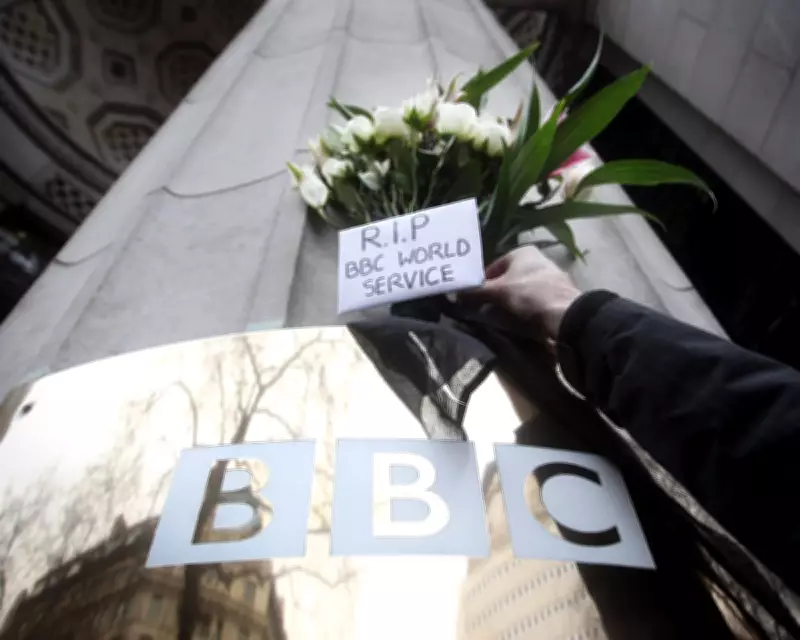
The Guardian View on the BBC World Service: This is London Calling
The BBC World Service, a cornerstone of British broadcasting and a global symbol of impartial journalism, is currently navigating a period of profound uncertainty and mounting challenges. For decades, its iconic opening phrase, "This is London calling," has resonated across continents, delivering trusted news and information to audiences in over 40 languages. However, this vital institution now confronts a dual threat: severe financial constraints and escalating political pressures that risk undermining its editorial independence and global reach.
Financial Strains and Operational Hurdles
In recent years, the World Service has grappled with significant budget cuts, which have forced difficult decisions about staffing, language services, and programming. These financial strains are not merely operational inconveniences; they represent a direct assault on the service's ability to fulfill its mission of providing accurate, unbiased news to regions where media freedom is often suppressed. The reduction in resources has led to the closure of some language services and reduced output in others, diminishing the BBC's presence in critical areas such as Eastern Europe, the Middle East, and parts of Asia.
Moreover, the reliance on government funding through the Foreign, Commonwealth and Development Office (FCDO) introduces a precarious dependency. While this funding is intended to support the World Service's global operations, it also opens the door to political influence, with governments potentially leveraging financial support to sway editorial content or prioritise certain narratives over others.

Political Pressures and Editorial Independence
The World Service's commitment to impartiality is increasingly tested by political pressures from both domestic and international quarters. In the UK, debates over the BBC's funding model and its role in public life have spilled over into discussions about the World Service, with some politicians questioning its value or advocating for greater oversight. Internationally, authoritarian regimes have targeted the service with censorship, jamming signals, and cyber-attacks, viewing its independent reporting as a threat to their control over information.
This environment challenges the World Service's core principle of delivering news without fear or favour. The risk is that, in response to these pressures, the service might inadvertently dilute its editorial stance or avoid controversial topics, thereby eroding the trust it has built with millions of listeners worldwide.
The Global Impact and British Soft Power
Despite these hurdles, the BBC World Service remains a powerful tool of British soft power, promoting democratic values, human rights, and cultural exchange. Its reporting has often provided a lifeline in conflict zones and under authoritarian regimes, where local media is either nonexistent or heavily censored. For instance, during the Arab Spring, the World Service's Arabic-language broadcasts played a crucial role in disseminating information and fostering dialogue.
The service also contributes to the UK's global influence by showcasing British perspectives and fostering international understanding. In an era of disinformation and polarised media landscapes, its reputation for reliability and integrity is more valuable than ever, helping to counter fake news and promote informed public discourse.
Future Prospects and Necessary Reforms
To secure its future, the BBC World Service requires a sustainable funding model that reduces its vulnerability to political whims. Options include diversifying revenue streams through partnerships, philanthropic donations, or increased commercial activities, while safeguarding editorial independence. Additionally, the service must continue to adapt to digital transformations, expanding its online and social media presence to reach younger audiences and navigate the evolving media ecosystem.

Ultimately, the survival and success of the BBC World Service are not just matters of institutional concern but are integral to the UK's role on the global stage. As "This is London calling" echoes into the future, it must do so with the unwavering commitment to truth and impartiality that has defined it for generations, lest it lose its voice in a world increasingly in need of reliable journalism.