House Speaker Mike Johnson has decisively torpedoed a bipartisan agreement passed by the Senate to reopen the Department of Homeland Security and resolve the escalating crisis at airports across the United States. In a move that has intensified political tensions, Johnson simultaneously implied that Senate Republican Leader John Thune lacks full control over his chamber.
Johnson's Defiant Stance on Immigration
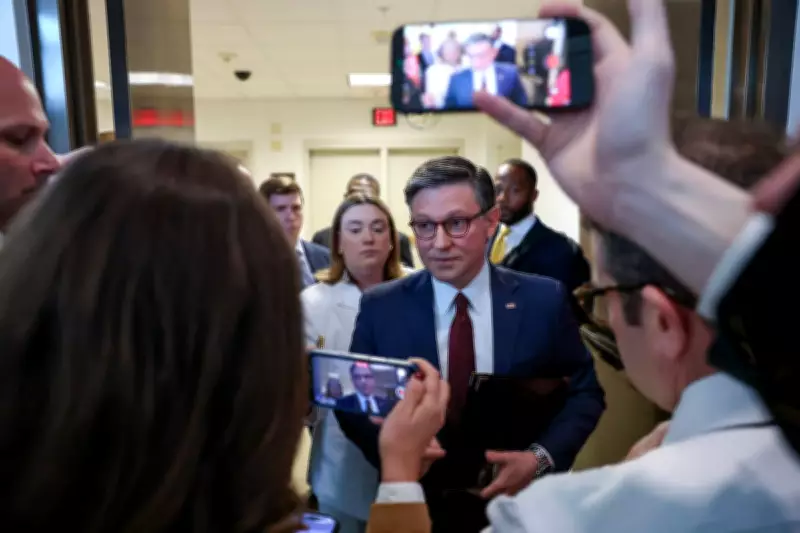
Speaking to reporters on Friday, 27 March 2026, following a series of votes and an extended telephone conference with House Republican members, Johnson outlined his uncompromising position. "The Republicans are not going to be part of any effort to reopen our borders or to halt immigration enforcement," he declared emphatically. The Speaker underscored his commitment to stringent immigration policies, stating, "We are going to deport dangerous criminal illegal aliens, because it is a basic function of the government. The Democrats fundamentally disagree with this approach."
Alternative Plan: A Two-Month Extension
Instead of accepting the Senate's proposed legislation, Johnson revealed his intention to push forward with a two-month extension of Department of Homeland Security spending. This short-term measure is likely to prolong the uncertainty and operational challenges facing airports, where staffing and security issues have already led to significant disruptions and passenger delays. The decision effectively stalls broader efforts to address the root causes of the airport crisis, leaving travellers and aviation officials in a state of limbo.

Political Fallout and Blame Game
Johnson's actions have sparked a sharp political confrontation, with his comments subtly questioning Senate Leader Thune's authority. By blaming his Republican counterpart in the Senate for the impasse, Johnson has highlighted deep divisions within the GOP regarding immigration and homeland security funding. This rift complicates the path to a sustainable solution, as both chambers remain at odds over how to balance border security with operational necessities at critical transportation hubs.
The rejection of the Senate deal not only exacerbates the immediate airport crisis but also sets the stage for further legislative battles. As Johnson advances his two-month extension, the focus shifts to whether Congress can bridge its ideological gaps before the situation deteriorates further, impacting national security and economic stability.