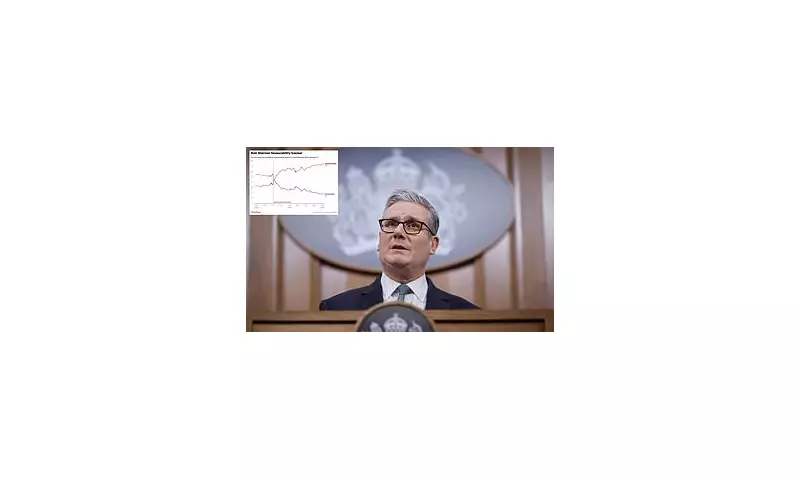
Sir Keir Starmer's public standing has collapsed to its lowest point since he entered Downing Street, according to devastating new polling data. The Prime Minister's personal approval ratings have entered uncharted negative territory, casting a dark shadow over Labour's attempted New Year reset.
Polling Disaster and Policy Reversals
YouGov's latest research reveals a staggering 75% of the British public now holds a negative view of the Prime Minister. This figure marks Sir Keir's worst personal rating ever recorded by the polling firm. A mere 18% of respondents reported a favourable opinion, resulting in a dire net approval score of minus 57. This represents a further three-point drop from the tracker's findings just one month ago.
The bleak statistics signal that the government's high-profile relaunch at the start of the year has failed to resonate with voters. The decline appears directly linked to a series of high-stakes policy reversals that have defined the opening months of 2026, cementing Sir Keir's reputation for political flip-flopping.

Key Concessions and Mounting Pressure
Two major climbdowns have dominated headlines. After months of vigorously championing digital ID cards as a crucial tool for tackling illegal immigration, Sir Keir bowed to a significant public and political backlash. He has now confirmed that the proposed digital ID system will be entirely voluntary, a major dilution of the original policy.
Simultaneously, Chancellor Rachel Reeves has been forced to draw up an emergency bailout package for thousands of pubs facing ruin. The intervention comes in direct response to the fallout from her own Budget, which hiked business rates. There is growing speculation that this relief will have to be extended to the wider hospitality sector, a move that would place additional strain on the Treasury's finances.
A Government on the Back Foot
These retreats seem to have opened the floodgates to internal dissent and external pressure. The government now faces massive resistance to its controversial proposals for curbing the right to jury trials, with campaigners warning ministers they risk appearing foolish by continuing to publicly defend the measure.
Furthermore, a clamour is building within the Labour Party for ministers to bring forward a ban on under-16s using social media—a policy Sir Keir himself previously opposed. This growing list of policy headaches points to a administration struggling to maintain discipline and momentum.
The Stakes for Starmer's Future
With increasingly mutinous backbench MPs pushing for changes on multiple fronts, the Prime Minister's authority is being tested as never before. The upcoming local elections in May are now viewed as a critical juncture for Sir Keir's political fate. They will serve as the first major electoral test of public sentiment since this poll slump and the associated policy disarray.
If the negative polling trend translates into significant losses at the ballot box, pressure on the Labour leadership will become intense. The data suggests that, for now, the public's patience with perceived indecision and reversal is wearing dangerously thin.