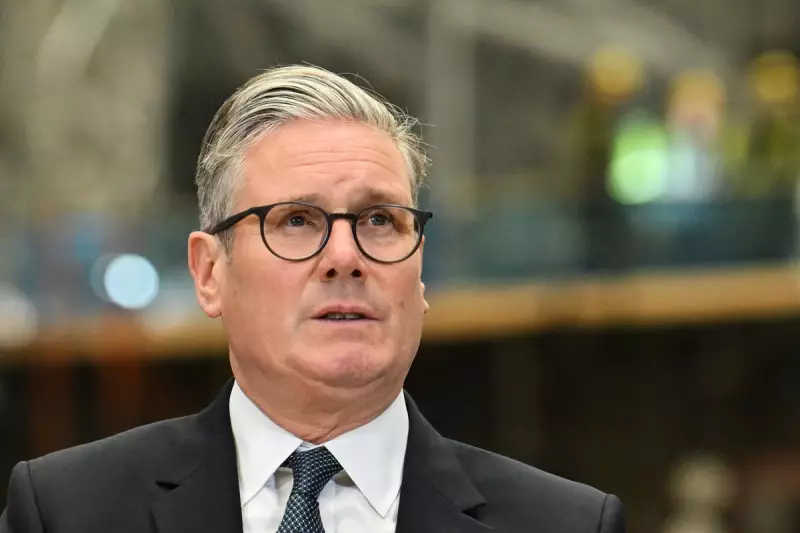
Sir Keir Starmer's government has cost the British economy a staggering £8.2 billion in lost economic growth through a series of major policy U-turns, according to a damning new analysis.
The Staggering Financial Toll of Policy Reversals
A report published by the influential think tank, the Resolution Foundation, on Monday 19 January 2026, indicates that frequent changes in direction have created significant policy uncertainty. This uncertainty is now higher than during any of the previous seven Parliaments, despite Labour's core election pledge to deliver stability.
The analysis pinpoints specific reversals on welfare policies as major contributors to the economic damage. U-turns affecting personal independence payments (PIP), universal credit, the winter fuel allowance, and the two-child benefit cap collectively delivered a heavy blow to economic planning and growth projections.

Recent Reversals Add Hundreds of Millions More
The cost to the nation is continuing to rise. More recent policy shifts are projected to add a further £430 million to the total bill. These include sudden changes to planned business rates for pubs and alterations to inheritance tax rules affecting farmers.
Chancellor of the Exchequer's own reversals have totalled £6.1 billion alone. This figure places the financial impact of these U-turns second only to the economic disruption caused by Liz Truss's infamous 'mini-Budget' over the last fifteen years.
A Pattern of Instability Under Starmer
Sir Keir Starmer's tenure in Number 10 has become defined by numerous high-profile policy reversals. The report suggests that the cumulative effect of this governing style is a direct £8.2 billion drag on the UK's economic growth.
This finding starkly contradicts the government's promised era of certainty and steady management, raising serious questions about the long-term economic strategy and its execution.
The Resolution Foundation's work highlights a critical challenge for the administration: restoring confidence and demonstrating a clear, consistent direction to avoid further economic penalties.