MAGA Movement's 'Draft Rubio' 2028 Campaign Gains Momentum Amid GOP Succession Race
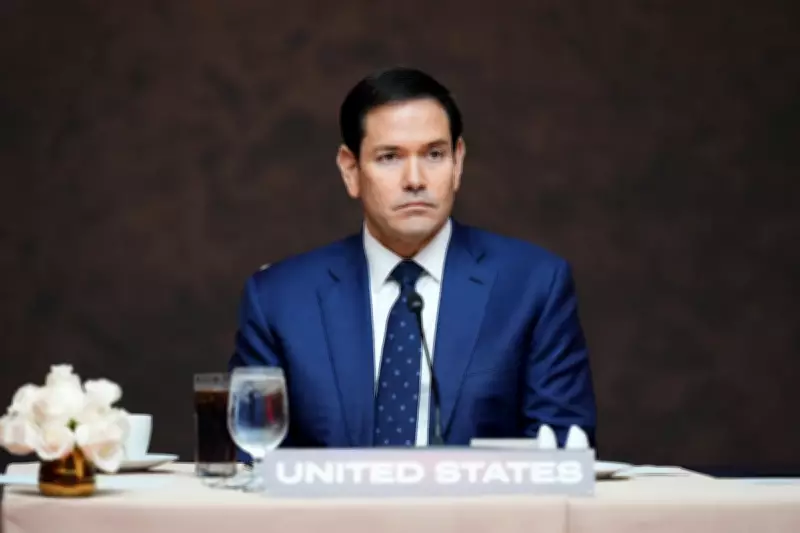
Secretary of State Marco Rubio is experiencing a significant surge in support from within President Donald Trump's MAGA movement, with a burgeoning "Draft Rubio" campaign for the 2028 presidential election reportedly taking shape. This development positions Rubio as a formidable contender against Vice President JD Vance, who has long been viewed as the natural heir to Trump's political legacy.
Rubio's Rising Profile and Key Roles
Marco Rubio, who once challenged Trump for the Republican nomination in 2016 with a series of heated exchanges, has since transformed into one of the administration's most loyal cabinet members. In addition to his primary role leading the State Department, Rubio currently serves as acting national security adviser and acting director of the U.S. Agency for International Development, giving him unprecedented influence across multiple critical government functions.
His visibility has been particularly enhanced by his central involvement in two major foreign policy initiatives:
- Leading the administration's operation to remove Nicolas Maduro from power in Venezuela in January
- Playing a key messaging role in the U.S.-Israeli airstrikes on Iran
Donor Enthusiasm and Presidential Approval
According to multiple reports, Republican donors have been particularly impressed with Rubio's performance and are reportedly prepared to back him for a presidential bid. The Wall Street Journal noted that Rubio's dedication extends to personal gestures, such as wearing uncomfortably large leather Florsheim Oxford dress shoes gifted by Trump simply to please the president.
ABC News has reported that Trump himself has taken private note of Rubio's growing popularity, describing his secretary of state as "popular" and "loved" in conversations. The president reportedly even asked donors at Mar-a-Lago last month whether they preferred Rubio to Vice President Vance, directly challenging the long-held assumption about the succession hierarchy.
The Vance-Rubio Dynamic and Trump's Calculated Ambiguity
The Wall Street Journal reported last summer that Trump has deliberately fostered competition between Vance and Rubio regarding who might succeed him, rather than offering explicit endorsement to either. "Which one of you is going to be at the top of the ticket?" Trump reportedly asked them. "I used to think it would be Vance-Rubio, but maybe it will be Rubio-Vance."
This strategic ambiguity has created an environment where both men must continually prove their loyalty and effectiveness. While Vance has maintained his position as vice president, Rubio's more visible role in high-profile military operations has given him distinct advantages in the public eye.
Operational Contrasts and Policy Divisions
The differences between Vance and Rubio became particularly apparent during Operation Epic Fury against Iran. Rubio was photographed alongside Trump at Mar-a-Lago on February 28, overseeing the initial stages of the mission from a makeshift "Situation Room." Meanwhile, Vance remained in Washington, manning the actual Situation Room but appearing comparatively isolated.
This visual contrast underscored their policy differences: Vance had previously expressed opposition to military intervention in Iran and has been less prominent than Rubio or other hawkish Republicans like Senator Lindsey Graham in championing the airstrikes. Vance has faced criticism from some Trump allies for maintaining associations with non-interventionist figures like conservative pundit Tucker Carlson.
Administration Pushback and Strategic Caution
White House Communications Director Steven Cheung moved quickly to downplay suggestions of a Vance-Rubio rivalry, stating: "The president has assembled an all-star team that has achieved unprecedented success in just over one year. No amount of crazed media speculation about Vice President Vance and Secretary Rubio will deter this administration's mission of fighting for the American people."
A senior Republican strategist offered additional perspective, cautioning that "donors don't pick the nominee – the base picks. Donors tried to abandon President Trump and tried to pick [Florida Gov. Ron] DeSantis, and we all saw how that went." This reminder suggests that despite donor enthusiasm for Rubio, the ultimate decision rests with Republican voters.
Political Risks and Public Sentiment
The ongoing engagement with Iran presents potential risks for Rubio, given public unease about the conflict's purpose and duration. According to an Ipsos poll, only 29 percent of Americans currently support the operation, with 43 percent opposed and 26 percent uncertain. Should backlash develop, Defense Secretary Pete Hegseth could also face scrutiny as a potential fall guy.
Despite the emerging competition, Rubio has publicly pledged support for Vance's potential candidacy, telling Vanity Fair last year: "If JD Vance runs for president, he's going to be our nominee, and I'll be one of the first people to support him."
Polling Landscape and Electoral Prospects
Current polling reveals a complex picture of both men's national appeal:
- An NBC News poll indicates that 49 percent of registered voters view Vance negatively, while 41 percent oppose Rubio
- A Real Clear Polling analysis gives Rubio an 18.8 percent chance of winning the 2028 presidential election against California Democratic Governor Gavin Newsom (18.5 percent) and Vance (17.3 percent)
- The same analysis suggests Vance is more likely to win the Republican primary, with the vice president at 45 percent support, Donald Trump Jr. at 17.5 percent, Rubio at 11.1 percent, and Ron DeSantis at 7.4 percent
As the 2028 election approaches, the "Draft Rubio" movement represents a significant development within MAGA circles, challenging conventional assumptions about the Republican succession and creating a dynamic competition that reflects both personal ambition and ideological divisions within the party.