Hungary's Orbán Faces Electoral Reckoning as Trump's Support Backfires
After 16 years in power, Hungarian Prime Minister Viktor Orbán is fighting for his political survival as the country heads to the polls on Sunday. Orbán, who has championed an "illiberal democracy" that has clamped down on press freedoms and the judiciary while blocking vital support for Ukraine, now faces a stern test from a resurgent opposition led by former Fidesz insider Peter Magyar.
The Rise and Fall of Orbán's Illiberal Project
In 2014, at a cultural event in Romania, Orbán unveiled his vision for Hungary's future, arguing that the 2008 financial crisis had exposed flaws in liberal democracy and that a strong state less focused on personal freedoms was the answer. "Just because something is not liberal, it still can be a democracy," he declared prophetically.
Twelve years later, Hungary has transformed under his leadership. Orbán, now 62, has positioned himself as a defender of cultural identity, implementing some of Europe's toughest asylum rules, limiting gay rights, and offering generous family handouts to combat falling birth rates. This has made him Europe's clearest internal threat to values like free speech, rule of law, and tolerance.

Trump's Backing: A Double-Edged Sword
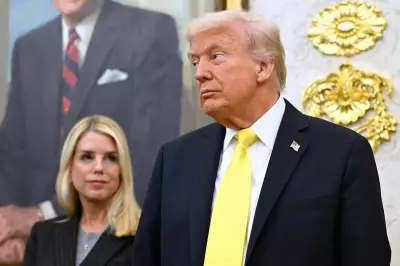
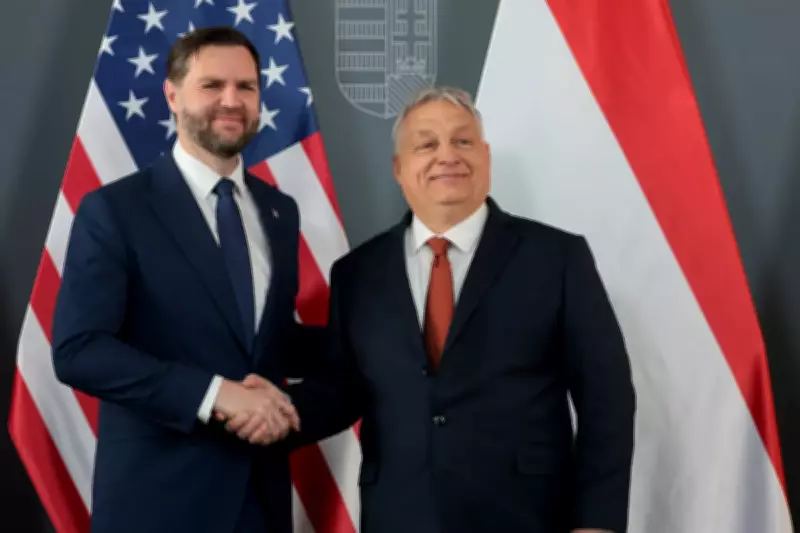
Orbán's tough stance on immigration and emphasis on "Christian family" values attracted the backing of former US President Donald Trump. MAGA and Fidesz have since become ideological allies, with Washington sending Vice President JD Vance to campaign for Orbán this week—an intervention unthinkable under previous US administrations.
Paradoxically, Trump's support may have sealed Orbán's fate. Polls conducted after Vance's high-profile visit showed the incumbent leader's performance dropping, as Trump's "America First" policies continue to hurt European economies. Betting markets suggest the trip backfired, undermining Orbán's re-election bid.
Economic Woes and EU Pressure
Orbán's popularity has suffered due to Hungary's faltering economy. Despite being a high-income, industrialised nation, it struggles with inflation and spending constraints tied to democratic shortcomings. The EU has withheld roughly €19 billion in funding over rule of law and corruption concerns, exacerbating economic pain.
Éva Fodor, a professor at Central European University, noted: "Orbán is now trying to turn on the heat, but they don't seem to have any new ideas. Before every election, they had a different kind of enemy: immigrants, George Soros, Brussels, and the gender lobby. But now they don't seem to have a new enemy that they can construct."
Peter Magyar's Challenge
Waiting in the wings is Peter Magyar, a 45-year-old former Fidesz insider who emerged as a rival in 2024. His Tisza party has tapped into public discontent with years of economic stagnation and corruption, promoting a "Hungarian New Deal" that promises massive investment, predictable policies, and clamping down on graft.
Magyar says it is "now or never" to reverse Fidesz's damage, but analysts caution that a victory would not immediately swing Hungary back to liberal democracy. Polls show Magyar leading with 52% support among decided voters, compared to 39% for Fidesz, but around one in five voters remain undecided.
Election Dynamics and Potential Pitfalls
Polls open on Sunday morning, with preliminary results expected by evening. Most voters will cast two votes: one for a constituency candidate and another for a nationwide party list. About 95% of votes will be processed on election night, but ballots from abroad could delay a definitive outcome in a tight race.
Historical gerrymandering, ethnic Hungarians in neighbouring countries supporting Fidesz, and potential vote manipulation could cause an upset. Dr Jonathan Eyal of the Royal United Services Institute warned that Orbán has laid traps for any successor, creating quasi-government bodies to interfere with a new administration.
Implications for Europe and Russia
A change in leadership would be bad news for Russia. Hungary, dependent on Russian oil and gas, has been a valuable access point for the Kremlin to influence support for Ukraine in Europe. Orbán's government has blocked aid, with leaked conversations suggesting collaboration with Moscow.

Magyar is likely to remain "suspicious" of Ukraine but aims to be "unobstructive" in Europe, potentially allowing a €90 billion loan for Ukraine to pass. He advocates "pragmatism" in the conflict, emphasising sovereignty without mutual interference.
Dr Eyal stressed that Europe must avoid "liberal purism" while Magyar adjusts to a system designed to destroy him. Orbán's defeat would show that the global swing towards autocracy is not inevitable. "If Orbán was to lose power, this is an important lesson for other countries that you can reverse this trend," he said. "He stands for the past, not the future."