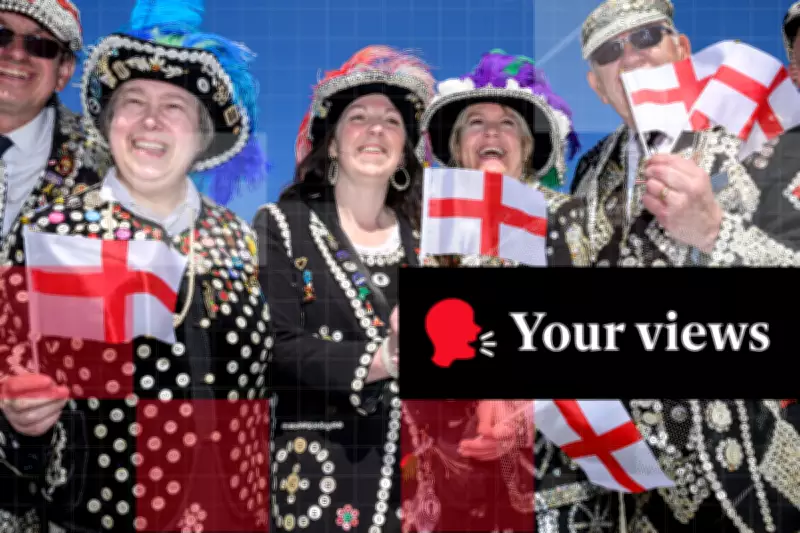
St George's Day has reignited a fierce debate over the meaning of the England flag, with Independent readers offering sharply divided views on whether it remains a unifying national symbol or has been co-opted by divisive elements.
A nation divided over a symbol
The discussion revealed a deeply fractured perspective. For some, the backlash against the flag reflects what they see as hypocrisy and double standards, with English identity unfairly stigmatised compared to other UK nations. But many others argued the issue is not the symbol itself, but how it has been used—particularly by groups perceived to project exclusion or intimidation.
A dominant theme was that the flag has been tainted or weaponised, with several readers linking its display to political extremism or aggressive behaviour. This, they suggest, has led to a wider reluctance among many to display it, even during major sporting events. Others pushed back, insisting the flag belongs to everyone and should be reclaimed as a symbol of inclusion and shared identity in a diverse, modern Britain.

Double standards apparent
One reader, JSMill88, commented: "It's the left who have created the hatred for the flag and England. They celebrate flags and nationalism of every UK country except England. The hypocrisy and double standards are very apparent. You are made to feel ashamed and guilty to be English, whilst celebrated if Scottish or Welsh."
It's not the flag, it's the behaviour
Another reader, leafspot, offered a different perspective: "When I see an England flag I think, oh God, someone's going to be upset but it isn't me because I don't care – it's just a flag. When I see grown men, predominantly men, marching about shouting the odds, the flag is the last thing that bothers me. It's their noise, their message, behaviour and demeanour – they could be carrying dishcloths or ribbon."
Taking back the flag
Jools argued for reclaiming the symbol: "The flag has been tainted by those who choose to fly it everywhere as a means to mark their territory, no better than dogs leaving their scent at lampposts. It isn't an act of patriotism; it is meant to threaten those they perceive as 'don't belong'. It actually makes me think twice about putting the flag up during England games, but I will raise it today in defiance of these people – take back the flag!"
A flag that should unite everyone
Essuu, a reader with diverse heritage, wrote: "The flag of St George is my flag too. A flag is a symbol, a 'standard' that is meant to identify and unite all of those within a certain group. The UK has a diverse ethno-cultural history, and London, its capital, is regarded as one of the world's most ethnically diverse cities, with over 170 different languages spoken every day. ... It's not about where you're from. It's about where you are now and what you want to do from here."
Restricting flag use to public offices
Pomerol95 proposed strict regulations: "The union flag should only be allowed to be flown from public offices, and the country's flag should only be allowed to be flown from public offices on that country's public holiday. No private individual should be allowed to fly any flag, nor should any flags be flown from lampposts or painted on roads or walls."
Decline of flag displays in diverse areas
Greg noted a worrying trend: "It's really sad. It was reclaimed from the far right but they have been allowed to have it back. I live in a very multi-ethnic area and a few years ago, if England was in a tournament – World Cup or Euros – there would be St George's crosses up and down the street. I doubt there will be for the World Cup in the summer."
Flags used as intimidation in communities
Hayneman described a local issue: "Clearly not in Bristol. There are still many roads lined with intimidating Union and St George flags. They are illegally placed there by neo-fascist groups to specifically threaten immigrants and those who don't agree with their odious racist views. But when contacted, the council refuses to remove them, seeming to agree with the sentiments they express. Why?"

A medieval revival
David Lindsay offered historical context: "Before Euro 96, the English regarded the Union Flag as their national flag without any complication. The present medieval revival was initiated 30 years later to sell bad beer to football's new middle-class audience. That revival predates devolution or anything like that. But we do have it now. It can be used to advantage."
The Welsh dragon
Mintman compared flags: "The Welsh dragon has been voted the world's coolest flag, a sign of identity, and as it flutters in the wind it seems to be alive. The English flag is now seen by many as a sign of hate and intolerance, remembering that the Reformers decreed, initially, only the Union Jack and Cross of St George could be put on council buildings."