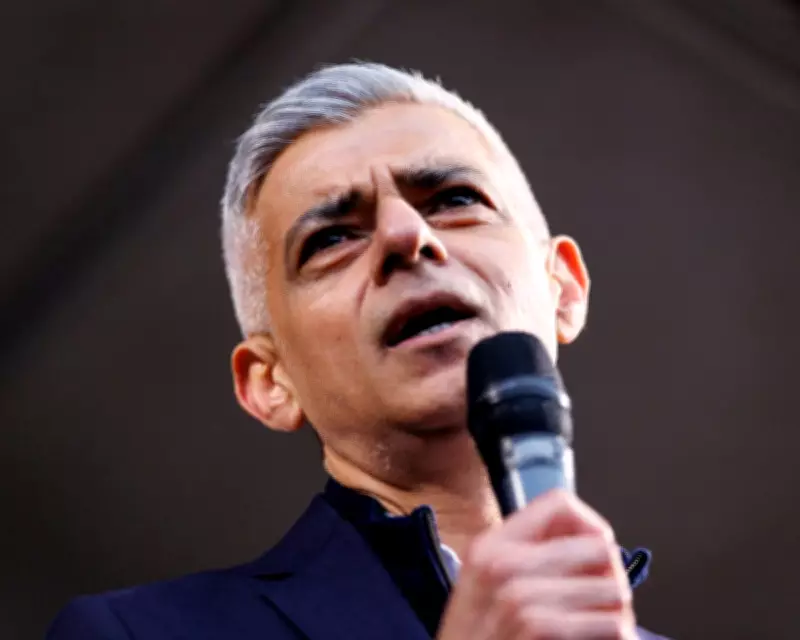
London Mayor Sadiq Khan has issued a bold call for the Labour Party to commit to rejoining the European Union in its next general election manifesto, marking a significant escalation in his pro-EU advocacy. Khan, who has long championed closer ties with the bloc, now argues that full membership should be a central pledge for Labour at the ballot box.
From Customs Union to Full Rejoining: Khan's Escalated Stance
While Khan has previously advocated for the UK to rejoin the EU's customs union and single market, he took his position much further in an interview with the Italian publication La Repubblica on Wednesday night. He stated that Labour should fight the next election with a clear commitment that a vote for the party means a vote to rejoin the European Union, describing this move as "inevitable."
Economic Instability and Trump Policies Drive New Argument
Khan cited two primary reasons for this shift: the passage of time since the 2016 referendum and the economic instability caused by policies under US President Donald Trump since Labour took office in July 2024. He highlighted Trump's imposition of tariffs on allies and adversaries alike, which he said has created unforeseen economic uncertainty.

"President Trump is imposing tariffs to friend and foe, creating huge economic uncertainty that was unforeseen at the last general election," Khan explained. He also pointed to America's involvement with Israel in a war in Iran, which he argued causes additional economic turmoil by affecting oil prices and the cost of living.
"God knows what President Trump's exit strategy is, what the endgame is," Khan added. "So the facts have changed. The evidence has changed, which is why this parliament, we should rejoin the customs union and single market. I'm quite clear."
Brexit Damage and Economic Impact
Khan emphasized that he witnesses daily "the damage Brexit has done to not just London, but Londoners, the damage economically, socially and culturally." He referenced new research from the National Institute of Economic and Social Research and Goldman Sachs, which suggests the UK economy would have grown by an additional 10% without Brexit.
On the election front, Khan asserted, "On the ballot paper of the next general election is a vote for Labour, a vote to rejoin the European Union, and we should be unequivocal about the benefits of the European [Union] because we've now seen the alternative."
Contrast with Government Policy
Khan's demand represents a stark departure from the current government's stance, which focuses on "resetting" relations with the EU rather than rejoining. Chancellor Rachel Reeves, in a speech earlier this week, acknowledged that Brexit has reduced GDP by up to 8% and contributed to higher prices for businesses and consumers.
However, Reeves insisted she is not trying to "turn back the clock" on Brexit but to build a "new and stable future relationship" with Brussels. This highlights a growing divide within Labour ranks over how to address post-Brexit challenges, with Khan pushing for a more radical approach.
Historical Context and Future Implications
The UK voted to leave the EU in the 2016 referendum under Prime Minister David Cameron, completing its formal separation in 2021. Khan's call for rejoining signals a potential major policy shift for Labour, as the party grapples with economic pressures and international uncertainties.
As debates over university fees and other issues show, resetting UK-EU relations may not be straightforward. Khan's intervention adds fuel to this complex political landscape, positioning EU membership as a key election issue for Labour's future.