Scottish Labour Leader Anas Sarwar Dismisses Reform UK Deal Allegations as 'Desperate Lie'
Scottish Labour leader Anas Sarwar has vehemently denied claims made by Reform UK's Scotland leader, Malcolm Offord, that he attempted to broker a deal with the right-wing party to exclude the Scottish National Party from power. Sarwar labelled the accusation as "a desperate lie from a desperate man," firmly stating there have been "no stitch-ups, no deals, no backroom chats with Reform" regarding the upcoming Holyrood elections.
Debate Sparks Political Row Over Alleged Backroom Negotiations
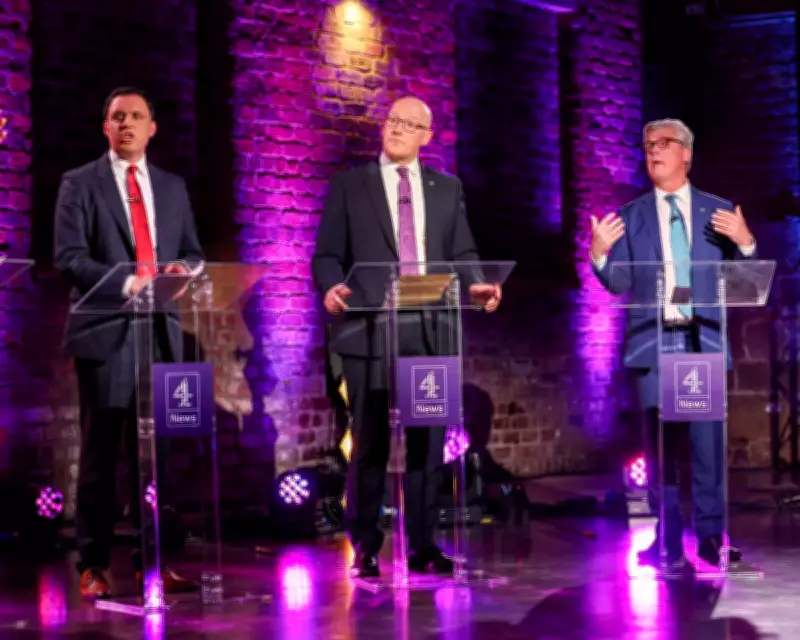
The controversy erupted during Channel 4's Scottish leaders' debate on Tuesday evening, where Offord alleged that Sarwar approached him at an event in Paisley town hall last December, suggesting they "work together to remove the SNP." Offord maintained his account after the debate, with Reform UK candidate Thomas Kerr in Glasgow claiming similar overtures were made months earlier. The SNP quickly seized on the exchange, posting it on social media as evidence of Scottish Labour pursuing "a grubby deal."
Holyrood Election Dynamics and Potential Power Balances
Under Scottish parliament rules, a first minister must be elected by MSPs, with the convention favouring the leader of the largest party. However, Scottish Labour and the Liberal Democrats hope to collectively secure enough seats to elect Sarwar instead, potentially with Conservative support. With Reform UK projected to win up to 10 Holyrood seats, Offord could hold the balance of power, possibly forcing Sarwar to accept support from the populist party—a scenario some Labour figures have privately speculated might be necessary.

Senior Labour and Liberal Democrat sources have emphatically denied any intention to court Reform votes, suggesting Offord would likely abstain to avoid backing a Labour administration, thereby allowing SNP leader John Swinney to prevail. Swinney has alleged that if the SNP falls short of a majority, Scottish Labour would seek Reform UK's support, intensifying the political stakes.
Sarwar's Strong Rebuttal and Accusations of Racism
Speaking to reporters after the debate, Sarwar dismissed Offord's claims as "desperation from a party whose campaign has completely flunked." He reiterated that there had been "no stitch-ups, no deals, no backroom chats, no back-channel contact with Reform," with Labour sources calling the allegations a "flat-out lie." Sarwar also highlighted personal attacks from Reform, noting that one candidate suggested deporting his children, and questioned Offord's credibility given Reform's history of racist remarks and Islamophobic adverts targeting him.
During the debate, Offord countered by accusing Sarwar of hypocrisy, recalling the alleged encounter in Paisley where Sarwar purportedly said, "Interesting move to Reform. I always thought you was more of a unionist than a Tory, Malcolm," before suggesting they collaborate to oust the SNP. Offord insisted his account was accurate, describing Sarwar's approach as abrupt and opportunistic.
Broader Political Context and Reform UK's Campaign Challenges
The row unfolds against a backdrop of Reform UK's faltering Holyrood campaign, which has seen five candidates step down or be suspended. Offord recently dismissed questions about historical offensive tweets by Reform candidates, calling it a "slippery slope" to examine decade-old social media posts. Meanwhile, Reform leader Nigel Farage addressed a rally in Aberdeen, predicting the party could become the second largest at Holyrood and serve as an effective opposition voice against the SNP if campaign efforts succeed.
Sarwar further criticised Swinney's response to the allegations, expressing disappointment that the SNP leader would imply a deal with Reform while condemning their racism elsewhere. He urged Swinney to reflect morally on leveraging such claims for political gain, emphasising the personal nature of the attacks against him and his family.
As the Holyrood elections on 7 May approach, this dispute underscores the volatile political landscape in Scotland, with parties manoeuvring for advantage amid accusations of deceit and ethical compromises. The outcome may hinge on delicate seat distributions and potential alliances, making transparency and trust central issues for voters.