Republican Leader Defends Congressional Departure Amid DHS Funding Impasse
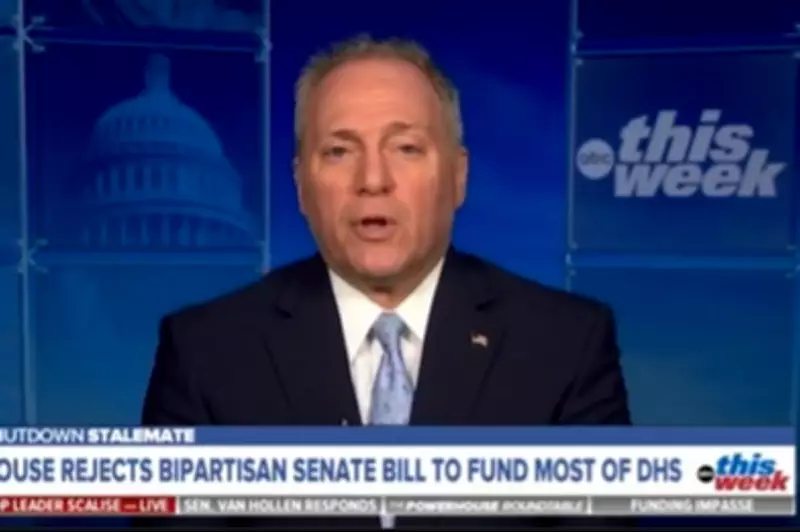
House Majority Leader Steve Scalise has publicly defended fellow Republican lawmakers who left Washington D.C. without voting on a Senate proposal to end the partial government shutdown affecting the Department of Homeland Security. The Louisiana congressman appeared on ABC's This Week program on Sunday to explain the House's strategy regarding the ongoing funding crisis.
Funding Deadlock and Congressional Recess
The political standoff escalated when the Senate unanimously passed legislation that would fund most DHS operations through September, excluding Immigration and Customs Enforcement's enforcement and removal programs. In response, the House approved a short-term funding package before members departed for an Easter recess that extends through next weekend.
This congressional departure virtually guarantees that DHS agencies, including the Transportation Security Administration responsible for airport security, will remain unfunded for at least another week. Both chambers adjourned on Thursday and Friday, leaving the funding crisis unresolved as lawmakers return to their home districts.

Scalise's Defense of House Strategy
During his television appearance, Scalise maintained that the House had remained in session longer than originally planned to address the funding issue. "We sent a bill that was short term. It's not exactly what we want, but at least it allows everybody to get paid, all the agencies, TSA, while we negotiate our differences. We have very big differences," Scalise told ABC's Jonathan Karl.
When pressed about Congress leaving town while DHS remains unfunded during heightened security concerns related to the Iran conflict, Scalise emphasized that the House had fulfilled its responsibility by passing legislation. "Well, Congress — the House stayed later than we were scheduled to stay to take up a bill to fully fund the department, and sent it back over to the Senate. The Senate's got options. They've got to come back and deal with it," he stated.
Airport Chaos and Executive Action
The funding impasse has created significant operational challenges at airports nationwide, with TSA staffing shortages causing severe delays. Several major airports, including those in Baltimore and Houston, experienced wait times exceeding four hours last week, with some facilities reporting TSA call-out rates as high as 40 percent.
In response to the growing crisis, President Donald Trump signed an executive order directing DHS to collaborate with the Office of Management and Budget to ensure TSA agents receive paychecks despite the funding lapse. However, legal experts and some Democratic lawmakers have questioned the order's legality, suggesting it may face court challenges.
Partisan Divide Over ICE Funding
The core disagreement between Democrats and Republicans centers on funding for ICE's enforcement and removal operations. These programs have become increasingly controversial following the shootings of two Americans, Renee Good and Alex Pretti, by federal agents in Minneapolis during the Trump administration's enforcement surge.
Democrats have proposed several reforms to break the stalemate, including:
- Requiring ICE agents to remove masks during operations
- Mandating judicial warrants before searching Americans' homes or private property
- Implementing additional oversight measures for enforcement actions
Republicans have resisted these proposals, particularly regarding mask requirements, resulting in the agency operating in shutdown mode for over a month. The partisan divide has created a legislative gridlock that shows no immediate signs of resolution, even as airport disruptions continue to affect thousands of travelers daily.
Travel officials continue to warn Americans about potential sudden and severe delays at airports due to ongoing staffing shortages. The situation remains fluid, with uncertainty about how long TSA agents can be paid through alternative funding mechanisms given congressional spending restrictions.