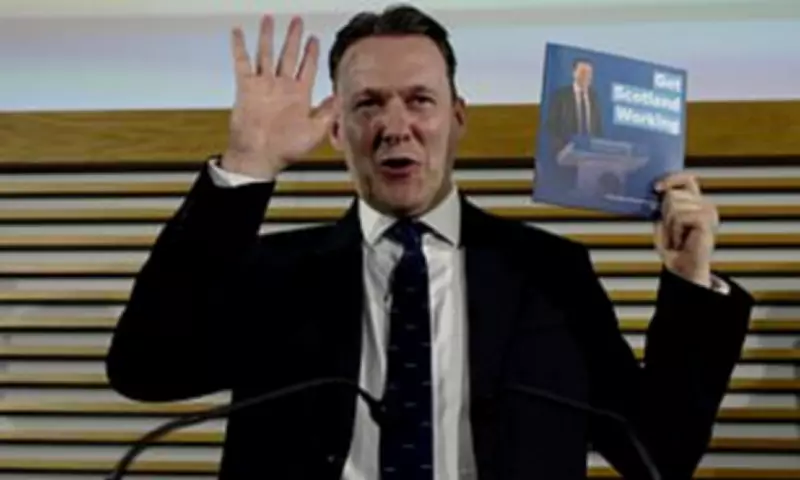
Scottish Conservatives Unveil 'Get Scotland Working' Election Blueprint
The Scottish Conservative Party has launched its manifesto for the upcoming Holyrood election, centering on a plan titled 'Get Scotland Working'. The blueprint promises extra support for hard-working families in Scotland, significant cuts to benefits spending, and a major reduction in the size of the public sector.
Core Pledges and Constitutional Stance
Party leader Russell Findlay emphasised that the proposals are 'fully costed' and make economic growth the top priority for the next Scottish Parliament. The manifesto contains five key pledges: cutting family bills by up to £2,500, raising school standards, delivering faster GP appointments, fixing roads, and putting more police on the streets.
On the constitution, the document opposes any attempt to hold another independence referendum, branding First Minister John Swinney's plans a 'secret plan for independence'. It pledges to ban Scottish Government spending on pro-independence propaganda and require civil servants to sign a neutrality pledge on constitutional matters.

Taxation and Cost of Living Measures
The manifesto includes substantial tax reforms aimed at alleviating the cost of living crisis. These involve scrapping the 20p basic rate and 21p intermediate rate of income tax, replacing them with a single 19p rate on all taxable earnings above the personal allowance until the current higher rate threshold.
Thresholds would rise by at least inflation annually for five years to prevent 'fiscal drag', where pay rises push workers into higher tax brackets. The higher rate threshold would also increase to match UK levels. Households would receive a council tax rebate funded by government savings, and pensioners could reclaim the first £500 of income tax paid on pension income.
Public Sector and Welfare State Overhaul
A series of pledges commit to cutting £1.5 billion from spending on public bodies, reducing the number of quangos by at least a quarter, and returning civil servant numbers to 2016 levels. Foreign aid spending would also be reduced.
The plan includes creating a 'Scottish Agency of Value and Efficiency', similar to a US oversight body, banning 'woke' roles in the public sector, clamping down on unnecessary first-class flights, and reimposing a ministerial pay freeze.
Welfare reforms would introduce new assessment systems for adult mental health benefits requiring medical diagnosis, impose a two-child cap on the Scottish child payment, establish a fraud unit to tackle benefit cheats, and end 'light touch' reviews of claims. Cold weather payments for pensioners would be restored.
Economic Growth and Business Support
Under the Tory plan, economic growth would become the Scottish Government's primary policy objective. A new Bill would cut red tape for businesses, with a moratorium on new regulation. Business rates would be lowered, restructured, and capped during revaluations, with extra support for retail, hospitality, and leisure firms.
Tax reliefs would be offered to firms creating jobs in 'left-behind' communities, and a 'Jobs For Life' scheme would help redundant workers retrain. Canary Wharf-style enterprise zones would be introduced, and councils would get funding to abolish car parking charges for short stays under two hours to boost high streets.
Transparency, Transport, and Other Policy Areas
The manifesto aims to end a 'culture of secrecy' in the SNP Government through a Scottish information and whistleblowers commission, a Government Transparency Bill, and requiring charities to disclose taxpayer funding. It also proposes ending 'gagging orders', restricting political appointments, and introducing a Recall Bill for voters to sack MSPs.
On transport, an emergency law would speed up upgrades to key roads like the A77 and A9, a national pothole fund would be introduced, and there would be a crackdown on illegal e-bikes and e-scooters. Free bus passes would be removed from those involved in antisocial behaviour and asylum seekers.
Other pledges include opposing new alcohol advertising restrictions to protect jobs, reviewing regulatory barriers for tourism firms, overhauling Historic Environment Scotland, and amalgamating some culture quangos.

Housing, Energy, Health, Education, and Justice
Housing measures would scrap the land and buildings transaction tax on primary residences, halt a new building safety levy for cladding repairs, end rent controls, and scrap policies making it easier for asylum seekers to access housing.
Energy policies would scrap the plan to make Scotland net zero by 2045, provide more support to off-grid households, abolish renewable energy subsidies, scrap the energy profits levy, and support new oil, gas, and nuclear developments. All major energy infrastructure would be paused, with a new law allowing communities to reject pylons.
Health pledges guarantee GP appointments within 48 hours, increase NHS capacity for procedures like knee and hip replacements, eliminate corridor care in hospitals, guarantee women access to single-sex wards, close the Glasgow drug consumption room, and scrap minimum pricing.
Education reforms would expand free childcare, conduct a national review of 'mainstreaming' for additional support needs pupils, support breakfast clubs for all primary pupils, give head teachers more power to exclude pupils, and protect exam-based learning.
Justice proposals include increasing police patrols, opposing station closures, introducing whole life sentences for dangerous criminals, jailing shoplifters, mandating life sentences for child rapists, expanding prison places, and sending some inmates abroad to prevent emergency early releases.
While some pledges require a Tory government, others could be delivered if the SNP fails to win a majority or form a government. The manifesto positions the Scottish Conservatives as a party focused on economic recovery and public sector efficiency, in stark contrast to the SNP's independence agenda.