In a decisive move on Wednesday, Senate Republicans successfully blocked a Democratic-led measure designed to curtail former President Donald Trump's executive authority to conduct military operations against Iran without explicit congressional consent. The procedural vote, which failed by a margin of 53 to 47, effectively prevented the resolution from advancing to a full debate on the Senate floor, highlighting the deep partisan divisions over war-making powers in the United States.
Partisan Lines Hold Firm in War Powers Showdown
The vote fell almost entirely along party lines, mirroring a similar outcome earlier this month when Republicans thwarted Democratic efforts to limit Trump's military actions following the initiation of Operation Epic Fury, the joint US-Israeli strikes across Iran. This latest attempt marks the second time Democrats have sought to force congressional oversight on the open-ended military campaign that commenced late last month.
Key Figures Voice Starkly Opposing Views
Democratic Leader Chuck Schumer delivered a passionate plea before the vote, expressing frustration over the lack of clarity surrounding Trump's objectives in Iran. "We do not know Donald Trump's goals. We do not know Donald Trump's timeline. We do not know what victory even looks like in his eyes," Schumer stated, urging Republican colleagues to support a debate on the war. "Enough is enough," he added, encapsulating the Democratic position.

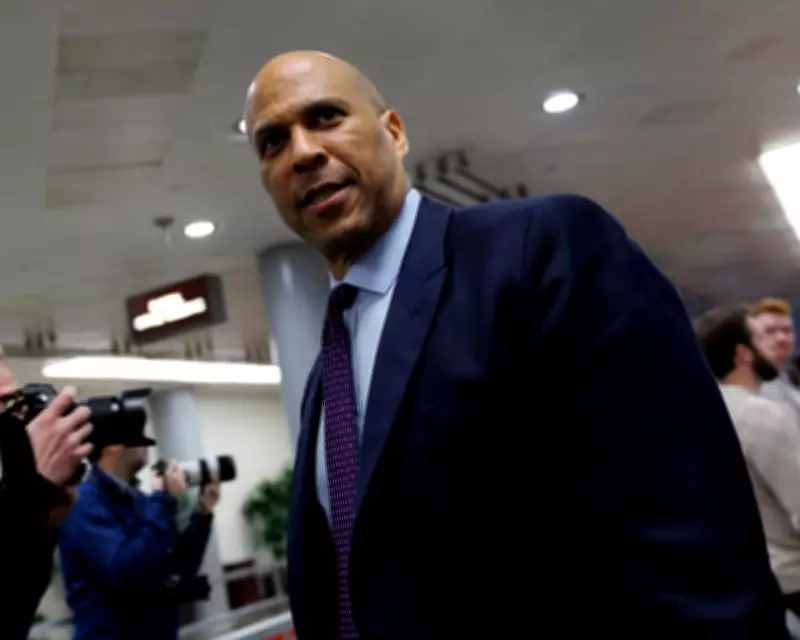
Leading the war-powers resolution, Senator Cory Booker of New Jersey emphasized constitutional principles in a floor speech. "If there's anything that is plain in that constitution, it is that a president does not have the power to unilaterally bring a nation and its treasure, to bring a nation and its men and women, into conflict without a say of Congress," Booker asserted. Despite acknowledging the likely failure of the measure, he vowed persistent action, declaring, "Me and my colleagues will bring up these resolutions again and again and again as more and more Americans on both sides of the aisle see this war for what it is: one president's decision."
Cross-Party Exceptions and Republican Defense
The vote saw rare cross-party exceptions, with Senator Rand Paul of Kentucky, a long-time advocate for war-powers restrictions, being the sole Republican to support the measure. Conversely, Senator John Fetterman of Pennsylvania, known for his staunch support of Israel, broke with Democratic ranks to vote against the resolution.
Republican Senator Tom Cotton, chair of the Senate's intelligence committee, mounted a vigorous defense of the Trump administration's actions. He argued that Iran had posed an imminent threat, claiming, "Iran had already loaded and cocked the gun. What were you supposed to do? Wait till they pulled the trigger? Of course not." Cotton insisted that the administration was compelled to act swiftly, stating, "Given these facts on the ground, we were left with no choice."
Broader Implications and War Toll
The ongoing conflict has exacted a heavy human and economic toll. Reports indicate that more than 1,300 Iranians have been killed, alongside hundreds of civilians in Lebanon and 15 individuals in Israel. Financially, the war incurred costs exceeding $11.3 billion in its first week alone, disrupting global supply chains for critical commodities such as oil, fertilizer, and aluminum.
Intelligence Testimony and International Reactions
Earlier on Wednesday, Director of National Intelligence Tulsi Gabbard testified that Iran's nuclear program had been "obliterated" by US strikes the previous year, with no subsequent efforts to rebuild. When pressed by lawmakers on whether Iran posed an imminent nuclear threat prior to the strikes, Gabbard, who as a 2020 presidential candidate sold shirts bearing the slogan "No War With Iran," repeatedly deflected, stating it was a conclusion for the president to draw.
Internationally, US allies have rebuffed Trump's requests for assistance in reopening the strategic Strait of Hormuz, insisting they would not participate in a war initiated without prior consultation. This resistance underscores the diplomatic strains arising from the conflict.

Internal Dissent and Resignation
The vote followed the resignation of Joe Kent, former head of the National Counterterrorism Center and a top aide to Gabbard, who stepped down in protest against the war in Iran. This move highlights the growing discontent within certain factions of Trump's "America First" coalition, reflecting broader unease over the military engagement.
As Democrats pledge to reintroduce similar measures, the debate over presidential war powers and congressional oversight remains a contentious and unresolved issue in US politics, with significant implications for future military actions and constitutional balance.