Sir Keir Starmer Issues Apology in Hastings Community Centre
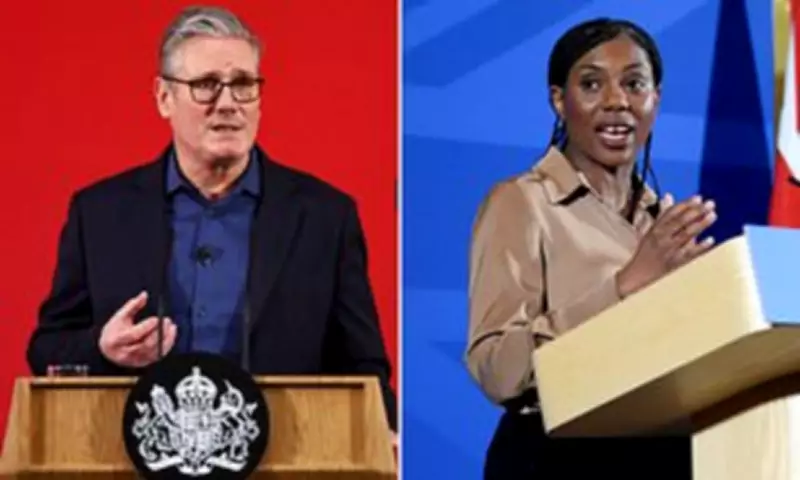
Eyes shifting nervously, Sir Keir Starmer declared with solemn emphasis: 'I am sorry.' The Labour leader delivered his apology at a community centre in Hastings, East Sussex, before a modest gathering of reporters and party supporters. The venue was punctuated by the loud beeping of a nearby agricultural vehicle reversing after a wrong turn, adding an incongruous soundtrack to the political moment.
Starmer's Appearance and Speech Tone
Sir Keir appeared in what observers might term his 'mixing with common people' attire: a black shirt, dark jacket, and no tie. Despite a week of political calamities, he looked remarkably fresh, with his distinctive hairstyle neatly groomed and a rested demeanour. Some speculated this might indicate a lack of full awareness regarding the severity of his predicament.
He had brought his entourage to this somewhat dusty location ostensibly to deliver a speech about British decency and community values. Given the ongoing Peter Mandelson scandal, these themes took on a particularly ironic resonance. The speech's focus on traditional virtues like honesty and integrity contrasted sharply with allegations of betrayal, corruption, and sexual indiscretion currently plaguing his party.

The Speech Content and Delivery
Aides, apparently concerned that a straightforward decency speech might invite sarcasm given current circumstances, crafted an extensive preamble distancing the Prime Minister from the scandal. Sir Keir delivered this with indignant blinking, emphasizing his outrage at Mandelson's behaviour - behaviour he described as 'entirely characteristic.'
The Labour leader repeatedly referenced 'Mandelson' using only the surname, uttering it with evident resentment, his mouth forming a tight, disapproving shape. He claimed eagerness to release documents related to the scandal, insisting 'I WANTED to release them yesterday,' though critics noted his initial parliamentary manoeuvres suggested otherwise.
The speech progressed at a glacial pace, laden with political clichés: 'as long as I've got breath in my body,' 'with every fibre of my being,' 'let me be clear.' This was not compelling oratory but rather what might be described as political porridge - formulaic, impersonal, and lacking the authentic emotion one might expect in a genuine apology.
Kemi Badenoch's Counter-Move
While Sir Keir continued his defensive monologue, Conservative figure Kemi Badenoch seized the initiative at a separate event. Speaking at the historic Horseguards Hotel in London - formerly headquarters of MI5 and MI6 - she addressed a gathering of genteel Tories in a room that once served as a billiards hall, complete with faience tiles and faded opulence.
Dressed in a coffee-coloured silk shirt, Badenoch went to work with evident appetite. She openly invited Labour backbenchers to collaborate with Conservative whips in drafting a parliamentary no-confidence motion against the Prime Minister. 'It's a question of when, not if, he goes,' she declared sharply. 'His self-righteousness is his greatest weakness.'
Though her overture was unlikely to be accepted by Labour MPs, it served multiple purposes: highlighting her political ascendancy, reminding voters of her role in recent parliamentary dramas, and capitalizing on Sir Keir's difficulties. 'He's bang to rights,' she concluded, prompting chuckles from the audience while maintaining her own unsmiling, beady-eyed gaze throughout.
Political Implications
The contrasting events revealed a Labour leader struggling to contain a scandal through formulaic apologies and a Conservative opponent eagerly exploiting the vulnerability. Sir Keir's speech, delivered in a community centre with agricultural machinery audible in the background, attempted to project connection with ordinary voters while addressing elite political failings.
Meanwhile, Badenoch's performance in a historically significant London venue demonstrated strategic positioning, using the Mandelson affair to undermine the Prime Minister's authority and promote her own political standing. The dual narratives - apology versus accusation - highlighted the deepening political crisis surrounding the Labour leadership and the opportunistic responses it has provoked.