Prime Minister Condemns Billionaire's Immigration Comments as 'Offensive and Wrong'
Prime Minister Sir Keir Starmer has issued a strong rebuke to billionaire Sir Jim Ratcliffe, demanding an immediate apology for what he described as 'offensive and wrong' remarks about immigration. The Manchester United owner and INEOS founder claimed in a recent interview that Britain has been 'colonised by immigrants' and that the current system is 'costing too much money'.
Downing Street's Firm Response
A spokesperson from Number 10 stated unequivocally that Ratcliffe's comments 'play into the hands of those who want to divide our country'. The Prime Minister himself took to social media platform X to express his disapproval, writing: 'Offensive and wrong. Britain is a proud, tolerant and diverse country. Jim Ratcliffe should apologise.' This public condemnation underscores the government's commitment to maintaining what it describes as Britain's inclusive values.
Ratcliffe's Controversial Interview
In his interview with Sky News, the 73-year-old businessman made several provocative statements about the state of the nation. 'You can't have an economy with nine million people on benefits and huge levels of immigrants coming in,' Ratcliffe asserted. 'The UK has been colonised by immigrants really, hasn't it? It's costing too much money.' He cited population growth from 58 million in 2020 to 70 million in mid-2024 as evidence of this trend, according to Office for National Statistics figures.

Beyond immigration, Ratcliffe questioned whether Sir Keir Starmer possesses the necessary qualities to lead the country effectively. 'I don't know whether it's just the apparatus that hasn't allowed Keir to do it or he's maybe too nice,' he remarked. 'Keir is a nice man. I like him, but it's a tough job and I think you have to do some difficult things with the UK to get it back on track.'
Political Context and Migration Statistics
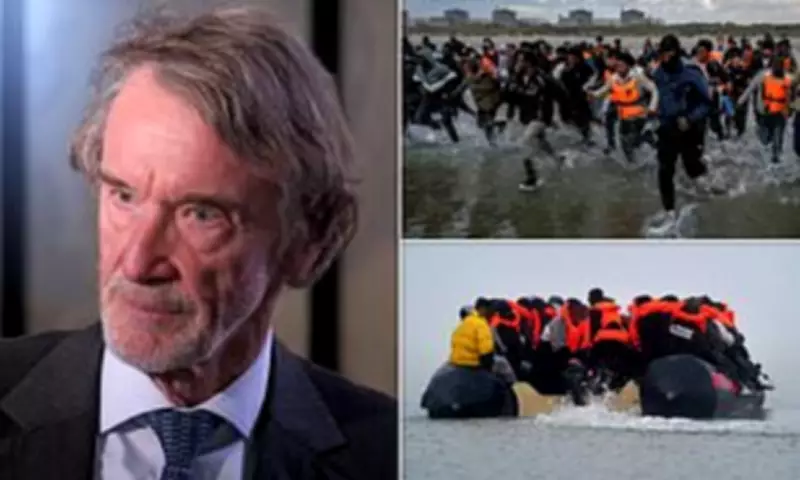
The controversy emerges against a backdrop of significant political pressure on the Prime Minister. Since Sir Keir assumed office in July 2024, official records indicate that 65,922 illegal migrants have reached British shores - a figure that surpasses totals under any previous prime minister. One of Sir Keir's initial actions was to scrap the previous government's Rwanda asylum deal, replacing it with a 'one in, one out' arrangement with France designed to manage Channel crossings more effectively.
Ratcliffe's comments have ignited debate about migration policy at a time when the Labour government faces multiple challenges. The recent scandal involving Lord Peter Mandelson's resignation has placed additional strain on Sir Keir's administration, prompting calls for leadership changes from opposition figures including Scottish Labour leader Anas Sarwar.
Ratcliffe's Broader Perspectives
The billionaire businessman revealed that he has met with Reform UK leader Nigel Farage, whom he described as 'an intelligent man' with 'good intentions'. However, he drew parallels between Farage and Starmer, suggesting that both may lack the necessary resolve. 'I think it needs somebody who's prepared to be unpopular for a period of time to get the big issues sorted,' Ratcliffe observed.
As one of Britain's wealthiest individuals with an estimated fortune of £17 billion according to the 2025 Sunday Times Rich List, Ratcliffe's opinions carry considerable weight in business circles. However, his tenure as Manchester United co-owner has been marked by controversy, with many fans expressing dissatisfaction with changes implemented since his investment group acquired a stake in December 2023. 'I've been very unpopular at Manchester United because we've made lots of changes,' he acknowledged. 'But, for the better, in my view.'
Government's Stance on Diversity
The Prime Minister's response emphasizes what his administration views as fundamental British values. 'Britain is a proud, tolerant and diverse country,' Sir Keir stated, directly countering Ratcliffe's characterization of immigration as colonization. This exchange highlights the ongoing national conversation about migration, benefits culture, and economic management that continues to dominate political discourse.

As the controversy unfolds, attention remains focused on whether Sir Jim Ratcliffe will issue the apology demanded by Downing Street, and how this public disagreement between political leadership and business elite might influence broader discussions about immigration policy and national identity in contemporary Britain.