Keir Starmer's Premiership Hangs by a Thread After Cabinet Revolt
The Cabinet has narrowly stepped back from the brink of outright rebellion. Following twenty-four hours of intense, private debate regarding the Prime Minister's political future, Keir Starmer's most senior colleagues have, for the moment, backed him to remain in office. The situation was perilously close to collapse, with the Prime Minister's fate hanging in the balance throughout a dramatic series of events.
A Tense Bunker Mentality in Downing Street
For hours on Sunday night and extending into Monday morning, members of the Cabinet flatly refused repeated requests from Number 10 to issue public statements of support for the Prime Minister. This left Sir Keir isolated in his Downing Street bunker, sweating over his political survival. Behind closed doors, ministers engaged in frank discussions about potentially forcing him out, contingency plans if he resigned abruptly, and even who might serve as an interim Prime Minister.
By Monday lunchtime, Downing Street attempted to project an image of business as usual, claiming the PM was 'getting on with the job with the support of the Cabinet'. Officials even suggested Sir Keir had been 'upbeat' in a speech to staff. However, they were conspicuously unable to cite a single supportive public comment from any Cabinet member over the preceding day, revealing the deep fissures within the government.

The Scottish Catalyst That Forced a Decision
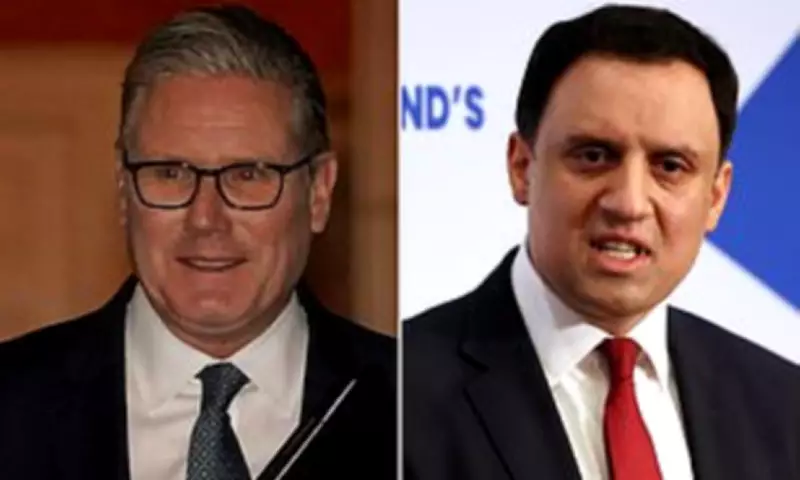
The Cabinet's hand was ultimately forced by breaking news from Scotland. When Scottish Labour leader Anas Sarwar scheduled an emergency press conference for 2:30 pm, it became immediately apparent he intended to call publicly for the Prime Minister's resignation. This external pressure compelled the Cabinet to make a snap judgment: either stick with Sir Keir or risk plunging the party into a chaotic and unprepared leadership contest.
Just one minute before Mr. Sarwar was due to speak in Glasgow, Deputy Prime Minister David Lammy finally broke the Cabinet's collective silence. He took to social media to urge colleagues to 'support the Prime Minister'. In the following hour, in a remarkable volte-face, every single Cabinet member—who had maintained a deafening silence—piled in to voice their backing for the embattled leader.
Devastating Criticism from a Former Ally
Mr. Sarwar's subsequent criticisms were devastating, particularly as they came from a long-time political ally of Sir Keir. He stated there had been 'too many mistakes' in Number 10. 'I have to be honest about failure wherever I see it,' he declared. 'The distraction has to end, the leadership has to change.' Had one or two senior ministers echoed this sentiment, Sir Keir's troubled premiership would likely have been terminated on the spot.
The collective decision to support Starmer was driven less by confidence and more by a fear of the alternatives. A leadership contest now threatens to be chaotic, with no clear, unblemished successor ready. Andy Burnham is geographically and politically marooned in Manchester. Angela Rayner is actively manoeuvring but remains under the cloud of an HMRC investigation. Wes Streeting is preoccupied with defending his association with the toxic figure of Peter Mandelson. Other potential candidates, from Ed Miliband to the relatively unknown Armed Forces Minister Al Carns, are merely eyeing their chances, none fully prepared for an immediate campaign.
A Fragile and Temporary Reprieve
The Cabinet collectively concluded that triggering an unpredictable leadership contest now would be disastrous, especially with crucial local elections looming in May. However, Sir Keir's survival prospects remain dire. His support structure is crumbling; his talismanic chief of staff, Morgan McSweeney, departed on Sunday, followed on Monday by his communications chief, Tim Allan—the fourth person in that role in just eighteen months. This least political of prime ministers suddenly finds himself without key advisors to guide his messaging and strategy.

He remains engulfed by the ongoing scandal surrounding his disastrous decision to appoint Lord Mandelson as US ambassador. There is no respite in sight, as Parliament has ordered the release of tens of thousands of related documents and private messages. Whitehall sources indicate this process could take weeks or even months, prolonging the political agony for a PM desperate to move on.
As Monday's events starkly demonstrated, Sir Keir's future is no longer entirely within his own control. The Cabinet's belated and frankly unconvincing show of loyalty has granted him only a temporary stay of execution. This fragile support could easily be withdrawn when circumstances are more favourable for a challenge, such as after the May local elections. The Prime Minister is now riding through a political storm, where it would take only a puff of wind to blow him over.