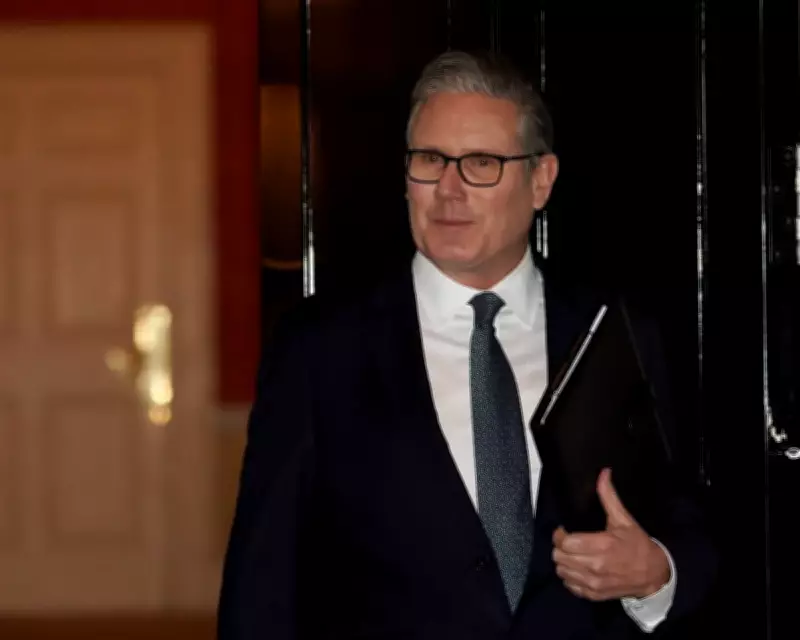
Keir Starmer Defies Resignation Calls Amid Labour Party Turmoil
Prime Minister Keir Starmer has emphatically rejected calls for his resignation, declaring to MPs that he is "not prepared to walk away" from his mandate and responsibility to the country. This statement came during a day of intense political drama, as Labour faced internal strife and high-profile departures from Downing Street.
Surviving a Leadership Challenge
Starmer managed to withstand an immediate challenge to his leadership from Anas Sarwar, the Scottish Labour leader, who publicly urged the Prime Minister to step down. Sarwar argued that the distraction caused by recent controversies, including the appointment of Peter Mandelson as US ambassador, was damaging Labour's prospects, particularly in the upcoming Scottish parliament elections. Despite this, Starmer's full cabinet rallied behind him, though some members privately expressed concerns that his leadership remains precarious.
In a parliamentary Labour party meeting, Starmer addressed over 400 MPs and peers, asserting his determination to fight any challenges. He highlighted his past successes in transforming the Labour party and warned against plunging the country into chaos. "I have won every fight I've ever been in," Starmer stated, emphasizing his commitment to continuing in office.
Internal Unrest and Key Resignations
The turmoil within Labour escalated with the resignation of Morgan McSweeney, Starmer's closest adviser, amid anger over Mandelson's appointment. This was followed by the departure of Tim Allan, the director of communications, who quit after just five months, citing a need for a new No 10 team. Allan's exit leaves Starmer searching for his fifth communications chief since taking office in July 2024.
Adding to the sense of instability, Chris Wormald, the UK's most senior civil servant, is reportedly negotiating his exit as part of a broader shake-up in Downing Street. These developments have left Labour insiders fearing that Starmer is dangerously exposed as he approaches critical policy and electoral challenges, including the Gorton and Denton byelection later this month.
Potential Leadership Contenders Emerge
Amid the chaos, potential leadership rivals such as Angela Rayner and Wes Streeting appeared to be positioning themselves for a future contest. Rayner publicly supported Starmer, urging party unity, but an unfinished website claiming to launch her leadership campaign was temporarily published, sparking speculation. Rayner's team dismissed the site as a "fake," but the domain name was registered shortly after the error.
Streeting, meanwhile, published private WhatsApp messages with Mandelson, in which he criticized Starmer's communications skills and the government's growth strategy. This move was seen as an effort to distance himself from the disgraced peer and prepare for a potential leadership bid. Despite this, Streeting publicly backed Starmer, calling for people to give him a hearing.
Public and Party Reactions
MPs reported a shift in mood after Starmer's address, with some feeling galvanized by his promises to improve relationships within the party and his focus on attacking Reform UK. However, others expressed doubts about Starmer's ability to recover, given Labour's trailing poll numbers behind Nigel Farage's party and ongoing cost of living pressures.
Sarwar's call for resignation was described by some MPs as a moment that highlighted the risks of further instability, with one noting it "looked more and more insane as it went on." Despite public displays of loyalty, including MPs being encouraged to tweet support for Starmer, concerns persist about the long-term viability of his leadership.
The day's events underscore the deep divisions and challenges facing the Labour Party, as Starmer strives to maintain control and steer the government through a period of significant uncertainty.