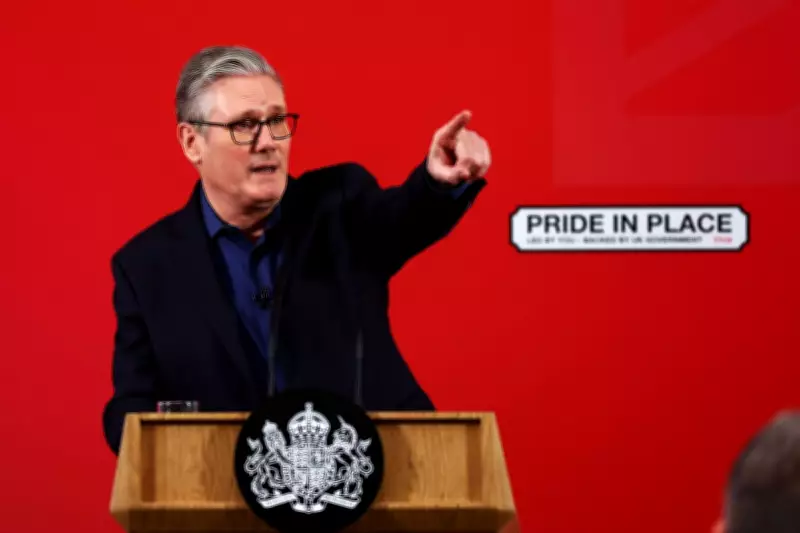
Prime Minister Sir Keir Starmer has delivered a forceful warning against what he describes as a dangerous rise in political rhetoric that deliberately exploits societal divisions and "social scars". The Labour leader made his comments during a major speech in Hastings, East Sussex, where he simultaneously unveiled a substantial £800 million government funding package aimed at revitalising Britain's struggling high streets.
A Torrid Political Week
The Prime Minister's address comes during an exceptionally difficult period for his leadership, dominated by renewed scrutiny over his controversial decision to appoint Lord Peter Mandelson as UK ambassador to the United States. Fresh revelations concerning Mandelson's dealings with convicted paedophile financier Jeffrey Epstein have triggered a political firestorm, with Lord Mandelson having since resigned from the House of Lords, left the Labour Party, been removed from the Privy Council, and now faces a criminal investigation.
During his speech, Sir Keir issued a direct apology to Epstein's victims, while maintaining that no one had previously understood the "depth and darkness" of the relationship between the peer and the disgraced financier. The controversy has intensified questions about the Prime Minister's political judgement and future, with Labour's internal Mainstream group calling for a "clean break" from what it termed the "betrayal" of the appointment.

Condemning Division and 'Industrialised Grievance'
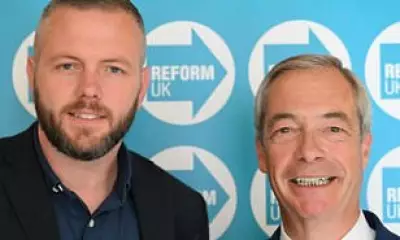
Sir Keir launched a broadside against what he perceives as a toxic trend in modern politics, criticising both Conservative and Reform UK figures for peddling narratives of division. He specifically condemned the "selling the lie that people who look different cannot really live together", labelling such rhetoric an affront to fundamental British values.
"You see it in the industrialised grievance factory in parts of social media," the Prime Minister stated, "miserable video after miserable video, telling you that entire cities and towns – the great communities of this country – are 'wastelands', 'no go zones'."
Targeting Reform UK and Conservative Figures
Sir Keir singled out Reform UK candidate for Gorton and Denton, Matthew Goodwin, accusing him and others of suggesting that prominent British figures like Rishi Sunak, Shabana Mahmood, Marcus Rashford, Shirley Bassey, and Anas Sarwar cannot truly be English, Welsh, or Scottish because they are not white. He pledged to fight such views "as long as I've got breath in my body".
The Prime Minister also criticised the Conservative Party for its prolonged tolerance of Robert Jenrick, who has since defected to Reform UK. He expressed disbelief that the Tories had kept Jenrick in the party for months after the former minister claimed Birmingham had "failed at integration" due to a lack of white faces, stating "he should have been sacked months ago".
Reframing Migration and Integration
Setting out his vision for migration reform, Sir Keir attacked what he called the "liberal narrative" surrounding the Windrush generation. He argued that Britain invited Caribbean migrants not out of compassion for vulnerable victims, but because the country needed their contribution to rebuild post-war Britain.
"They came here because Britain needed them, because they wanted to come and Britain wanted them to make a contribution, and they did. They helped rebuild this country," he asserted. The Prime Minister insisted that Labour's forthcoming migration reforms would focus on contribution, boost integration, and restore public trust in the system.
£800 Million High Street Revival Fund
Alongside his political warnings, Sir Keir announced a significant economic intervention: £800 million in new government funding to regenerate what he described as "decrepit high streets". According to Downing Street, the cash will support 40 communities across the UK with £20 million each, aiming to breathe new life into town centres and local economies.
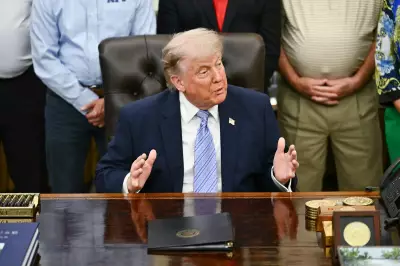
The Prime Minister framed the investment as part of building a stronger, more tolerant Britain "in a world that increasingly preys on weakness", a likely reference to recent foreign policy moves by US President Donald Trump that have unsettled Western allies.

Political Repercussions and Upcoming Tests
The speech arrives at a critical juncture for Sir Keir's premiership, with a crucial by-election imminent in Manchester's Gorton and Denton constituency on February 26th, followed by May's local and devolved parliamentary elections. The Prime Minister has previously framed the Gorton and Denton contest as a direct battle between Labour and Reform UK.
Speculation continues to mount about a potential leadership challenge should Labour perform poorly in these upcoming electoral tests. The centre-left Mainstream group, backed by Greater Manchester mayor Andy Burnham – long viewed as a potential leadership rival – warned against the party succumbing to "the same old sickness of elite privilege, spin and toxic factionalism".
Calls for Concrete Action
Responding to the Prime Minister's intervention, the cross-party Independent Commission on Community and Cohesion expressed hope that his words would be followed by substantive policies, resources, and leadership to tackle the crisis in community cohesion. The commission's co-chairman, Tory former minister Sir Sajid Javid, stated: "We hope that the PM's words today are just the start of a whole-of-government approach to get to grips with the twin crises of disconnection and division."
As Sir Keir Starmer navigates the fallout from the Mandelson-Epstein scandal while preparing for significant electoral battles, his Hastings speech represents a deliberate attempt to define his leadership against what he characterises as a politics of division, even as his own political judgement faces intense scrutiny.