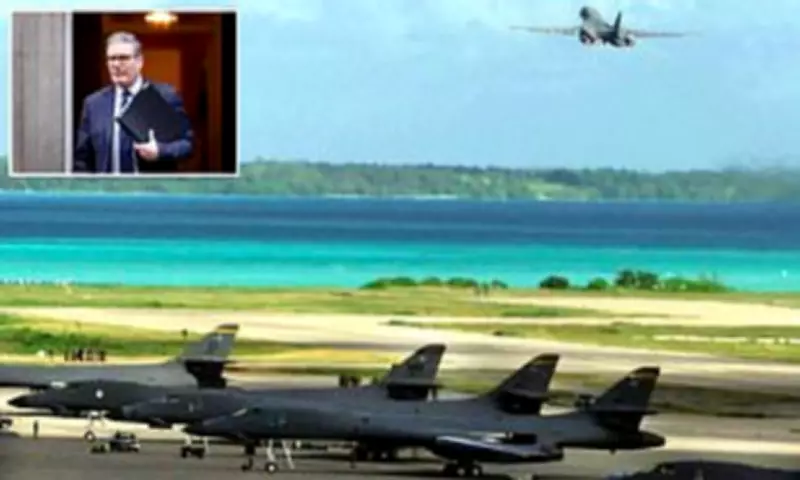
Labour leader Keir Starmer experienced a significant internal "wobble" regarding the controversial Chagos Islands agreement with Mauritius, as concerns mounted over the staggering £35 billion price tag and the legal robustness of the deal. This revelation comes from former ambassador to Washington, Lord Mandelson, who provided a rare glimpse into the behind-the-scenes governmental tensions.
Mounting Doubts Over Cost and Legal Standing
In an exclusive interview with The Times, Lord Mandelson disclosed that serious reservations emerged within the UK government about the agreement's viability and its appeal to the British public. The peer highlighted that the primary anxieties centred on the enormous financial burden and whether there was a definitive legal obligation to proceed with the arrangement.
"That was to do with the price tag and whether we had the total legal obligation to enter the deal and whether the original legal case made for the agreement in Whitehall was as watertight as was claimed," Lord Mandelson stated, underscoring the depth of the uncertainty.

US Opposition and Geopolitical Tensions
Compounding the domestic unease, the United States has joined widespread international condemnation of the package, despite initially offering public support. Former President Donald Trump notably labelled the pact an "act of great stupidity," a stark reversal from earlier White House backing. Sir Keir has dismissed Trump's opposition as a mere pressure tactic, linked to broader geopolitical manoeuvres.
The Conservative Party has vehemently criticised the agreement, branding it a "surrender" and warning that Mauritius maintains close alliances with China, raising significant security concerns. The deal aims to transfer sovereignty of the Chagos archipelago to Mauritius while leasing back the strategically vital Diego Garcia military base for a minimum of 99 years, alongside substantial financial payments to Mauritius.
Legal Imperatives and Parliamentary Delays
The government maintains that this move is essential to stabilise the legal status of the Chagos Islands following a series of adverse international court rulings. However, the legislation is currently navigating a turbulent parliamentary process. A House of Lords debate on the Chagos bill has been postponed after an amendment was tabled, calling for a pause "in the light of the changing geopolitical circumstances."
Lord Mandelson's insights arrive as he himself faces intense scrutiny over a new tranche of emails published by the American administration, linking him to the disgraced financier Jeffrey Epstein, which led to his resignation in September. Amid this personal storm, his account reveals a government grappling with dual pressures: a sceptical US administration and internal instability.
"So on the one hand I faced a sceptical US administration and then at another point a wobbly government of my own behind me," he recounted, painting a picture of a precarious diplomatic and domestic landscape. The future of the Chagos deal remains uncertain as legal, financial, and geopolitical challenges continue to mount.