Starmer's Defiant Stand Overshadowed by Fresh Labour Scandal
Prime Minister Sir Keir Starmer attempted to launch a political fightback on Tuesday, delivering a defiant "put up or shut up" message to his critics following a failed leadership coup. However, his moment of political theatre was immediately overshadowed by news that Labour peer Lord Matthew Doyle, Starmer's former communications chief, has been suspended from the party over links to a convicted paedophile.
A Prime Minister Under Siege
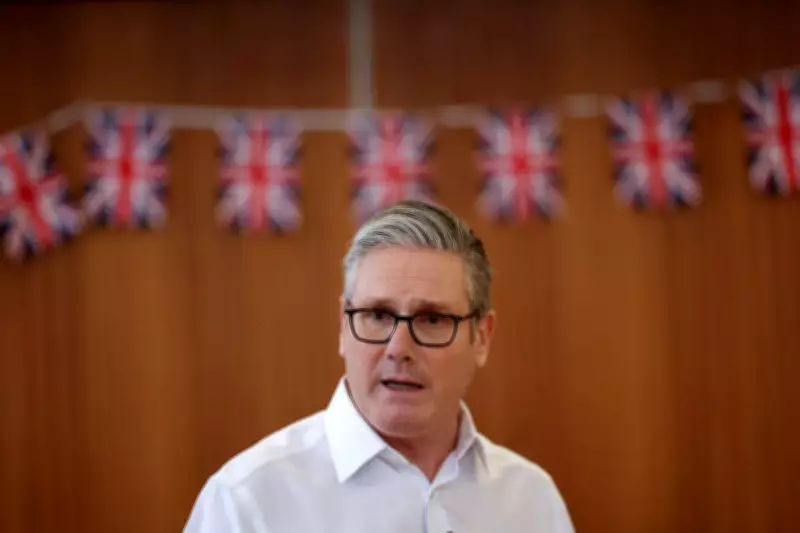
Sir Keir's public appearance in Hertfordshire marked his first outing since surviving what he described as "the hardest day" of his premiership. Surrounded by Union Jack pennants, the prime minister insisted: "I will never walk away from the mandate I was given to change this country. I will never walk away from the people that I'm charged with fighting for. And I will never walk away from the country that I love."
This defiant statement came just hours after Labour's Scottish leader Anas Sarwar had called for Starmer's resignation in a stunning press conference that many believe was orchestrated by health secretary Wes Streeting. The prime minister's message was clearly aimed at both his internal party critics and the wider public.

The Doyle Scandal Emerges
Moments after Starmer's defiant performance, news broke that Lord Matthew Doyle - appointed by Starmer as his first director of communications and personally elevated to the House of Lords - had been suspended by Labour. The suspension follows revelations that Doyle campaigned for Moray councillor Sean Morton in 2017 after Morton had been charged with possessing indecent images of children.
Lord Doyle issued a statement apologising "unreservedly" for supporting Morton before the case had concluded, claiming he had believed Morton's assertions of innocence at the time. Morton later admitted to possessing the illegal images. Doyle stated he had "extremely limited" contact with Morton following the conviction.
This latest scandal represents a significant blow to Starmer's authority for several reasons:- Doyle was a personal appointment by Starmer to both his communications team and the House of Lords
- It follows Starmer's admission that he appointed Lord Mandelson as US ambassador despite knowing about Mandelson's relationship with convicted sex offender Jeffrey Epstein
- The Mandelson appointment cost Starmer his chief of staff Morgan McSweeney and raised serious questions about the prime minister's judgement
Internal Party Tensions Continue
The Doyle scandal emerged against a backdrop of continuing internal Labour tensions. Health Secretary Wes Streeting has publicly backed Starmer but recently released his WhatsApp and email exchanges with the disgraced Lord Mandelson without consulting the prime minister. Streeting claimed this was to prove he had "nothing to hide" about his links to the former US ambassador.
The prime minister's spokesman refused to endorse Streeting's unilateral action, stating that "due process" should be followed while police handle the material. However, Streeting's decision not to be sacked has been interpreted by many as evidence of Starmer's weakened authority within his own government.
Historical Parallels and Future Challenges
Starmer's "put up or shut up" message drew immediate comparisons to former Conservative Prime Minister John Major, who used the same phrase in 1995 when challenging his critics. Major successfully saw off a leadership challenge from Sir John Redwood, but led his party to a catastrophic general election defeat just two years later.
Starmer now faces a series of critical challenges:
- Navigating the difficult Gorton and Denton by-election later this month
- Preparing for potentially disastrous local and devolved elections on 7 May
- Shaking off what critics describe as "the stench of sleaze and scandal" surrounding his appointments
- Proving he can be more than just a survivor of leadership challenges
Some within Labour believe that, having shed the "baggage" of former chief of staff Morgan McSweeney and his supporters, Starmer now has an opportunity for genuine renewal. His defiant public appearance represents an attempt to position himself as the front and centre of his government's agenda.

However, as the Doyle scandal demonstrates, Starmer's political recovery faces immediate obstacles. The prime minister must now convince both his party and the public that he can overcome these challenges and deliver on the mandate he received in his landslide July 2024 election victory.